 Woyɛ dino bɛn? Nsɛmmisa agoro
 Dino ko
 Dino mmirikatuo
 Dino agodie nketewa
 Stika nwoma
 Dino TOP nhyehyɛeɛ
 Ma me nwanwa!
Berɛ bɛn na ɛtenaa ase?

Na ne kɛseɛ yɛ sɛn?
Na ne tenten yɛ sɛn?
Na ne korɔn yɛ sɛn?
Na ne mu yɛ duru sɛn?
 ne tenten te sɛ nkraman 3 firi hwene kɔsi dua🍌ne tenten te sɛ kwadu 17 a wɔde abɔ toatoa so🍉ne mu duru te sɛ watamɛlɔn 18🧸ne mu duru te sɛ nkɔkɔaa sukuu mmofra 5🎒ne mu duru te sɛ sukuu mmofra 3🏃anka ɔbɛtumi atu mmirika mita 100 wɔ sikɛn 5.5 mu (onipa a ɔyɛ ntɛm sen biara hia 9.6)
Rativates kɛseɛ yɛ sɛn sɛ wode toto WO ho a?
Akontaa nko ara wɔ wo browser mu. Yɛnkora biribiara so, na yɛmmfa biribiara nkɔ baabiara.
Na ɛyɛ ntɛm sɛn?


Nsɛm a ɛyɛ anigye
Rativates was about half the size of the largest individuals of its relative Struthiomimus.1
The name Rativates means 'raft seer', because scientists thought these dinosaurs looked like modern ratites (like ostriches) and seemed to predict their evolution.1
The only known fossil of Rativates was discovered in 1934 by Levi Sternberg, but it was not recognized as a new species until 2016.1
Rativates had a straight edge on its third toe bone, unlike other ornithomimids which had a curved edge.1
The tail vertebrae of Rativates had short, mound-like spines, which is different from many other ornithomimids.1
A thin section of its thigh bone showed that the known Rativates was at least eight years old and not a juvenile.1
Nsɛm a wɔbisa bebree fa Rativates ho
?How big was Rativates?
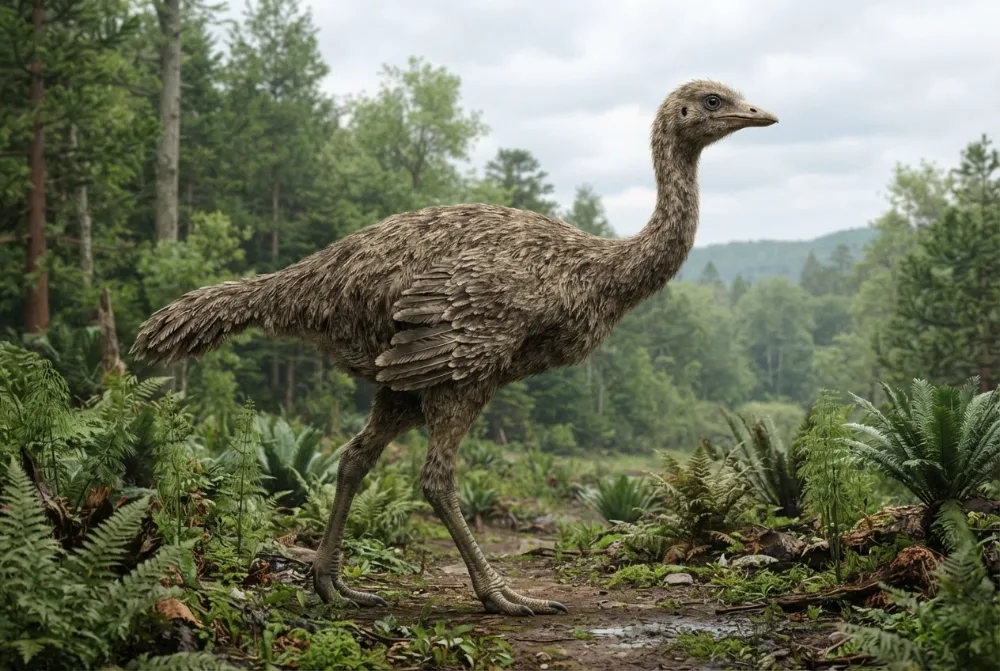
About 3.3 metres (11 feet) long, 1.5 metres (5 feet) tall, and weighed around 90 kilograms (200 pounds).3
?Did Rativates have feathers?
Probably yes. While no skin impressions were found for Rativates, its close relative Ornithomimus had a downy covering and may have had true feathers.3
?When did Rativates live?
Rativates lived about 77 to 75 million years ago, during the Late Cretaceous period.1
Ma dino ho animdefoɔ
- Nyansahu din
- Rativates
- Obi a ɔtoo din
- McFeeters et al. 20164
- Kuo
- Ɔstrik dino
- Abusua / kuo kɛseɛ
- Ornithomimidae4
- Nkyekyɛmu
- Theropoda > Ornithomimosauria4
- Abotan no mfeɛ
- mfeɛ ɔpepem 84 kɔsi 72 (Campanian)4
- Abotan nhyehyɛeɛ
- Oldman4
- Aman
- Kanada4
- Fɔsil nkyerɛwee
- 1 wɔ The Paleobiology Database mu4
- Nhunumu
- Rativates was named in 2016 by Bradley McFeeters and colleagues. The only skeleton was found in 1934 by Levi Sternberg in Alberta, Canada, but it took over 80 years for scientists to realize it was a new species.1
- Wɔda so gye ho akyinnye
- Scientists are still debating exactly how Rativates is related to other ornithomimids like Struthiomimus and Ornithomimus.1
Baabi a nsɛm no firi
- Rativates (en.wikipedia.org)
- Carleton student discovers new dinosaur - The Charlatan, Carleton's independent newspaper (charlatan.ca)
- Carleton PhD Student Leads Team That Discovered Ostrich-like Dinosaur - Graduate Studies (graduate.carleton.ca)
- Rativates in The Paleobiology Database (CC BY 4.0): mfeɛ, mmeaeɛ, abotan nhyehyɛeɛ, nkyekyɛmu.
Asɛm biara a ɛwɔ krataafa yi so wɔ nɔma a ɛkyerɛ baabi a ɛfiri. Sɛ yɛfom biribi a, kafra, yɛyɛ dino dɔfoɔ, yɛnyɛ nyansahu nsɛmma krataa. Ka kyerɛ yɛn wɔ [email protected] na yɛbɛsiesie.
 Ɔkɔm de Rex! Dino Wiki yɛ agya bi adwuma a ɔyɛɛ maa ne babarima a ɔdɔ dino. Ɛyɛ kwa, dawurubɔ biara nni mu, akyidifoɔ biara nni mu. Mpanimfoɔ bɛtumi ama Rex aduane kakra, na aboa ama Dino Wiki atena intanɛt so.Ma Rex aduane
 Gallimimus
 Ornithomimus
 Struthiomimus
 Deinocheirus
 Dromiceiomimus
 Archaeornithomimus
 Tyrannosaurus
 Triceratops
 Velociraptor
 Spinosaurus
 Ankylosaurus
 Parasaurolophus