 Woyɛ dino bɛn? Nsɛmmisa agoro
 Dino ko
 Dino mmirikatuo
 Dino agodie nketewa
 Stika nwoma
 Dino TOP nhyehyɛeɛ
 Ma me nwanwa!
Saturnalia
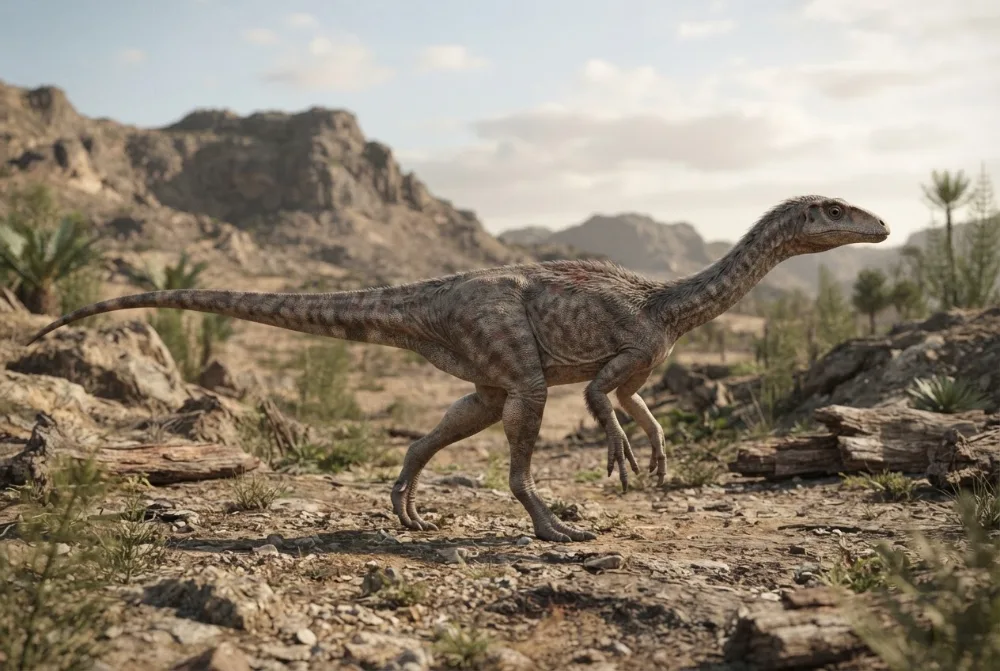
Saturnalia was one of the very first dinosaurs to ever walk the Earth. It was a small, speedy plant-eater that lived in what is now Brazil about 233 million years ago. Scientists have found several skeletons, making it one of the best-known early dinosaurs.1
Berɛ bɛn na ɛtenaa ase?
Na ne kɛseɛ yɛ sɛn?
Na ne tenten yɛ sɛn?
Na ne korɔn yɛ sɛn?
nsusuiɛ
Na ne mu yɛ duru sɛn?
 ne tenten te sɛ fie agyinamoa 3 firi hwene kɔsi dua🍌ne tenten te sɛ kwadu 8 a wɔde abɔ toatoa so🍌ne mu duru te sɛ kwadu 92🏃anka ɔbɛtumi atu mmirika mita 100 wɔ sikɛn 13 mu (onipa a ɔyɛ ntɛm sen biara hia 9.6)
Saturnalia kɛseɛ yɛ sɛn sɛ wode toto WO ho a?
Akontaa nko ara wɔ wo browser mu. Yɛnkora biribiara so, na yɛmmfa biribiara nkɔ baabiara.
Na ɛyɛ ntɛm sɛn?


Nsɛm a ɛyɛ anigye
Saturnalia was only about 1.5 metres (4.9 feet) long, about the size of a large dog.1
Its skull was only about 10 centimetres (3.9 inches) long, giving it a tiny head compared to its body.1
Saturnalia had a long neck made of nine or ten vertebrae, which was about half the length of its trunk.1
It lived at the same time as the meat-eating dinosaur Staurikosaurus, which may have hunted it.1
Saturnalia is one of the oldest dinosaurs ever found, dating back to about 233 million years ago.1
The fossils were collected during the Brazilian Carnival, which is why scientists named it after the Roman festival Saturnalia.1
Atosɛm sɛefoɔ
Atosɛm: Saturnalia was a plant-eater like later sauropodomorphs.
Nokorɛ: Scientists now think Saturnalia was probably an omnivore or carnivore, eating insects and small animals, based on its teeth and skull shape.1
Ma dino ho animdefoɔ
- Nyansahu din
- Saturnalia
- Obi a ɔtoo din
- Langer et al. 19992
- Kuo
- Kɔn tenten
- Abusua / kuo kɛseɛ
- Saturnaliidae2
- Nkyekyɛmu
- Sauropodomorpha2
- Abotan no mfeɛ
- mfeɛ ɔpepem 237 kɔsi 227 (Carnian)2
- Abotan nhyehyɛeɛ
- Santa Maria, Pebbly Arkose2
- Aman
- Brazil, Zimbabwe2
- Fɔsil nkyerɛwee
- 3 wɔ The Paleobiology Database mu2
- Nhunumu
- Saturnalia was named in 1999 by Max Cardoso Langer and his team, based on three skeletons found in the Santa Maria Formation of Brazil during the 1998 Carnival.1
- Wɔda so gye ho akyinnye
- Scientists still debate whether Saturnalia was a true sauropodomorph or more closely related to theropods, because it has a mix of features from both groups.1
Baabi a nsɛm no firi
- Saturnalia tupiniquim (en.wikipedia.org)
- Saturnalia in The Paleobiology Database (CC BY 4.0): mfeɛ, mmeaeɛ, abotan nhyehyɛeɛ, nkyekyɛmu.
Asɛm biara a ɛwɔ krataafa yi so wɔ nɔma a ɛkyerɛ baabi a ɛfiri. Sɛ yɛfom biribi a, kafra, yɛyɛ dino dɔfoɔ, yɛnyɛ nyansahu nsɛmma krataa. Ka kyerɛ yɛn wɔ [email protected] na yɛbɛsiesie.
 Ɔkɔm de Rex! Dino Wiki yɛ agya bi adwuma a ɔyɛɛ maa ne babarima a ɔdɔ dino. Ɛyɛ kwa, dawurubɔ biara nni mu, akyidifoɔ biara nni mu. Mpanimfoɔ bɛtumi ama Rex aduane kakra, na aboa ama Dino Wiki atena intanɛt so.Ma Rex aduane
 Brachiosaurus
 Diplodocus
 Brontosaurus
 Argentinosaurus
 Camarasaurus
 Morosaurus
 Nothosaurus
 Coelophysis
 Podokesaurus
 Simosaurus
 Eudimorphodon
 Herrerasaurus