 Woyɛ dino bɛn? Nsɛmmisa agoro
 Dino ko
 Dino mmirikatuo
 Dino agodie nketewa
 Stika nwoma
 Dino TOP nhyehyɛeɛ
 Ma me nwanwa!
Scanisaurus
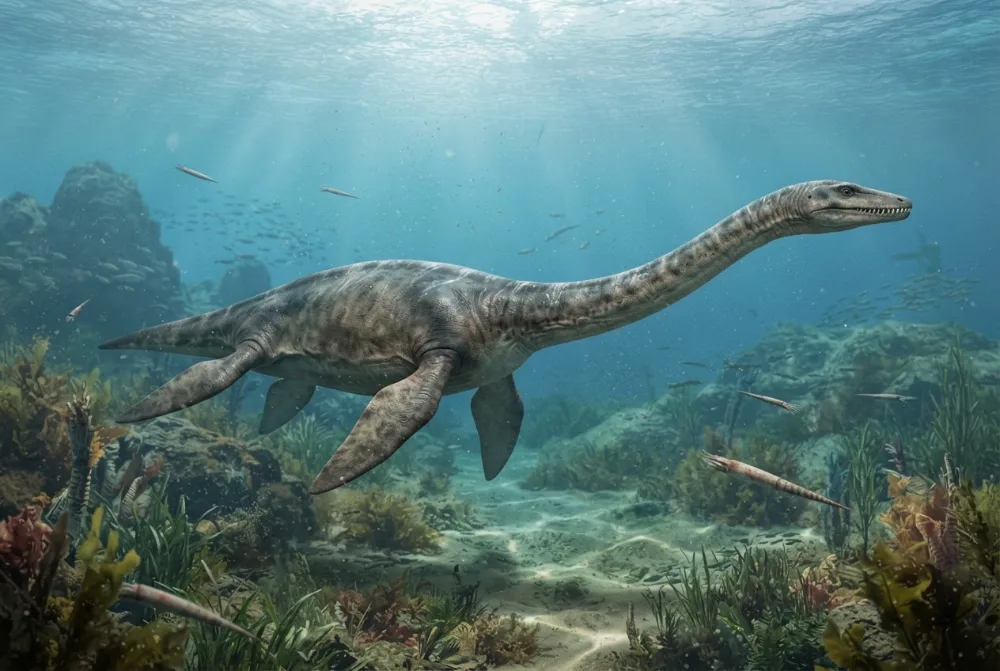
Scanisaurus was a long-necked marine reptile that swam in the shallow seas of what is now Sweden and Russia. It was about as long as a small car and used its sharp teeth to catch small fish and squid-like animals called belemnites.1
Berɛ bɛn na ɛtenaa ase?
Na ne kɛseɛ yɛ sɛn?
Na ne tenten yɛ sɛn?
 ne tenten te sɛ nkraman 5 firi hwene kɔsi dua🍌ne tenten te sɛ kwadu 28 a wɔde abɔ toatoa so🏊anka ɔbɛtumi aguare nsuguarebea kɛseɛ (50 m) tenten wɔ sikɛn 6.4 mu
Scanisaurus kɛseɛ yɛ sɛn sɛ wode toto WO ho a?
Akontaa nko ara wɔ wo browser mu. Yɛnkora biribiara so, na yɛmmfa biribiara nkɔ baabiara.
Na ɛyɛ ntɛm sɛn?


Nsɛm a ɛyɛ anigye
Scanisaurus is known from only a single backbone (a vertebral centrum) found in Russia, plus many similar backbones and teeth from Sweden.1
It lived about 80 to 75 million years ago during the Campanian stage of the Late Cretaceous.1
Scanisaurus had a shorter neck than some other elasmosaurids like Elasmosaurus, and scientists sometimes call it a 'mesodiran' plesiosaur.1
In the Kristianstad Basin, Scanisaurus fossils are the most common plesiosaur remains found.1
A fountain with two Scanisaurus sculptures was built in the Swedish town of Bromölla in 1971.1
Scanisaurus shared its home with many other marine reptiles, including mosasaurs, sea turtles, and crocodile-like animals.1
Nsɛm a wɔbisa bebree fa Scanisaurus ho
?How big was Scanisaurus?
About 4 to 5 metres (13 to 16 feet) long, which is about the length of a small car.1
?What did Scanisaurus eat?
It ate small prey like small fish and belemnites (squid-like animals). Its sharp teeth were good for smashing or piercing them.1
?Is Scanisaurus a dinosaur?
No, it is not a dinosaur. It is a plesiosaur, a type of long-necked marine reptile that lived in the sea.1
Atosɛm sɛefoɔ
Atosɛm: Scanisaurus is a dinosaur.
Nokorɛ: Scanisaurus is not a dinosaur. It is a plesiosaur, a type of marine reptile that lived in the sea.1
Ma dino ho animdefoɔ
- Nyansahu din
- Scanisaurus
- Obi a ɔtoo din
- Persson 19602
- Kuo
- Plesiosɔɔ
- Abusua / kuo kɛseɛ
- Elasmosauridae2
- Nkyekyɛmu
- Plesiosauria > Elasmosauridae > Sauropterygia2
- Abotan no mfeɛ
- mfeɛ ɔpepem 84 kɔsi 72 (Campanian)2
- Aman
- Swiidin2
- Fɔsil nkyerɛwee
- 3 wɔ The Paleobiology Database mu2
- Nhunumu
- The first fossil, a single backbone, was named Cimoliasaurus nazarowi by Nikolay Bogolyubov in 1911 from Russia. In 1959, Swedish paleontologist Per-Ove Persson moved it to a new genus, Scanisaurus, based on fossils from Sweden.1
- Wɔda so gye ho akyinnye
- Scientists debate whether Scanisaurus is a valid genus or a nomen dubium (doubtful name), because the fossils lack features that clearly separate it from other Late Cretaceous elasmosaurids.1
Baabi a nsɛm no firi
- Scanisaurus (en.wikipedia.org)
- Scanisaurus in The Paleobiology Database (CC BY 4.0): mfeɛ, mmeaeɛ, abotan nhyehyɛeɛ, nkyekyɛmu.
Asɛm biara a ɛwɔ krataafa yi so wɔ nɔma a ɛkyerɛ baabi a ɛfiri. Sɛ yɛfom biribi a, kafra, yɛyɛ dino dɔfoɔ, yɛnyɛ nyansahu nsɛmma krataa. Ka kyerɛ yɛn wɔ [email protected] na yɛbɛsiesie.
 Ɔkɔm de Rex! Dino Wiki yɛ agya bi adwuma a ɔyɛɛ maa ne babarima a ɔdɔ dino. Ɛyɛ kwa, dawurubɔ biara nni mu, akyidifoɔ biara nni mu. Mpanimfoɔ bɛtumi ama Rex aduane kakra, na aboa ama Dino Wiki atena intanɛt so.Ma Rex aduane
 Elasmosaurus
 Pliosaurus
 Plesiosaurus
 Cimoliasaurus
 Colymbosaurus
 Trinacromerum
 Tyrannosaurus
 Triceratops
 Velociraptor
 Spinosaurus
 Ankylosaurus
 Parasaurolophus