 Woyɛ dino bɛn? Nsɛmmisa agoro
 Dino ko
 Dino mmirikatuo
 Dino agodie nketewa
 Stika nwoma
 Dino TOP nhyehyɛeɛ
 Ma me nwanwa!
Berɛ bɛn na ɛtenaa ase?

Na ne kɛseɛ yɛ sɛn?
Na ne tenten yɛ sɛn?
Na ne korɔn yɛ sɛn?
nsusuiɛ
Na ne mu yɛ duru sɛn?
 ne tenten te sɛ nkraman 5 firi hwene kɔsi dua🍌ne tenten te sɛ kwadu 26 a wɔde abɔ toatoa so🍉ne mu duru te sɛ watamɛlɔn 60🧸ne mu duru te sɛ nkɔkɔaa sukuu mmofra 16🎒ne mu duru te sɛ sukuu mmofra 9🏃anka ɔbɛtumi atu mmirika mita 100 wɔ sikɛn 8.8 mu (onipa a ɔyɛ ntɛm sen biara hia 9.6)
Talenkauen kɛseɛ yɛ sɛn sɛ wode toto WO ho a?
Akontaa nko ara wɔ wo browser mu. Yɛnkora biribiara so, na yɛmmfa biribiara nkɔ baabiara.
Na ɛyɛ ntɛm sɛn?


Nsɛm a ɛyɛ anigye
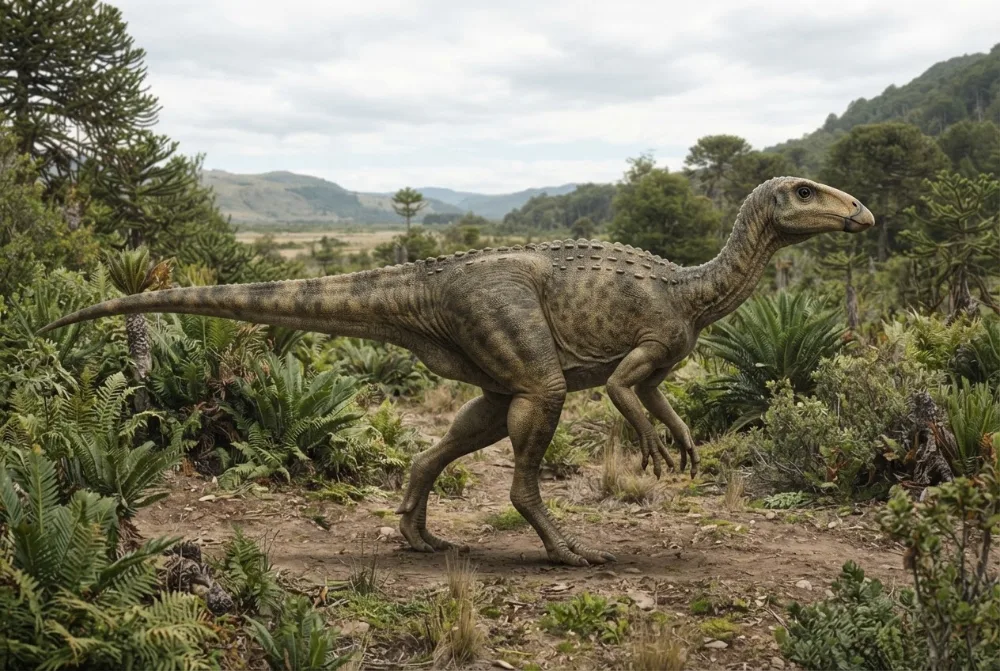
Talenkauen had smooth, oval plates along its ribcage. These plates were very thin, only about 3 millimeters thick, and may have helped with breathing, like similar structures in birds.1
Unlike many other plant-eating dinosaurs, Talenkauen still had teeth in the front of its beak and a first toe. More advanced relatives lost these features.1
A tiny baby Talenkauen was found with an adult. The baby had already hatched and eaten food, because its teeth showed wear. This is one of the few baby ornithopod fossils found in the southern hemisphere.1
Talenkauen lived alongside giant dinosaurs like Dreadnoughtus and Puertasaurus, which were huge long-necked plant-eaters, and the predator Orkoraptor.1
The plates on Talenkauen's ribs were too thin and small to be useful for defense, so scientists think they had another job, like helping the dinosaur breathe.1
Nsɛm a wɔbisa bebree fa Talenkauen ho
?How big was Talenkauen?
About 4 meters (13 feet) long, maybe up to 4.7 meters (15 feet) and 300 kilograms (660 pounds).1
?What did Talenkauen eat?
It ate plants, using its beak and teeth to chew leaves and other vegetation.1
?Did Talenkauen have feathers?
No one knows for sure. No fossils of feathers have been found with Talenkauen, and it is not closely related to feathered dinosaurs.1
?When did Talenkauen live?
It lived during the Late Cretaceous period, about 72 to 66 million years ago.1
Atosɛm sɛefoɔ
Atosɛm: Some people think Talenkauen's rib plates were armor for protection.
Nokorɛ: Scientists think the plates were more like uncinate processes, which help with breathing, not armor.1
Ma dino ho animdefoɔ
- Nyansahu din
- Talenkauen
- Obi a ɔtoo din
- Novas et al. 20042
- Kuo
- Ahabandifoɔ a wɔwɔ anomaa ano
- Abusua / kuo kɛseɛ
- Elasmaria2
- Nkyekyɛmu
- Ornithischia > Ornithopoda > Iguanodontia2
- Abotan no mfeɛ
- mfeɛ ɔpepem 84 kɔsi 72 (Campanian)2
- Abotan nhyehyɛeɛ
- Cerro Fortaleza2
- Aman
- Argentina2
- Fɔsil nkyerɛwee
- 2 wɔ The Paleobiology Database mu2
- Nhunumu
- Talenkauen was found in February 2000 on Los Hornos Hill near Viedma Lake in Argentina. It was named and described by Fernando Novas and colleagues in 2004.1
- Wɔda so gye ho akyinnye
- Scientists debate whether the rib plates of Talenkauen are related to the uncinate processes of birds and other animals, or if they are a different feature.1
Baabi a nsɛm no firi
- Talenkauen (en.wikipedia.org)
- Talenkauen in The Paleobiology Database (CC BY 4.0): mfeɛ, mmeaeɛ, abotan nhyehyɛeɛ, nkyekyɛmu.
Asɛm biara a ɛwɔ krataafa yi so wɔ nɔma a ɛkyerɛ baabi a ɛfiri. Sɛ yɛfom biribi a, kafra, yɛyɛ dino dɔfoɔ, yɛnyɛ nyansahu nsɛmma krataa. Ka kyerɛ yɛn wɔ [email protected] na yɛbɛsiesie.
 Ɔkɔm de Rex! Dino Wiki yɛ agya bi adwuma a ɔyɛɛ maa ne babarima a ɔdɔ dino. Ɛyɛ kwa, dawurubɔ biara nni mu, akyidifoɔ biara nni mu. Mpanimfoɔ bɛtumi ama Rex aduane kakra, na aboa ama Dino Wiki atena intanɛt so.Ma Rex aduane
 Iguanodon
 Tenontosaurus
 Thescelosaurus
 Zalmoxes
 Camptosaurus
 Rhabdodon
 Tyrannosaurus
 Triceratops
 Velociraptor
 Spinosaurus
 Ankylosaurus
 Parasaurolophus