 Woyɛ dino bɛn? Nsɛmmisa agoro
 Dino ko
 Dino mmirikatuo
 Dino agodie nketewa
 Stika nwoma
 Dino TOP nhyehyɛeɛ
 Ma me nwanwa!
Berɛ bɛn na ɛtenaa ase?

Na ɛyɛ ntɛm sɛn?


Nsɛm a ɛyɛ anigye
Tongtianlong was discovered during the construction of a high school. Workers used TNT blasting, which destroyed parts of the fossil, including some arm and leg bones.1
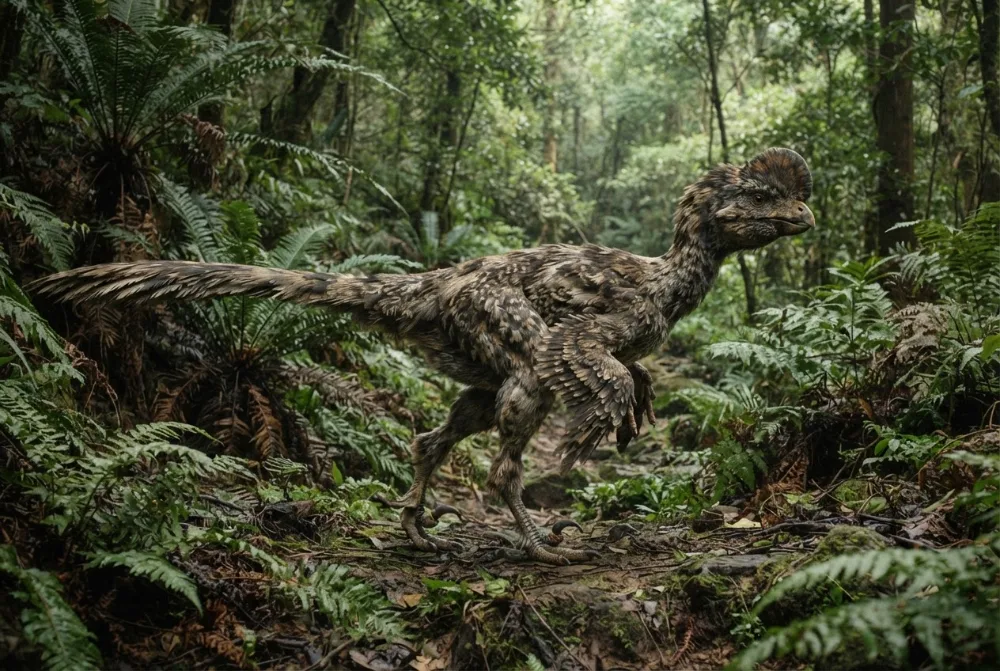
The fossil was found in a very unusual pose: its head was raised and its arms were splayed out to the sides. Scientists think it may have died while stuck in mud, trying to free itself.12
Tongtianlong had a dome-shaped skull crest, with the highest point just behind its eye socket. This made it different from other oviraptorids.12
It was a bird-like theropod dinosaur, covered in feathers. Oviraptorids like Tongtianlong are some of the most bird-like dinosaurs known.12
Tongtianlong is one of six different oviraptorosaur dinosaurs found in the same area of southern China. This shows that these dinosaurs were very diverse near the end of the Cretaceous.2
Nsɛm a wɔbisa bebree fa Tongtianlong ho
?How big was Tongtianlong?
It was about 1 meter long, similar in size to a large sheep or small donkey.3
?Did Tongtianlong have feathers?
Yes, Tongtianlong was a feathered dinosaur. It belonged to a group of bird-like theropods called oviraptorids.13
?What did Tongtianlong eat?
It was omnivorous, meaning it ate both plants and meat. It had a toothless beak, so it likely ate small animals, eggs, and plants.1
?When did Tongtianlong live?
It lived about 66 to 72 million years ago, during the very end of the Cretaceous Period, right before the mass extinction that killed the large dinosaurs.3
Ma dino ho animdefoɔ
- Nyansahu din
- Tongtianlong
- Obi a ɔtoo din
- Lü et al. 20164
- Kuo
- Dino nwonwa a wɔwɔ ntakra
- Abusua / kuo kɛseɛ
- Oviraptoridae4
- Nkyekyɛmu
- Theropoda > Oviraptorosauria4
- Abotan no mfeɛ
- mfeɛ ɔpepem 72 kɔsi 66 (Maastrichtian)4
- Abotan nhyehyɛeɛ
- Hekou4
- Aman
- Kyaena4
- Fɔsil nkyerɛwee
- 1 wɔ The Paleobiology Database mu4
- Nhunumu
- Tongtianlong was named in 2016 by Lü Junchang and colleagues. The only known fossil was found by workers blasting rock for a new high school in Ganxian District, Jiangxi Province, China.12
- Wɔda so gye ho akyinnye
- Scientists are not sure exactly what Tongtianlong ate. It may have eaten eggs, plants, shellfish, or nuts, but more evidence is needed.2
Baabi a nsɛm no firi
- Tongtianlong (en.wikipedia.org)
- A Late Cretaceous diversification of Asian oviraptorid dinosaurs: evidence from a new species preserved in an unusual posture | Scientific Reports (preview-www.nature.com)
- 'Mud Dragon' Dinosaur Unearthed—By Dynamite | National Geographic (nationalgeographic.com)
- Tongtianlong in The Paleobiology Database (CC BY 4.0): mfeɛ, mmeaeɛ, abotan nhyehyɛeɛ, nkyekyɛmu.
Asɛm biara a ɛwɔ krataafa yi so wɔ nɔma a ɛkyerɛ baabi a ɛfiri. Sɛ yɛfom biribi a, kafra, yɛyɛ dino dɔfoɔ, yɛnyɛ nyansahu nsɛmma krataa. Ka kyerɛ yɛn wɔ [email protected] na yɛbɛsiesie.
 Ɔkɔm de Rex! Dino Wiki yɛ agya bi adwuma a ɔyɛɛ maa ne babarima a ɔdɔ dino. Ɛyɛ kwa, dawurubɔ biara nni mu, akyidifoɔ biara nni mu. Mpanimfoɔ bɛtumi ama Rex aduane kakra, na aboa ama Dino Wiki atena intanɛt so.Ma Rex aduane
 Therizinosaurus
 Oviraptor
 Chirostenotes
 Citipes
 Leptorhynchos
 Avimimus
 Tyrannosaurus
 Triceratops
 Velociraptor
 Spinosaurus
 Ankylosaurus
 Parasaurolophus