 Woyɛ dino bɛn? Nsɛmmisa agoro
 Dino ko
 Dino mmirikatuo
 Dino agodie nketewa
 Stika nwoma
 Dino TOP nhyehyɛeɛ
 Ma me nwanwa!
Traskasaura
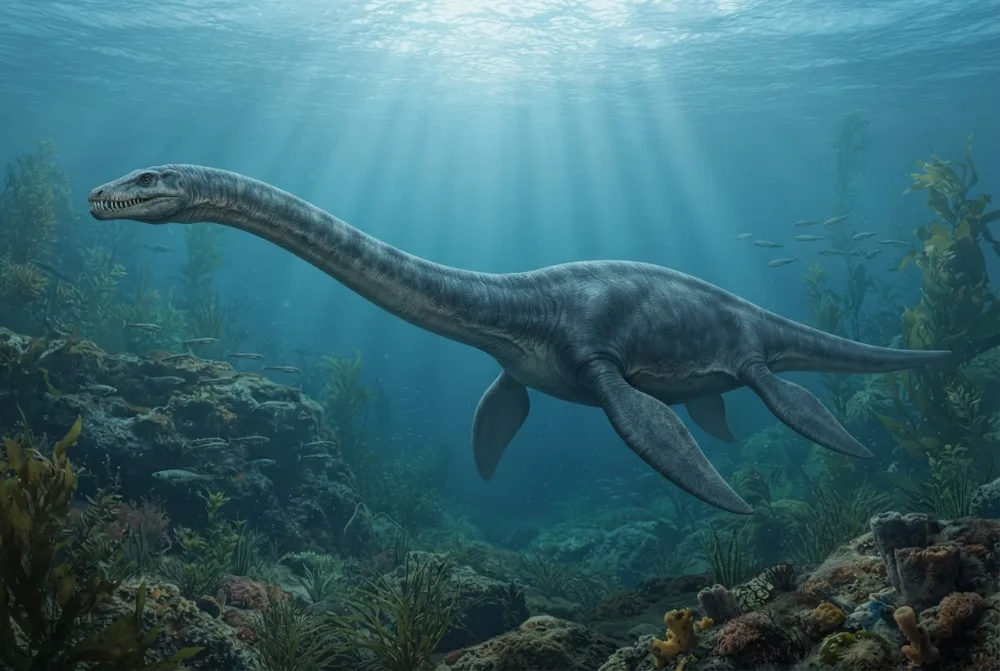
Traskasaura was a long-necked marine reptile that lived in the ocean around Vancouver Island, Canada, about 85 million years ago. It was a fierce predator with strong, sharp teeth that could crush the shells of its prey. This ancient sea monster is the official fossil of British Columbia!12
Berɛ bɛn na ɛtenaa ase?
Na ne kɛseɛ yɛ sɛn?
Na ne tenten yɛ sɛn?
 ne tenten te sɛ kaa 2.5 a wɔde agyina toatoa so🍌ne tenten te sɛ kwadu 67 a wɔde abɔ toatoa so🏊anka ɔbɛtumi aguare nsuguarebea kɛseɛ (50 m) tenten wɔ sikɛn 9 mu
Traskasaura kɛseɛ yɛ sɛn sɛ wode toto WO ho a?
Akontaa nko ara wɔ wo browser mu. Yɛnkora biribiara so, na yɛmmfa biribiara nkɔ baabiara.
Na ɛyɛ ntɛm sɛn?


Nsɛm a ɛyɛ anigye
Traskasaura had a very long neck with at least 50 bones, making it one of the longest-necked elasmosaurs.2
This marine reptile could swim downwards to dive on its prey from above, a hunting style that was unusual for elasmosaurs.2
The first Traskasaura fossil was found in 1988 by Michael Trask and his daughter Heather along the Puntledge River.1
Traskasaura was named the official Provincial Fossil of British Columbia in 2023, even before it got its scientific name.12
Scientists think Traskasaura had a strange mix of features from both early elasmosaurs and a later group called aristonectines.1
Three Traskasaura specimens have been found, including a nearly complete adult skeleton and a well-preserved juvenile.1
Nsɛm a wɔbisa bebree fa Traskasaura ho
?How big was Traskasaura?
About 12 metres (39 feet) long. That is roughly as long as a large bus.2
?What did Traskasaura eat?
It likely ate ammonites, shelled sea creatures that lived in the same ocean. Its strong, sharp teeth were perfect for crushing their shells.2
?Is Traskasaura a dinosaur?
No, it is a plesiosaur, a type of marine reptile that lived in the sea. It is not a dinosaur.1
Ma dino ho animdefoɔ
- Nyansahu din
- Traskasaura
- Obi a ɔtoo din
- O’Keefe et al. 20253
- Kuo
- Plesiosɔɔ
- Abusua / kuo kɛseɛ
- Elasmosauridae3
- Nkyekyɛmu
- Plesiosauria > Elasmosauridae > Sauropterygia3
- Abotan no mfeɛ
- mfeɛ ɔpepem 86 kɔsi 84 (Santonian)3
- Abotan nhyehyɛeɛ
- Haslam3
- Aman
- Kanada3
- Fɔsil nkyerɛwee
- 3 wɔ The Paleobiology Database mu3
- Nhunumu
- The first Traskasaura skeleton was discovered in 1988 by Michael Trask and his daughter Heather on the bank of the Puntledge River near Courtenay, British Columbia. It was officially named Traskasaura sandrae in 2025 by paleontologist F. Robin O'Keefe and colleagues.1
- Wɔda so gye ho akyinnye
- Scientists debate whether Traskasaura was a very early aristonectine or if its similar features evolved separately.1
Baabi a nsɛm no firi
- Traskasaura (en.wikipedia.org)
- Mystery of “very odd” elasmosaur finally solved: one of North America’s most famous fossils identified as new species - Taylor & Francis Newsroom (newsroom.taylorandfrancisgroup.com)
- Traskasaura in The Paleobiology Database (CC BY 4.0): mfeɛ, mmeaeɛ, abotan nhyehyɛeɛ, nkyekyɛmu.
Asɛm biara a ɛwɔ krataafa yi so wɔ nɔma a ɛkyerɛ baabi a ɛfiri. Sɛ yɛfom biribi a, kafra, yɛyɛ dino dɔfoɔ, yɛnyɛ nyansahu nsɛmma krataa. Ka kyerɛ yɛn wɔ [email protected] na yɛbɛsiesie.
 Ɔkɔm de Rex! Dino Wiki yɛ agya bi adwuma a ɔyɛɛ maa ne babarima a ɔdɔ dino. Ɛyɛ kwa, dawurubɔ biara nni mu, akyidifoɔ biara nni mu. Mpanimfoɔ bɛtumi ama Rex aduane kakra, na aboa ama Dino Wiki atena intanɛt so.Ma Rex aduane
 Elasmosaurus
 Pliosaurus
 Plesiosaurus
 Cimoliasaurus
 Colymbosaurus
 Trinacromerum
 Tyrannosaurus
 Triceratops
 Velociraptor
 Spinosaurus
 Ankylosaurus
 Parasaurolophus