 Woyɛ dino bɛn? Nsɛmmisa agoro
 Dino ko
 Dino mmirikatuo
 Dino agodie nketewa
 Stika nwoma
 Dino TOP nhyehyɛeɛ
 Ma me nwanwa!
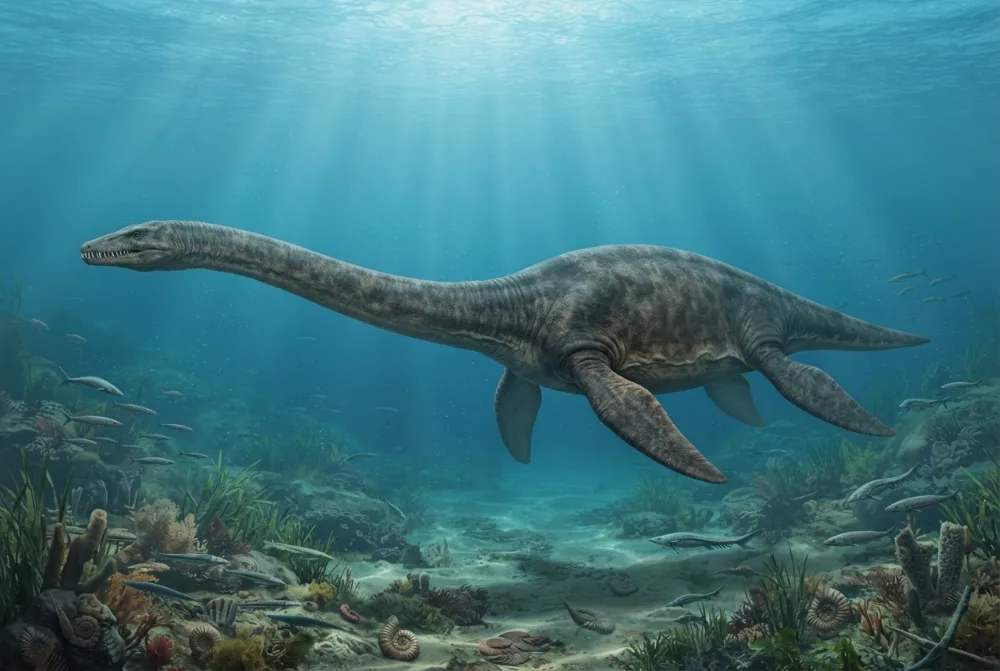
Tuarangisaurus
Tuarangisaurus was a long-necked marine reptile that swam in the seas around New Zealand 83 to 66 million years ago. It was not a dinosaur, but a plesiosaur, and it used its four flippers to paddle through the water. With a skull full of sharp teeth, it was a fierce hunter of fish and other sea creatures.51
Berɛ bɛn na ɛtenaa ase?
Na ne kɛseɛ yɛ sɛn?
Na ne tenten yɛ sɛn?
 ne tenten te sɛ nkraman 8 firi hwene kɔsi dua🍌ne tenten te sɛ kwadu 44 a wɔde abɔ toatoa so🏊anka ɔbɛtumi aguare nsuguarebea kɛseɛ (50 m) tenten wɔ sikɛn 7.5 mu
Tuarangisaurus kɛseɛ yɛ sɛn sɛ wode toto WO ho a?
Akontaa nko ara wɔ wo browser mu. Yɛnkora biribiara so, na yɛmmfa biribiara nkɔ baabiara.
Na ɛyɛ ntɛm sɛn?


Nsɛm a ɛyɛ anigye
Tuarangisaurus had a skull that was 37 centimetres (about 15 inches) long, with fused premaxillary bones and a low ridge on top.2
It had five large teeth in the upper jaw (premaxilla) and about 15 smaller teeth in the maxilla, plus 19 to 20 teeth in the lower jaw.2
The name Tuarangisaurus means 'ancient lizard' in the Māori language, reflecting its New Zealand discovery.1
Fossils of Tuarangisaurus have been found in marine rocks that were once part of a shallow sea, showing it lived in coastal waters.2
Scientists think Tuarangisaurus gave birth to live young, like other plesiosaurs, because it could not crawl onto land to lay eggs.2
The first fossils of Tuarangisaurus were found in the Mangahouanga Stream on the North Island of New Zealand, and included both adult and juvenile skull material.1
Tuarangisaurus is part of a group called elasmosaurids, which were plesiosaurs with very long necks.5
Nsɛm a wɔbisa bebree fa Tuarangisaurus ho
?How big was Tuarangisaurus?
Tuarangisaurus was a medium sized plesiosaur, measuring over 8 metres long, about the length of a school bus.43
?When did Tuarangisaurus live?
Tuarangisaurus lived during the Late Cretaceous period, about 78 million years ago, in the seas around New Zealand.4
?Was Tuarangisaurus a dinosaur?
No, Tuarangisaurus was not a dinosaur. It was a plesiosaur, a type of marine reptile with a very long neck, related to other elasmosaurids like Elasmosaurus.4
?What did Tuarangisaurus eat?
Tuarangisaurus was a hunter with sharp teeth, and it likely ate fish and other sea creatures, as mentioned in the page intro.3
Ma dino ho animdefoɔ
- Nyansahu din
- Tuarangisaurus
- Obi a ɔtoo din
- Wiffen and Moisley 19865
- Kuo
- Plesiosɔɔ
- Abusua / kuo kɛseɛ
- Elasmosauridae5
- Nkyekyɛmu
- Plesiosauria > Elasmosauridae > Sauropterygia5
- Abotan no mfeɛ
- mfeɛ ɔpepem 84 kɔsi 66 (Campanian / Maastrichtian)5
- Abotan nhyehyɛeɛ
- Tahora, Mocuio, Conway5
- Aman
- New Zealand, Angola, Argentina5
- Fɔsil nkyerɛwee
- 7 wɔ The Paleobiology Database mu5
- Nhunumu
- Tuarangisaurus was named in 1986 by Joan Wiffen and W. L. Moisley based on fossils found in the Mangahouanga Stream, North Island, New Zealand. The type species is Tuarangisaurus keyesi.51
- Wɔda so gye ho akyinnye
- Scientists are still debating exactly how Tuarangisaurus is related to other elasmosaurids, and whether fossils from Argentina and Angola belong to the same species.52
Baabi a nsɛm no firi
- Late Cretaceous reptiles (Families Elasmosauridae and Pliosauridae) from the Mangahouanga Stream, North Island, New Zealand (tandfonline.com)
- PBDB Taxon (paleobiodb.org)
- Tuarangisaurus (Wikipedia) (Wikipedia)
- Tuarangisaurus Facts for Kids (kids.kiddle.co)
- Tuarangisaurus in The Paleobiology Database (CC BY 4.0): mfeɛ, mmeaeɛ, abotan nhyehyɛeɛ, nkyekyɛmu.
Asɛm biara a ɛwɔ krataafa yi so wɔ nɔma a ɛkyerɛ baabi a ɛfiri. Sɛ yɛfom biribi a, kafra, yɛyɛ dino dɔfoɔ, yɛnyɛ nyansahu nsɛmma krataa. Ka kyerɛ yɛn wɔ [email protected] na yɛbɛsiesie.
 Ɔkɔm de Rex! Dino Wiki yɛ agya bi adwuma a ɔyɛɛ maa ne babarima a ɔdɔ dino. Ɛyɛ kwa, dawurubɔ biara nni mu, akyidifoɔ biara nni mu. Mpanimfoɔ bɛtumi ama Rex aduane kakra, na aboa ama Dino Wiki atena intanɛt so.Ma Rex aduane
 Elasmosaurus
 Pliosaurus
 Plesiosaurus
 Cimoliasaurus
 Colymbosaurus
 Trinacromerum
 Tyrannosaurus
 Triceratops
 Velociraptor
 Spinosaurus
 Ankylosaurus
 Parasaurolophus