 Woyɛ dino bɛn? Nsɛmmisa agoro
 Dino ko
 Dino mmirikatuo
 Dino agodie nketewa
 Stika nwoma
 Dino TOP nhyehyɛeɛ
 Ma me nwanwa!
Wintonotitan
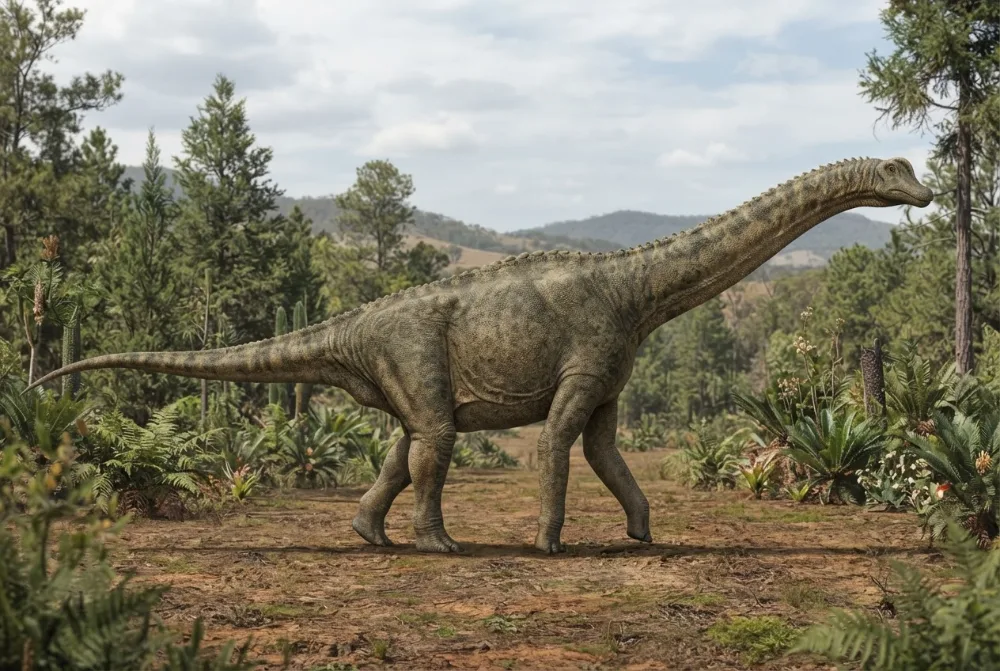
Wintonotitan was a long-necked sauropod that lived in Australia about 100 million years ago. It was a plant-eater with a relatively slender body and front legs longer than its back legs. Scientists call it 'Clancy' after a poem by Banjo Patterson.2
Berɛ bɛn na ɛtenaa ase?
Na ne kɛseɛ yɛ sɛn?
Na ne tenten yɛ sɛn?
Na ne korɔn yɛ sɛn?
Na ne mu yɛ duru sɛn?

 ne tenten te sɛ kaa 4 a wɔde agyina toatoa so🍌ne tenten te sɛ kwadu 89 a wɔde abɔ toatoa sone mu duru te sɛ kaa 10🍉ne mu duru te sɛ watamɛlɔn 3000🎒ne mu duru te sɛ sukuu klaas mũ 19 mu mmofra🐻❄️ne mu duru te sɛ polar bea 33🏃anka ɔbɛtumi atu mmirika mita 100 wɔ sikɛn 26 mu (onipa a ɔyɛ ntɛm sen biara hia 9.6)
Wintonotitan kɛseɛ yɛ sɛn sɛ wode toto WO ho a?
Akontaa nko ara wɔ wo browser mu. Yɛnkora biribiara so, na yɛmmfa biribiara nkɔ baabiara.
Na ɛyɛ ntɛm sɛn?


Nsɛm a ɛyɛ anigye
Wintonotitan was one of three new dinosaurs named from the Winton Formation in 2009, along with Diamantinasaurus and Australovenator.1
Its fossils were first discovered in the 1970s by Keith Watts, who donated them to the Queensland Museum. The species name wattsi honors him.2
Wintonotitan had unique tail bones that were biconvex (rounded on both ends) near the tip, which is different from most other sauropods.2
It lived in a river plain environment with large rivers, swamps, and lakes, after the Eromanga Sea had retreated. The climate was subtropical with abundant rainfall.2
Wintonotitan was a relatively small titanosaur, reaching about 15 to 16 metres long, while some other titanosaurs could grow to 35 metres.2
The fossils found include most of the front limb and shoulder girdle, tail vertebrae, ribs, and hip bones, but no skull or teeth have been discovered yet.2
Nsɛm a wɔbisa bebree fa Wintonotitan ho
?How much did Wintonotitan weigh?
About 10 to 15 tonnes (22,000 to 33,000 pounds). That is roughly as heavy as a large truck.2
?What plants did Wintonotitan eat?
It ate ferns, ginkgoes, conifers, cycads, and early flowering plants that grew in its river-plain home.2
?How did Wintonotitan get its name?
Its name means 'Winton titan', after the town of Winton in Queensland, Australia, where its fossils were found.3
?When did Wintonotitan live?
It lived during the Cretaceous Period, about 100 million years ago.2
Ma dino ho animdefoɔ
- Nyansahu din
- Wintonotitan
- Obi a ɔtoo din
- Hocknull et al. 20094
- Kuo
- Kɔn tenten
- Abusua / kuo kɛseɛ
- Diamantinasauria4
- Nkyekyɛmu
- Sauropodomorpha > Sauropoda > Macronaria4
- Abotan no mfeɛ
- mfeɛ ɔpepem 100 kɔsi 90 (Cenomanian / Turonian)4
- Abotan nhyehyɛeɛ
- Winton4
- Aman
- Ɔstrelia4
- Fɔsil nkyerɛwee
- 7 wɔ The Paleobiology Database mu4
- Nhunumu
- Wintonotitan was named by Scott Hocknull and colleagues in 2009 based on fossils found near Winton, Queensland. The bones were first collected in the 1970s by Keith Watts and later excavated by the Queensland Museum in the 1980s.12
- Wɔda so gye ho akyinnye
- Scientists are not sure what Wintonotitan's skull looked like because no skull bones have been found. They also debate whether it was a basal titanosauriform or a more derived titanosaur.21
Baabi a nsɛm no firi
- New Mid-Cretaceous (Latest Albian) Dinosaurs from Winton, Queensland, Australia | PLOS One (journals.plos.org)
- Dinosaurs - Wintonotitan wattsi - The Australian Museum (australian.museum)
- Wintonotitan (Wikipedia) (Wikipedia)
- Wintonotitan in The Paleobiology Database (CC BY 4.0): mfeɛ, mmeaeɛ, abotan nhyehyɛeɛ, nkyekyɛmu.
Asɛm biara a ɛwɔ krataafa yi so wɔ nɔma a ɛkyerɛ baabi a ɛfiri. Sɛ yɛfom biribi a, kafra, yɛyɛ dino dɔfoɔ, yɛnyɛ nyansahu nsɛmma krataa. Ka kyerɛ yɛn wɔ [email protected] na yɛbɛsiesie.
 Ɔkɔm de Rex! Dino Wiki yɛ agya bi adwuma a ɔyɛɛ maa ne babarima a ɔdɔ dino. Ɛyɛ kwa, dawurubɔ biara nni mu, akyidifoɔ biara nni mu. Mpanimfoɔ bɛtumi ama Rex aduane kakra, na aboa ama Dino Wiki atena intanɛt so.Ma Rex aduane
 Brachiosaurus
 Diplodocus
 Brontosaurus
 Argentinosaurus
 Camarasaurus
 Morosaurus
 Tyrannosaurus
 Triceratops
 Velociraptor
 Spinosaurus
 Ankylosaurus
 Parasaurolophus