 Woyɛ dino bɛn? Nsɛmmisa agoro
 Dino ko
 Dino mmirikatuo
 Dino agodie nketewa
 Stika nwoma
 Dino TOP nhyehyɛeɛ
 Ma me nwanwa!
Xingxiulong
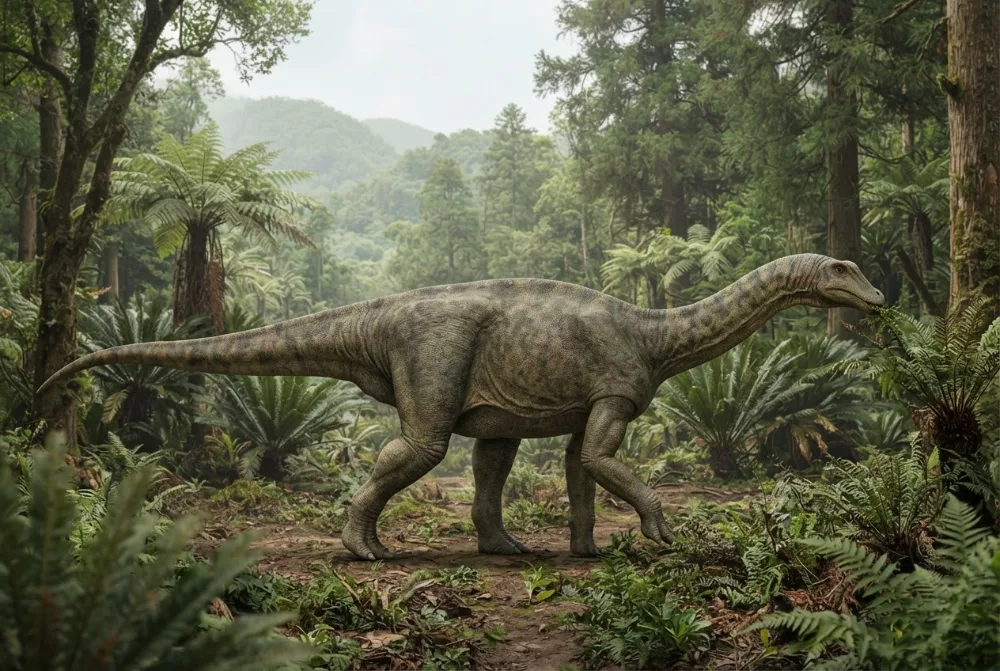
Xingxiulong was a long-necked plant-eater that lived in China during the Early Jurassic. It walked on two legs and had a strong, heavy body like a small sauropod. Three skeletons were found buried together, including two adults and a teenager.21
Berɛ bɛn na ɛtenaa ase?
Na ne kɛseɛ yɛ sɛn?
Na ne tenten yɛ sɛn?
Na ne korɔn yɛ sɛn?
 ne tenten te sɛ nkraman 5 firi hwene kɔsi dua🍌ne tenten te sɛ kwadu 28 a wɔde abɔ toatoa so🏃anka ɔbɛtumi atu mmirika mita 100 wɔ sikɛn 10 mu (onipa a ɔyɛ ntɛm sen biara hia 9.6)
Xingxiulong kɛseɛ yɛ sɛn sɛ wode toto WO ho a?
Akontaa nko ara wɔ wo browser mu. Yɛnkora biribiara so, na yɛmmfa biribiara nkɔ baabiara.
Na ɛyɛ ntɛm sɛn?


Nsɛm a ɛyɛ anigye
Xingxiulong had four vertebrae in its sacrum (hip region), which is a feature usually seen in true sauropods.21
Its pubis (hip bone) had a very long top plate, about 40% of the total length of the bone.2
Xingxiulong was bipedal, meaning it walked on two legs, unlike later sauropods that used all four legs.1
The three skeletons were found together in purple silty mudstone from the Shawan Member of the Lufeng Formation.21
One skeleton was about 14% smaller than the others and had unfused vertebrae, showing it was a subadult.21
Xingxiulong is one of the oldest and most primitive members of the group Sauropodiformes, which includes all sauropods.2
Nsɛm a wɔbisa bebree fa Xingxiulong ho
?How big was Xingxiulong?
About 4 to 5 metres (13 to 16 ft) long and 1 to 1.5 metres (3.3 to 4.9 ft) tall at the hip for the first species. A second species was larger, at 8 to 10 metres (26 to 33 ft) long.12
?Did Xingxiulong walk on two legs?
Yes, it was bipedal. Unlike later sauropods that used all four legs, Xingxiulong walked on two legs.12
?What did Xingxiulong eat?
It was a plant-eater. Its strong, heavy body and large gut helped it digest tough plants.1
Ma dino ho animdefoɔ
- Nyansahu din
- Xingxiulong
- Obi a ɔtoo din
- Wang et al. 20173
- Kuo
- Kɔn tenten
- Abusua / kuo kɛseɛ
- Sauropodiformes3
- Nkyekyɛmu
- Sauropodomorpha3
- Abotan no mfeɛ
- mfeɛ ɔpepem 201 kɔsi 175 (Hettangian / Toarcian)3
- Abotan nhyehyɛeɛ
- Lufeng3
- Aman
- Kyaena3
- Fɔsil nkyerɛwee
- 2 wɔ The Paleobiology Database mu3
- Nhunumu
- Xingxiulong was named in 2017 by Wang, You, and Wang. The fossils were dug up in 2013 near Sankeshu Village in Lufeng County, China.21
- Wɔda so gye ho akyinnye
- Scientists are not sure whether Xingxiulong was more closely related to Jingshanosaurus or to other sauropodiformes.1
Baabi a nsɛm no firi
- Xingxiulong (en.wikipedia.org)
- A new basal sauropodiform dinosaur from the Lower Jurassic of Yunnan Province, China | Scientific Reports (nature.com)
- Xingxiulong in The Paleobiology Database (CC BY 4.0): mfeɛ, mmeaeɛ, abotan nhyehyɛeɛ, nkyekyɛmu.
Asɛm biara a ɛwɔ krataafa yi so wɔ nɔma a ɛkyerɛ baabi a ɛfiri. Sɛ yɛfom biribi a, kafra, yɛyɛ dino dɔfoɔ, yɛnyɛ nyansahu nsɛmma krataa. Ka kyerɛ yɛn wɔ [email protected] na yɛbɛsiesie.
 Ɔkɔm de Rex! Dino Wiki yɛ agya bi adwuma a ɔyɛɛ maa ne babarima a ɔdɔ dino. Ɛyɛ kwa, dawurubɔ biara nni mu, akyidifoɔ biara nni mu. Mpanimfoɔ bɛtumi ama Rex aduane kakra, na aboa ama Dino Wiki atena intanɛt so.Ma Rex aduane
 Brachiosaurus
 Diplodocus
 Brontosaurus
 Argentinosaurus
 Camarasaurus
 Morosaurus
 Dilophosaurus
 Stenopterygius
 Dorygnathus
 Scutellosaurus
 Sinosaurus
 Temnodontosaurus