 Woyɛ dino bɛn? Nsɛmmisa agoro
 Dino ko
 Dino mmirikatuo
 Dino agodie nketewa
 Stika nwoma
 Dino TOP nhyehyɛeɛ
 Ma me nwanwa!
Berɛ bɛn na ɛtenaa ase?

Na ne kɛseɛ yɛ sɛn?
Na ne tenten yɛ sɛn?
Yulong kɛseɛ yɛ sɛn sɛ wode toto WO ho a?
Akontaa nko ara wɔ wo browser mu. Yɛnkora biribiara so, na yɛmmfa biribiara nkɔ baabiara.
Na ɛyɛ ntɛm sɛn?


Nsɛm a ɛyɛ anigye
Yulong is known from several juvenile skeletons and even an embryo inside an egg, making it one of the best-known baby oviraptorids.1
The name Yulong comes from 'Yu', the short name for Henan Province, and 'long', meaning dragon in Chinese.1
Most Yulong individuals were only 25 to 50 centimetres long, about the size of a chicken.1
Scientists think Yulong was more advanced than the giant oviraptorid Gigantoraptor, but its exact family tree is still uncertain.1
One nest of 26 eggs was found, and one of the eggs contained a well-preserved Yulong embryo.1
Yulong lived during the very end of the Age of Dinosaurs, about 72 to 66 million years ago.3
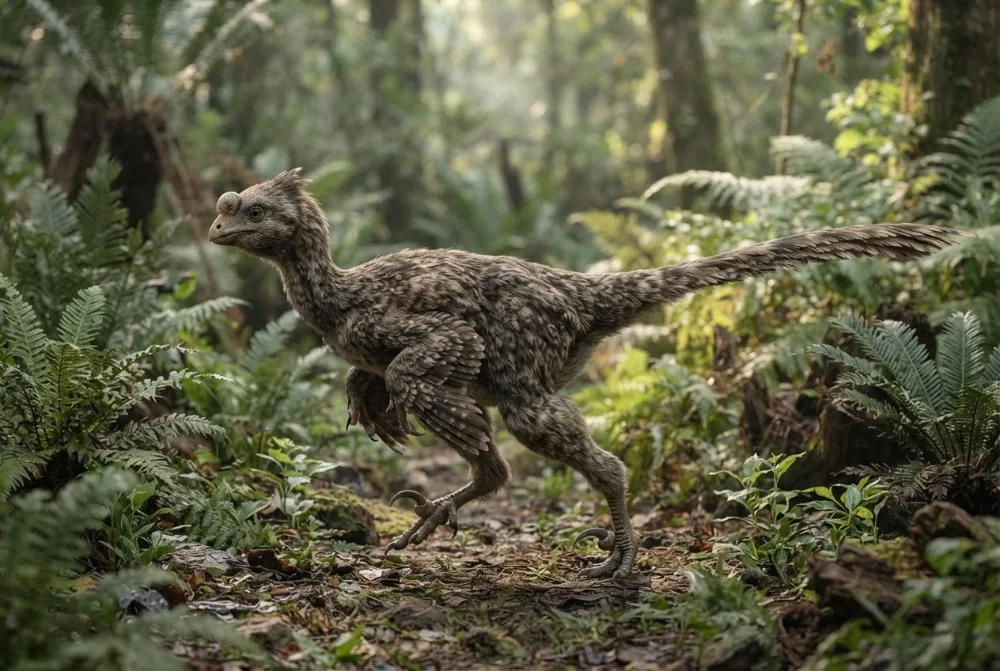
Ma dino ho animdefoɔ
- Nyansahu din
- Yulong
- Obi a ɔtoo din
- Lü et al. 20133
- Kuo
- Dino nwonwa a wɔwɔ ntakra
- Abusua / kuo kɛseɛ
- Oviraptoridae3
- Nkyekyɛmu
- Theropoda > Oviraptorosauria3
- Abotan no mfeɛ
- mfeɛ ɔpepem 72 kɔsi 66 (Maastrichtian)3
- Abotan nhyehyɛeɛ
- Qiupa3
- Aman
- Kyaena3
- Fɔsil nkyerɛwee
- 2 wɔ The Paleobiology Database mu3
- Nhunumu
- Yulong was named in 2013 by Junchang Lü and colleagues based on five juvenile skeletons found near Qiupa Town in Henan, China.12
- Wɔda so gye ho akyinnye
- Scientists are not sure exactly where Yulong fits on the oviraptorid family tree, because the known specimens are mostly young and may look more primitive than adults.1
Baabi a nsɛm no firi
- Yulong mini (en.wikipedia.org)
- PaleoCodex :: Yulong (paleocodex.com)
- Yulong in The Paleobiology Database (CC BY 4.0): mfeɛ, mmeaeɛ, abotan nhyehyɛeɛ, nkyekyɛmu.
Asɛm biara a ɛwɔ krataafa yi so wɔ nɔma a ɛkyerɛ baabi a ɛfiri. Sɛ yɛfom biribi a, kafra, yɛyɛ dino dɔfoɔ, yɛnyɛ nyansahu nsɛmma krataa. Ka kyerɛ yɛn wɔ [email protected] na yɛbɛsiesie.
 Ɔkɔm de Rex! Dino Wiki yɛ agya bi adwuma a ɔyɛɛ maa ne babarima a ɔdɔ dino. Ɛyɛ kwa, dawurubɔ biara nni mu, akyidifoɔ biara nni mu. Mpanimfoɔ bɛtumi ama Rex aduane kakra, na aboa ama Dino Wiki atena intanɛt so.Ma Rex aduane
 Therizinosaurus
 Oviraptor
 Chirostenotes
 Citipes
 Leptorhynchos
 Avimimus
 Tyrannosaurus
 Triceratops
 Velociraptor
 Spinosaurus
 Ankylosaurus
 Parasaurolophus