
Colymbosaurus
Colymbosaurus was a plesiosaur, a marine reptile that swam in the seas with a long neck and flippers. It was not a dinosaur, but a fierce hunter of the ocean.2
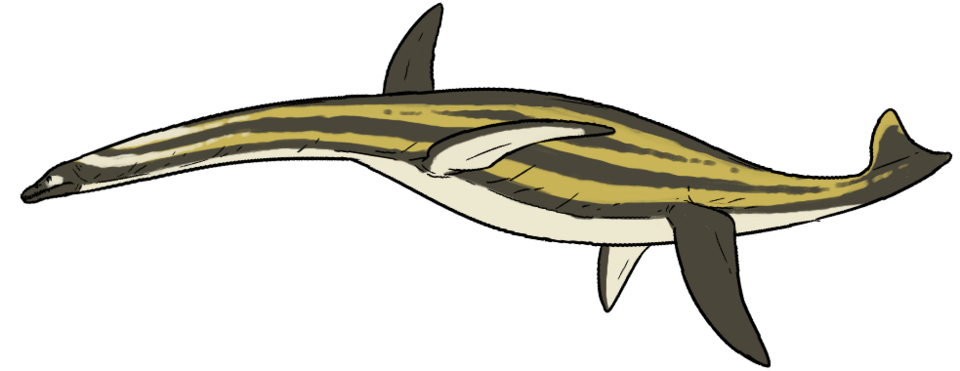
When did it live?
Fun facts
Colymbosaurus lived from about 168 to 113 million years ago, during the Jurassic and Cretaceous periods.2
It belonged to a group called Cryptoclididae, which were plesiosaurs with long necks and small heads.1
There were at least two valid species: Colymbosaurus megadeirus and Colymbosaurus svalbardensis.1
Colymbosaurus trochanterius is not considered a valid species, but some fossils are still referred to Colymbosaurus.1
Fossils have been found in the Kimmeridge Clay Formation in the UK, which was a shallow sea at the time.1
Colymbosaurus was actively mobile and lived in the water, likely swimming near the surface.2
Myth buster
Myth: Some people think Colymbosaurus was a dinosaur.
Truth: Colymbosaurus was a plesiosaur, a marine reptile, not a dinosaur.2
For dino experts
- Scientific name
- Colymbosaurus
- Named by
- Seeley 18742
- Group
- Plesiosaurs
- Family / clade
- Cryptoclididae2
- Classification
- Plesiosauria > Sauropterygia2
- Age of the rocks
- 168 to 113 million years (Bathonian to Aptian)2
- Rock formations
- Kimmeridge Clay, Portland Stone, Agardhfjellet2
- Countries
- United Kingdom, Norway, France, Russia2
- Fossil records
- 18 in the Paleobiology Database2
- Discovery
- Colymbosaurus was named by Harry Seeley in 1874 based on fossils from the UK.2
- Still debated
- Scientists debate which species belong to Colymbosaurus, because some fossils are incomplete and hard to compare.1
Where the facts come from
- Anatomy of Colymbosaurus megadeirus (Reptilia, Plesiosauria) from the Kimmeridge Clay Formation of the U.K., and high diversity among Late Jurassic plesiosauroids (tandfonline.com)
- Colymbosaurus in The Paleobiology Database (CC BY 4.0): age, places, rock formations, classification.
Every fact on this page has a number that points to its source. If we got something wrong, sorry, we are dino fans, not a science journal. Tell us at [email protected] and we will fix it.
 Rex is hungry! Dino Wiki is free with no ads. Grown-ups can feed Rex a snack to keep it that way.Feed Rex
 Elasmosaurus
 Pliosaurus
 Plesiosaurus
 Cimoliasaurus
 Trinacromerum
 Cryptoclidus
 Stegosaurus
 Iguanodon
 Archaeopteryx
 Giganotosaurus
 Microraptor
 Deinonychus