 Get the Dino Wiki app
 Home
 All dinos
 Dino groups
 Explore
 Dinos by country
 Dino vs dino
 How big were they?
 Dinos A to Z
 Who ate what?
 What dino are you? Quiz
 Dino games
 Dino battle
 Dino race
 Dino mini-games
 Sticker album
 Dino TOP lists
 Timeline
 Surprise me!
 Language: English
 Uzbekistan
When did it live?
Explorornis: 94 to 90 million years ago

How big was it?
How long was it?
How tall was it?
estimate
How big was Explorornis compared to YOU?
Just maths in your browser. Nothing is saved or sent anywhere.
How fast was it?


Fun facts
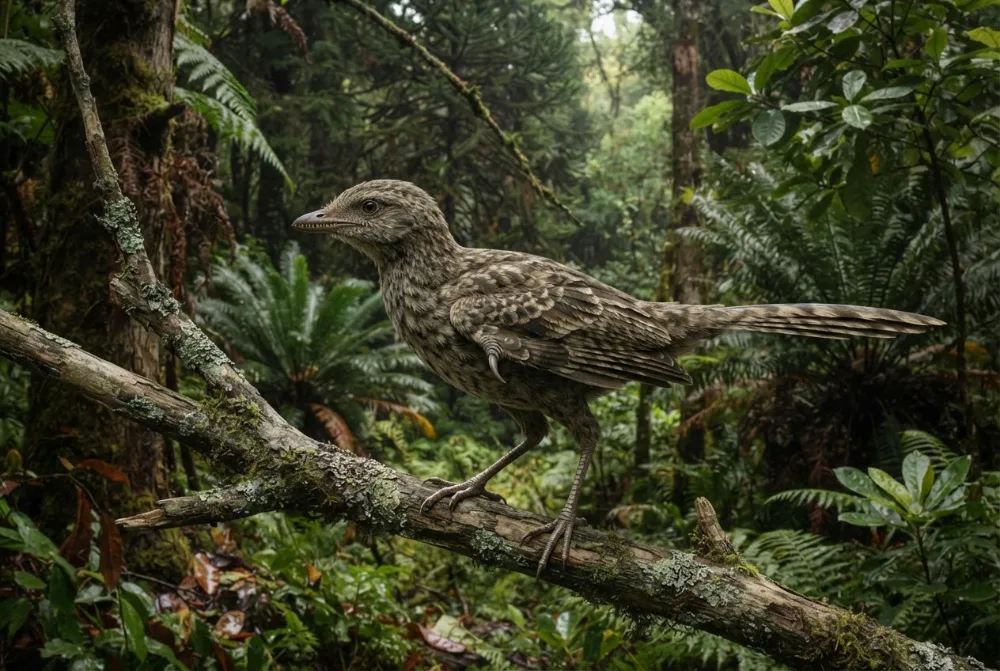
Explorornis is known only from its coracoid bones, which are part of the shoulder.1
The name Explorornis means 'discovered bird' in Latin and Greek.1
Two species are known: E. nessovi and E. walkeri, both named after famous paleontologists.1
E. walkeri was originally thought to belong to the South American bird Enantiornis, but later scientists moved it to Explorornis.1
Get the Dino Wiki app
Every dino, the quiz and the games on your phone or tablet. The full version also works offline in your language.

Most asked questions about Explorornis
For dino experts
- Scientific name
- Explorornis
- Named by
- Panteleyev 19983
- Group
- Early birds
- Family / clade
- Alexornithidae3
- Classification
- Theropoda > Avialae3
- Age of the rocks
- 94 to 90 million years (Turonian)3
- Rock formations
- Bissekty3
- Countries
- Uzbekistan3
- Fossil records
- 3 in the Paleobiology Database3
- Discovery
- Explorornis was named by Russian paleontologist Andrey Panteleyev in 1998. The type species is E. nessovi, named after Lev Alexandrovich Nesov.12
- Still debated
- Scientists are not sure exactly where Explorornis fits in the bird family tree because only its shoulder bones have been found.1
Where the facts come from
- Explorornis (en.wikipedia.org)
- PBDB Taxon (paleobiodb.org)
- Explorornis in The Paleobiology Database (CC BY 4.0): age, places, rock formations, classification.
Every fact on this page has a number that points to its source. If we got something wrong, sorry, we are dino fans, not a science journal. Tell us at hello@dinowiki.app and we will fix it.
 Archaeopteryx
 Hesperornis
 Ichthyornis
 Baptornis
 Jurapteryx
 Gobipteryx
 Tyrannosaurus
 Triceratops
 Velociraptor
 Spinosaurus
 Ankylosaurus
 Parasaurolophus