
Palintropus
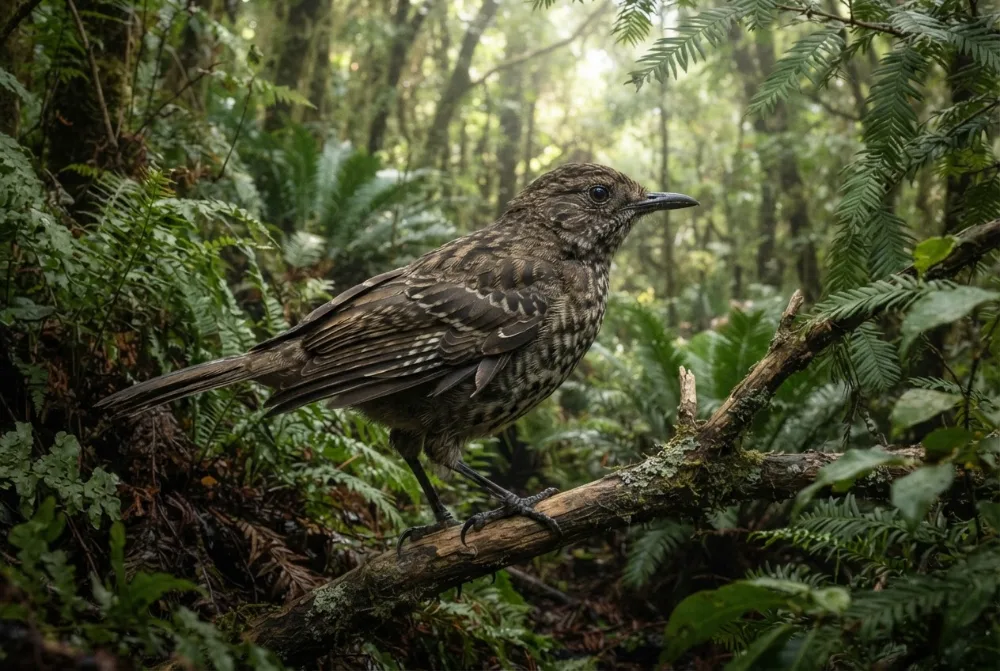
Palintropus was a small bird that lived at the end of the Age of Dinosaurs. It could fly and probably ate plants. Its fossils are very rare, so scientists are still figuring out exactly what kind of bird it was.12
When did it live?
Fun facts
Palintropus lived during the Late Cretaceous, about 76.5 to 66 million years ago.1
Only a few bones of Palintropus have been found, including a coracoid (a shoulder bone) and a scapula (a shoulder blade).1
Scientists disagree about what kind of bird Palintropus was. Some think it was an early relative of chickens and turkeys (galliforms), while others think it was related to shorebirds like gulls and auks.1
The first Palintropus fossil was originally named Cimolopteryx retusa by Othniel Charles Marsh in 1892.1
Palintropus was given its current name by Pierce Brodkorb in 1970.1
One study in 2009 suggested Palintropus was a primitive bird related to Apsaravis, and placed it in a new group called Palintropiformes.1

Ask Rex about Palintropus
Rex only answers questions about this page. 3 questions a day.
Rex is an AI and can make mistakes. He runs on servers in the EU and questions are never saved. Never type your name or other personal things.
For dino experts
- Scientific name
- Palintropus
- Named by
- Brodkorb 19702
- Group
- Early birds
- Family / clade
- Quercymegapodiidae2
- Classification
- Theropoda > Avialae2
- Age of the rocks
- 84 to 72 million years (Campanian)2
- Rock formations
- Dinosaur Park2
- Countries
- Canada2
- Fossil records
- 1 in the Paleobiology Database2
- Discovery
- The first Palintropus fossil, a shoulder bone, was found in the Lance Formation of Wyoming and named Cimolopteryx retusa by Othniel Charles Marsh in 1892. Pierce Brodkorb gave it the name Palintropus in 1970.1
- Still debated
- Scientists are still debating whether Palintropus was an early galliform (like a chicken) or a more primitive bird related to shorebirds or Apsaravis.1
Where the facts come from
- Palintropus (en.wikipedia.org)
- Palintropus in The Paleobiology Database (CC BY 4.0): age, places, rock formations, classification.
Every fact on this page has a number that points to its source. If we got something wrong, sorry, we are dino fans, not a science journal. Tell us at [email protected] and we will fix it.
 Rex is hungry! Dino Wiki is a dad's project for his dino-loving son, free with no ads. Grown-ups can feed Rex a snack to help keep it online.Feed Rex
 Archaeopteryx
 Hesperornis
 Ichthyornis
 Baptornis
 Jurapteryx
 Gobipteryx
 Tyrannosaurus
 Triceratops
 Velociraptor
 Spinosaurus
 Ankylosaurus
 Parasaurolophus