 Zer dino zara? Galdetegia
 Dino borroka
 Dino lasterketa
 Dino minijokoak
 Pegatina-albuma
 Dino TOP zerrendak
 Harritu nazazu!
Orienantius
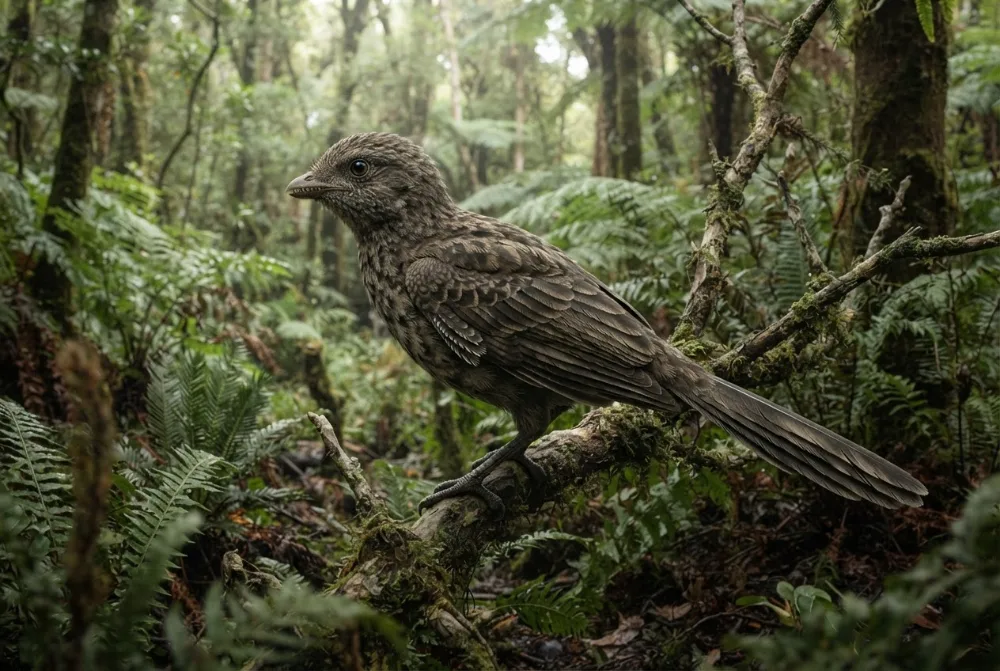
Orienantius was a tiny bird that lived about 130 million years ago in what is now China. It had feathers and could fly, but it was not like modern birds, it belonged to an ancient group called enantiornithines, which had a different way of flying.21
Noiz bizi izan zen?
Zein azkarra zen?


Datu dibertigarriak
Orienantius is known from two nearly complete skeletons that still have feathers and even soft tissues like wing skin preserved.12
It was about the size of a modern Eurasian Skylark, a small songbird.1
Orienantius could fly with high maneuverability and used a flap-gliding style, like some birds today.2
The holotype (main specimen) was not fully grown when it died, some of its bones had not yet fused together.1
Its name comes from Latin and Greek words meaning 'east' and 'opposite', referring to its discovery in East Asia and its group Enantiornithes.1
Orienantius lived during the Early Cretaceous, making it one of the oldest known enantiornithine birds.2
Dino adituentzat
- Izen zientifikoa
- Orienantius
- Izendatzailea:
- Liu et al. 20193
- Taldea
- Lehen hegaztiak
- Familia / klada
- Enantiornithes3
- Sailkapena
- Theropoda > Avialae3
- Arroken adina
- 133 eta 126 milioi urte artean (Hauterivian)3
- Arroka-formazioak
- Huajiying3
- Herrialdeak
- Txina3
- Fosil-erregistroak
- 1 The Paleobiology Database datu-basean3
- Aurkikuntza
- Orienantius was named in 2019 by Di Liu and colleagues based on two fossils from the Huajiying Formation in Hebei, China. The species name ritteri honors German scientist Johann Wilhelm Ritter.12
- Oraindik eztabaidagai
- Scientists are still debating exactly how Orienantius and other early enantiornithines evolved their flight abilities, since they show features of both primitive and advanced birds.2
Datuak nondik datozen
- Orienantius (en.wikipedia.org)
- Soft tissue preservation in two new enantiornithine specimens (Aves) from the Lower Cretaceous Huajiying Formation of Hebei Province, China (sciencedirect.com)
- Orienantius in The Paleobiology Database (CC BY 4.0): adina, tokiak, arroka-formazioak, sailkapena.
Orrialde honetako datu bakoitzak zenbaki bat du, bere iturrira eramaten zaituena. Zerbait gaizki badugu, barkatu, dino-zaleak gara, ez zientzia-aldizkari bat. Idatzi [email protected] helbidera eta konponduko dugu.
 Rex gose da! Dino Wiki aita baten proiektua da, dinosauroak maite dituen bere semearentzat, doakoa, iragarkirik eta jarraitzailerik gabe. Helduek mokadutxo bat eman diezaiokete Rexi, sarean jarraitzen laguntzeko.Eman jaten Rexi
 Archaeopteryx
 Hesperornis
 Ichthyornis
 Baptornis
 Jurapteryx
 Gobipteryx
 Stegosaurus
 Iguanodon
 Giganotosaurus
 Microraptor
 Deinonychus
 Baryonyx