 Kwizi: Oli dayinoso ki?
 Olutalo lwa dayinoso
 Empaka z'emisinde gya dayinoso
 Emizannyo emitono egya dayinoso
 Alubaamu ya sitika
 Enkalala za dayinoso eza TOP
 Mpa ekyewuunyisa!
Geosternbergia
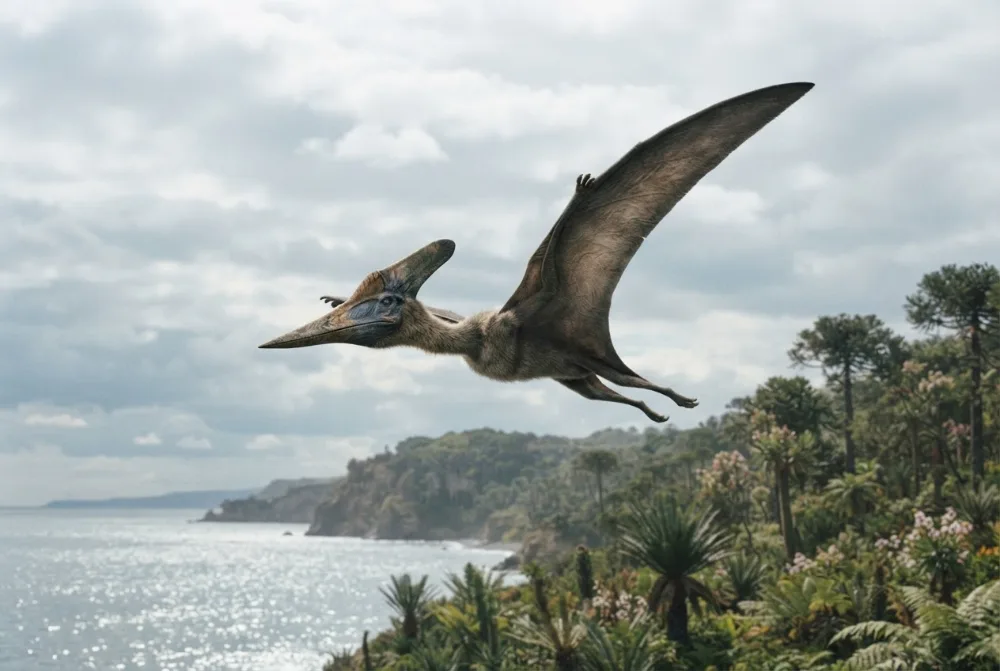
Geosternbergia was a flying reptile that soared over the ancient seas of North America. It had a long, toothless beak and a big crest on its head. It was a pterosaur, not a dinosaur.3
Yabeerawo ddi?
Yali munene atya?
Ebiwaawaatiro bye byali bigazi kwenkana wa?
 ebiwaawaatiro bigazi ng'obugaali 3 mu lunyiriri⚽yandibuuse okusomoka ekisaawe ky'omupiira kyonna mu sikonda 5.1
Geosternbergia yali munene atya bw'ogeraageranya ku GGWE?
Kubala kwokka mu browser yo. Tewali kiterekebwa wadde okusindikibwa wonna.
Yali wa mbiro kwenkana wa?


Ebyewuunyisa
Geosternbergia lived during the Campanian age, about 83 to 72 million years ago.3
Its fossils were found in the Pierre Shale Formation, which was once the bottom of a shallow sea.3
The name Geosternbergia honors Charles Sternberg, a famous fossil hunter.3
Geosternbergia belonged to the family Pteranodontidae, which includes large, toothless pterosaurs.3
Only one species of Geosternbergia is known: Geosternbergia maiseyi.1
The type specimen of Geosternbergia maiseyi is a partial skull, stored at the University of Kansas.1
Ebibuuzo ebisinga okubuuzibwa ku Geosternbergia
?How big was Geosternbergia?
Geosternbergia was among the largest pterosaurs, with a wingspan of up to 6 metres (20 ft) in males. Most adults had wingspans between 3 and 6 metres (9.8 and 19.7 ft).2
?Did Geosternbergia have teeth?
No, Geosternbergia had a toothless beak made of solid, bony margins, similar to modern birds. Its beak was long, slender, and ended in a sharp point.2
?What did Geosternbergia eat?
Scientists think Geosternbergia ate fish and other sea creatures, because it lived over shallow seas and had a long, toothless beak like a bird that catches fish. The sources do not give a direct answer, but its habitat and beak shape suggest a fish-eating diet.2
?Is Geosternbergia a dinosaur?
No, Geosternbergia is a pterosaur, a flying reptile that lived at the same time as dinosaurs but is not a dinosaur.2
?When did Geosternbergia live?
Geosternbergia lived during the Late Cretaceous period, about 88 to 80.5 million years ago. The species G. maiseyi lived between 81.5 and 80.5 million years ago.23
?Why did Geosternbergia have a crest?
The crest on Geosternbergia's head was probably used for display, like to attract mates or show off to other pterosaurs. It may have also had other functions, but scientists are not sure.2
Eri abakugu mu dayinoso
- Erinnya lya ssaayansi
- Geosternbergia
- Yatuumibwa
- Miller 19783
- Ekibinja
- Ebyewalula ebibuuka
- Ekika / ekibinja
- Pteranodontidae3
- Engabanya
- Pterosauria > Pterodactyloidea > Pteranodontidae3
- Emyaka gy'enjazi
- emyaka obukadde 84 okutuuka ku 72 (Campanian)3
- Ensengeka z'enjazi
- Pierre Shale3
- Ensi
- Amerika3
- Ebisigalira ebyazuulibwa
- 1 mu The Paleobiology Database3
- Okuzuulibwa
- Geosternbergia was named by Halszka Osmólska in 1978, based on fossils found in South Dakota. The species G. maiseyi was named by Alexander Kellner in 2010.31
Ebituufu gye biva
- PBDB Taxon (paleobiodb.org)
- Pteranodon sternbergi (en.wikipedia.org)
- Geosternbergia in The Paleobiology Database (CC BY 4.0): emyaka, ebifo, ensengeka z'enjazi, engabanya.
Buli kituufu ku lupapula luno kirina ennamba eraga ensibuko yaakyo. Bwe tuba nga tukoze ensobi, tusonyiwe, ffe tuli bawagizi ba dayinoso, so si magazini ya ssaayansi. Tubuulire ku [email protected] tujja kugitereeza.
 Rex alumwa enjala! Dino Wiki pulojekiti ya taata eri mutabani we ayagala ennyo dayinoso, ya bwereere, tewali bulango era tewali bikulondoola. Abakulu basobola okuwa Rex akantu ak'okulya okuyamba okugikuuma ku mutimbagano.Liisa Rex
 Pteranodon
 Quetzalcoatlus
 Dorygnathus
 Rhamphorhynchus
 Anhanguera
 Pterodactylus
 Tyrannosaurus
 Triceratops
 Velociraptor
 Spinosaurus
 Ankylosaurus
 Parasaurolophus