 Kwizi: Oli dayinoso ki?
 Olutalo lwa dayinoso
 Empaka z'emisinde gya dayinoso
 Emizannyo emitono egya dayinoso
 Alubaamu ya sitika
 Enkalala za dayinoso eza TOP
 Mpa ekyewuunyisa!
Petrodactyle
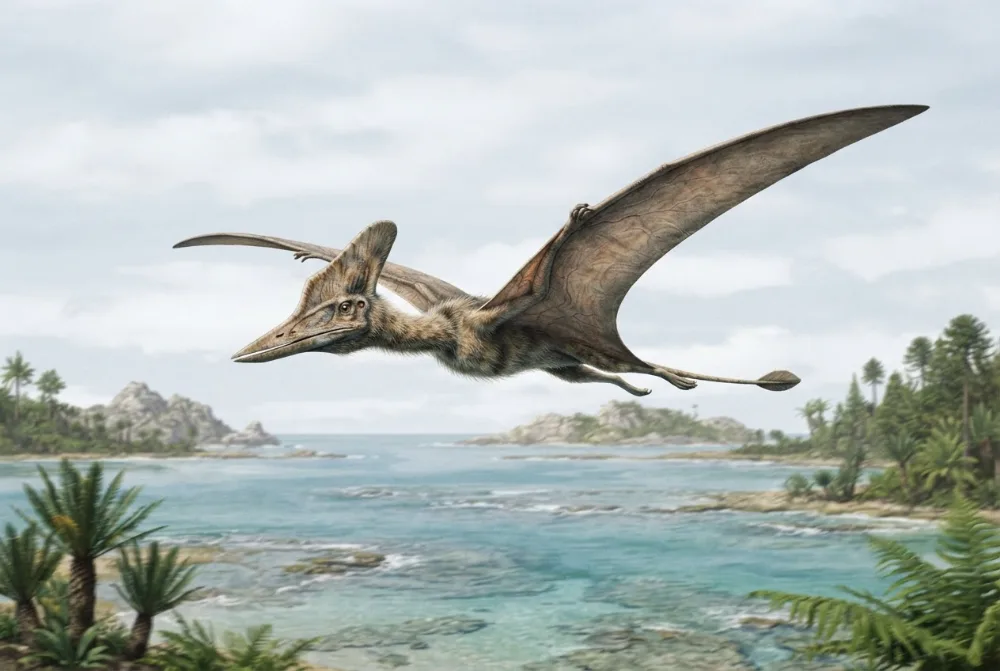
Petrodactyle was a flying reptile that lived in the Late Jurassic period, about 150 million years ago. It had a wingspan of about 2.1 metres (6.9 feet), making it one of the largest pterosaurs from the Solnhofen area of Germany. It also had one of the biggest bony crests on its head of any Jurassic pterosaur.1
Yabeerawo ddi?
Yali munene atya?
Ebiwaawaatiro bye byali bigazi kwenkana wa?
 obuwanvu nga kkapa 4 ab'awaka, ennyindo ku mukira⚽yandibuuse okusomoka ekisaawe ky'omupiira kyonna mu sikonda 7.9
Petrodactyle yali munene atya bw'ogeraageranya ku GGWE?
Kubala kwokka mu browser yo. Tewali kiterekebwa wadde okusindikibwa wonna.
Yali wa mbiro kwenkana wa?


Ebyewuunyisa
Petrodactyle is one of the largest pterosaurs known from the Jurassic period, with a wingspan of about 2.1 metres (6.9 feet).1
It had a large bony crest on the back of its skull, which helped give it a powerful bite.1
Its teeth were short and spike-like, and only found in the front half of its jaws. This suggests it grabbed prey with a strong grip.1
Petrodactyle had long legs and could probably wade in shallow water to hunt.1
The only known fossil was found in 2010 in a public quarry in Germany. It is a mostly complete skeleton of a subadult.1
The name Petrodactyle means 'stone finger', a nod to the first pterosaur ever named, Pterodactylus.1
Ebibuuzo ebisinga okubuuzibwa ku Petrodactyle
?What did Petrodactyle eat?
Petrodactyle was a carnivore, likely feeding on small fish, crustaceans, and other small prey. Its strong bite and spike-like teeth helped it grab slippery food.1
?How big was Petrodactyle?
Petrodactyle had a wingspan of about 2.1 metres (6.9 feet), making it one of the largest pterosaurs from the Solnhofen area and one of the largest Jurassic pterosaurs.21
?Where did Petrodactyle live?
Petrodactyle lived in what is now Germany about 150 million years ago, during the Late Jurassic. Its fossils were found in the Mörnsheim Formation in Bavaria.23
?Why did Petrodactyle have a crest?
The large bony crest on Petrodactyle's skull likely helped anchor jaw muscles, giving it a stronger bite. It may have also been used for display.1
Eri abakugu mu dayinoso
- Erinnya lya ssaayansi
- Petrodactyle
- Yatuumibwa
- Hone et al. 20234
- Ekibinja
- Ebyewalula ebibuuka
- Ekika / ekibinja
- Gallodactylidae4
- Engabanya
- Pterosauria > Pterodactyloidea4
- Emyaka gy'enjazi
- emyaka obukadde 149 okutuuka ku 145 (Tithonian)4
- Ensengeka z'enjazi
- Mörnsheim4
- Ensi
- Bugirimaani4
- Ebisigalira ebyazuulibwa
- 1 mu The Paleobiology Database4
- Okuzuulibwa
- Petrodactyle was named in 2023 by David Hone, René Lauer, and Frederik Spindler. The only known fossil was found in 2010 in a public quarry in Bavaria, Germany, by Günther Zehetner.1
- Kikyakubaganyizibwako ebirowoozo
- Scientists are not sure exactly what Petrodactyle ate. It may have been a fish-eater, but its strong bite and worn tooth tips suggest it also ate hard-shelled animals like crustaceans.1
Ebituufu gye biva
- A new Solnhofen pterosaur (palaeo-electronica.org)
- Petrodactyle (en.wikipedia.org)
- Jurassic Pterosaur Had Giant Bony Crest on Its Head | Sci.News (sci.news)
- Petrodactyle in The Paleobiology Database (CC BY 4.0): emyaka, ebifo, ensengeka z'enjazi, engabanya.
Buli kituufu ku lupapula luno kirina ennamba eraga ensibuko yaakyo. Bwe tuba nga tukoze ensobi, tusonyiwe, ffe tuli bawagizi ba dayinoso, so si magazini ya ssaayansi. Tubuulire ku [email protected] tujja kugitereeza.
 Rex alumwa enjala! Dino Wiki pulojekiti ya taata eri mutabani we ayagala ennyo dayinoso, ya bwereere, tewali bulango era tewali bikulondoola. Abakulu basobola okuwa Rex akantu ak'okulya okuyamba okugikuuma ku mutimbagano.Liisa Rex
 Pteranodon
 Quetzalcoatlus
 Dorygnathus
 Rhamphorhynchus
 Anhanguera
 Pterodactylus
 Brachiosaurus
 Diplodocus
 Allosaurus
 Brontosaurus
 Compsognathus
 Camarasaurus