 Ozali dino nini? Kwizi
 Etumba ya badino
 Mbangu ya badino
 Masano mike ya badino
 Albumu ya bastika
 Bilisti TOP ya badino
 Kamwisa ngai!
Azalaki na bomoi ntango nini?

Azalaki monene boni?
Azalaki molai boni?
Azalaki molai boni na likolo?
kokanisa
Azalaki kilo boni?
 molai lokola bapusu 4 ya ndako zolo kino mokila🍌molai lokola matoko 11 oyo balandani🍉kilo lokola bapasteke 6🏃akokaki kopota metele 100 na sekonde 9 (moto oyo aleki mbangu asalelaka 9,6)
Aristosuchus azalaki monene boni soki tokokanisi na YO?
Kaka matematiki na navigatere na yo. Eloko moko te ebombami to etindami esika moko.
Azalaki na mbangu boni?


Makambo ya kosepelisa
Aristosuchus was first thought to be a crocodile, but scientists later realized it was a dinosaur.1
The only known fossil of Aristosuchus is a set of bones from the hips and tail, found by a reverend named William D. Fox.1
Its name means 'best crocodile' in Greek, even though it was not a crocodile at all.1
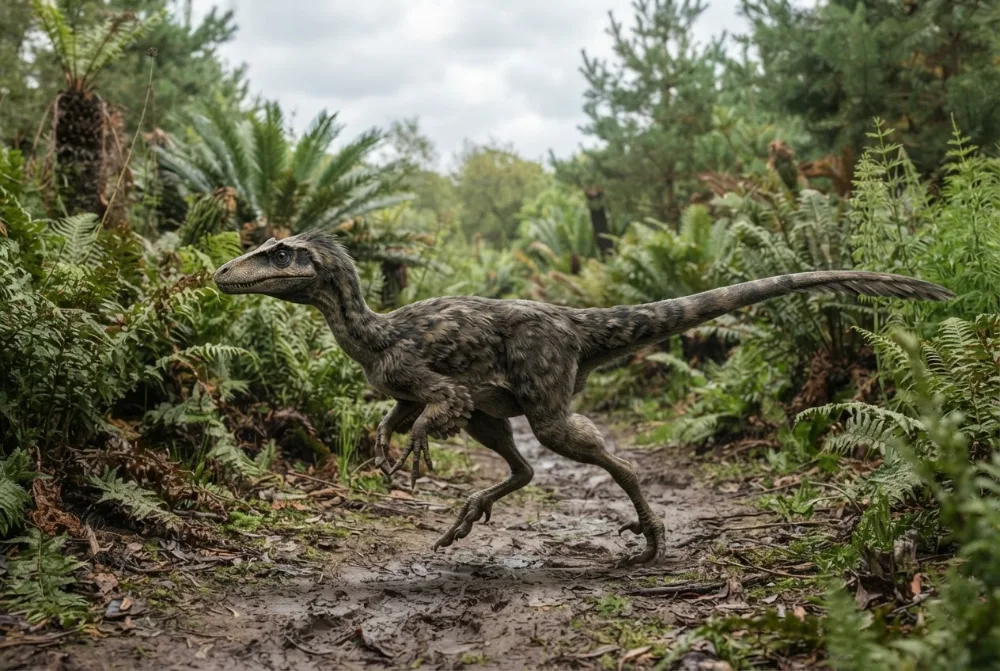
Aristosuchus was about the size of a large dog, around 2 metres (6.6 feet) long.1
It lived on the Isle of Wight, which at the time was a warm, swampy place full of dinosaurs.1
Scientists are not sure exactly how much Aristosuchus weighed; estimates range from 7 to 30 kilograms (15 to 66 pounds).1
Mituna oyo batunaka mingi na ntina na Aristosuchus
?How big was Aristosuchus?
About 2 metres (6.6 feet) long. Its weight is uncertain: estimates range from 7 to 30 kilograms (15 to 66 pounds).1
?What did Aristosuchus eat?
It was a meat-eater (carnivore) that hunted small animals in its environment.13
?Why is it called Aristosuchus?
Its name means 'best crocodile' in Greek, because scientists first thought it was a crocodile. Later they learned it was a dinosaur.1
?Where did Aristosuchus live?
It lived on the Isle of Wight in England, which was a warm, swampy floodplain with rivers and lakes during the Early Cretaceous.1
Mobuki masapo
Lisapo: Aristosuchus was a crocodile.
Solo: Aristosuchus was actually a small theropod dinosaur, not a crocodile. Early scientists mistook it for a crocodile because of its name and some bone features.1
Mpo na bayebi ya badino
- Nkombo ya siansi
- Aristosuchus
- Nkombo epesamaki na
- Seeley 18874
- Lisanga
- Badino ya kolia mosuni
- Libota / klade
- Compsognathidae4
- Klasifikasio
- Theropoda > Compsognathidae4
- Mbula ya mabanga
- mbula milio 126 kino 120 (Barremian / Aptian)4
- Bikolo
- Angeletere4
- Bafosile oyo ekomami
- 1 na The Paleobiology Database4
- Ntango bamonaki yango
- The fossils were discovered by Reverend William D. Fox on the Isle of Wight, England. Richard Owen first named them Poekilopleuron pusillus in 1876, but Harry Govier Seeley gave them the new name Aristosuchus in 1887.1
- Naino bazali kowelana
- Scientists still debate whether Aristosuchus is really a distinct species or if its fossils belong to another dinosaur.2
Esika makambo euti
- Aristosuchus (en.wikipedia.org)
- The historical taxonomy of the Lower Cretaceous theropods (Dinosauria) Calamospondylus and Aristosuchus from the Isle of Wight (darrennaish.wordpress.com)
- Aristosuchus, an Isle of Wight tyrannosauroid? - DinoWight (dinowight.org.uk)
- Aristosuchus in The Paleobiology Database (CC BY 4.0): mbula, bisika, milongo ya mabanga, klasifikasio.
Likambo nyonso na lokasa oyo ezali na nimero oyo elakisi liziba na yango. Soki tosali libunga, limbisa biso, tozali bato balingaka badino, zulunalo ya siansi te. Yebisa biso na [email protected] mpe tokobongisa yango.
 Rex azali na nzala! Dino Wiki ezali mosala ya tata moko mpo na mwana na ye ya mobali oyo alingaka badino, ofele, piblisite te mpe batrakere te. Bato bakolo bakoki kopesa Rex biskwi mpo na kosalisa ete etikala na internet.Leisa Rex
 Allosaurus
 Carnotaurus
 Dilophosaurus
 Giganotosaurus
 Compsognathus
 Paronychodon
 Stegosaurus
 Iguanodon
 Archaeopteryx
 Microraptor
 Deinonychus
 Baryonyx