 Ozali dino nini? Kwizi
 Etumba ya badino
 Mbangu ya badino
 Masano mike ya badino
 Albumu ya bastika
 Bilisti TOP ya badino
 Kamwisa ngai!
Bonapartenykus
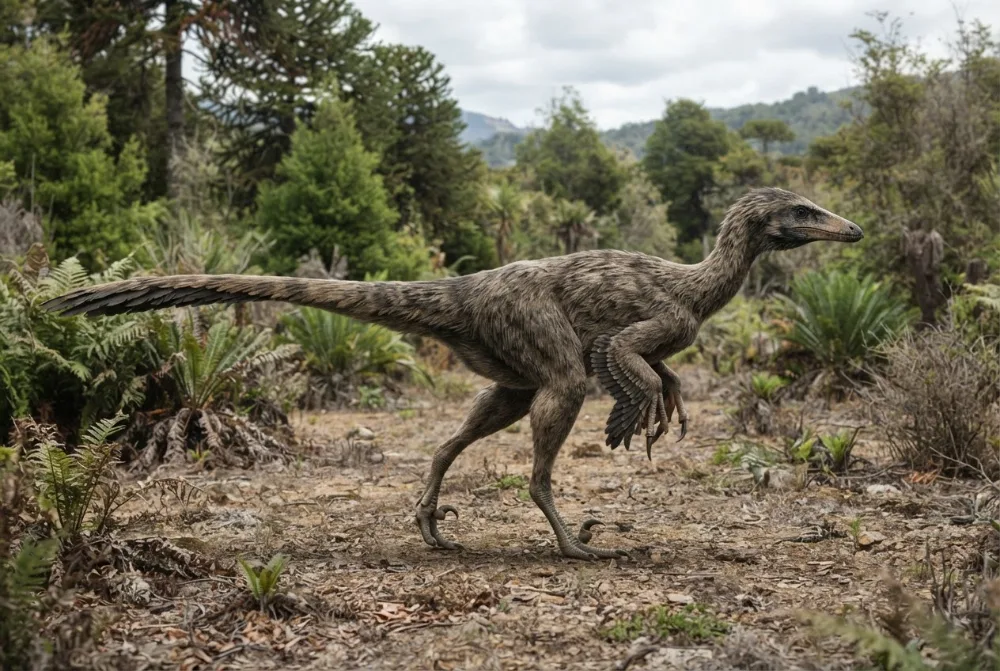
Bonapartenykus was a meat-eating dinosaur that lived in South America near the end of the Age of Dinosaurs. It was one of the biggest members of its family, the alvarezsauroids, and it had a special claw on each hand.1
Azalaki na bomoi ntango nini?
Azalaki monene boni?
Azalaki molai boni?
Azalaki molai boni na likolo?
kokanisa
Azalaki kilo boni?
 molai lokola bambwa 3 zolo kino mokila🍌molai lokola matoko 18 oyo balandani🍉kilo lokola bapasteke 14🧸kilo lokola bana 4 ya eteyelo ya bana mike🎒kilo lokola bana 2 ya kelasi🏃akokaki kopota metele 100 na sekonde 7,2 (moto oyo aleki mbangu asalelaka 9,6)
Bonapartenykus azalaki monene boni soki tokokanisi na YO?
Kaka matematiki na navigatere na yo. Eloko moko te ebombami to etindami esika moko.
Azalaki na mbangu boni?


Makambo ya kosepelisa
Bonapartenykus is the largest known alvarezsauroid, measuring up to 3.3 metres (10.8 feet) long and weighing up to 72 kilograms (159 pounds).1
Its fossils were found with two incomplete eggs and many eggshell pieces, which were given their own scientific name, Arriagadoolithus.1
The eggs were found less than 20 centimetres (7.9 inches) away from the skeleton, so scientists think they may belong to Bonapartenykus.1
Bonapartenykus had a fused hip bone and a fused shoulder blade, which are unusual features that help scientists tell it apart from other dinosaurs.1
It lived between 72 and 66 million years ago, during the Maastrichtian age of the Late Cretaceous period.2
The name 'ultimus' means 'latest', because it was one of the youngest alvarezsauroids from South America.1
Mituna oyo batunaka mingi na ntina na Bonapartenykus
?How big was Bonapartenykus?
It was about 2.5 to 3.3 metres (8.2 to 10.8 feet) long and weighed 43 to 72 kilograms (95 to 159 pounds). That makes it the largest known alvarezsauroid.1
?What did Bonapartenykus eat?
It was a meat-eating dinosaur, so it probably ate small animals like lizards or insects. Its special claw may have helped it catch prey.1
?Did Bonapartenykus lay eggs?
Yes, its fossils were found with two eggs and many eggshell pieces nearby. Scientists think the eggs belonged to Bonapartenykus and gave them the name Arriagadoolithus.1
?When did Bonapartenykus live?
It lived between 72 and 66 million years ago, near the end of the Age of Dinosaurs. Its name 'ultimus' means 'latest' because it was one of the youngest alvarezsauroids from South America.1
Mobuki masapo
Lisapo: Some people think Bonapartenykus was a bird because it had feathers and a beak-like snout.
Solo: Bonapartenykus was a dinosaur, not a bird. It belonged to a group called alvarezsauroids, which are close relatives of birds but still dinosaurs.1
Mpo na bayebi ya badino
- Nkombo ya siansi
- Bonapartenykus
- Nkombo epesamaki na
- Agnolin et al. 20122
- Lisanga
- Badino ya kolia mosuni
- Libota / klade
- Alvarezsauroidea2
- Klasifikasio
- Theropoda2
- Mbula ya mabanga
- mbula milio 72 kino 66 (Maastrichtian)2
- Milongo ya mabanga
- Allen2
- Bikolo
- Arzantine2
- Bafosile oyo ekomami
- 3 na The Paleobiology Database2
- Ntango bamonaki yango
- The first skeleton was found in Argentina and was described in 2009 as an unknown alvarezsaurid. In 2012, scientists Federico Agnolin, Jaime Powell, Fernando Novas, and Martin Kundrát named it Bonapartenykus ultimus.1
- Naino bazali kowelana
- Scientists are not sure if the eggs found with Bonapartenykus really belong to it, because they were not inside the body. They might belong to another animal.1
Esika makambo euti
- Bonapartenykus (en.wikipedia.org)
- Bonapartenykus in The Paleobiology Database (CC BY 4.0): mbula, bisika, milongo ya mabanga, klasifikasio.
Likambo nyonso na lokasa oyo ezali na nimero oyo elakisi liziba na yango. Soki tosali libunga, limbisa biso, tozali bato balingaka badino, zulunalo ya siansi te. Yebisa biso na [email protected] mpe tokobongisa yango.
 Rex azali na nzala! Dino Wiki ezali mosala ya tata moko mpo na mwana na ye ya mobali oyo alingaka badino, ofele, piblisite te mpe batrakere te. Bato bakolo bakoki kopesa Rex biskwi mpo na kosalisa ete etikala na internet.Leisa Rex
 Allosaurus
 Carnotaurus
 Dilophosaurus
 Giganotosaurus
 Compsognathus
 Paronychodon
 Tyrannosaurus
 Triceratops
 Velociraptor
 Spinosaurus
 Ankylosaurus
 Parasaurolophus