 Ozali dino nini? Kwizi
 Etumba ya badino
 Mbangu ya badino
 Masano mike ya badino
 Albumu ya bastika
 Bilisti TOP ya badino
 Kamwisa ngai!
Foskeia
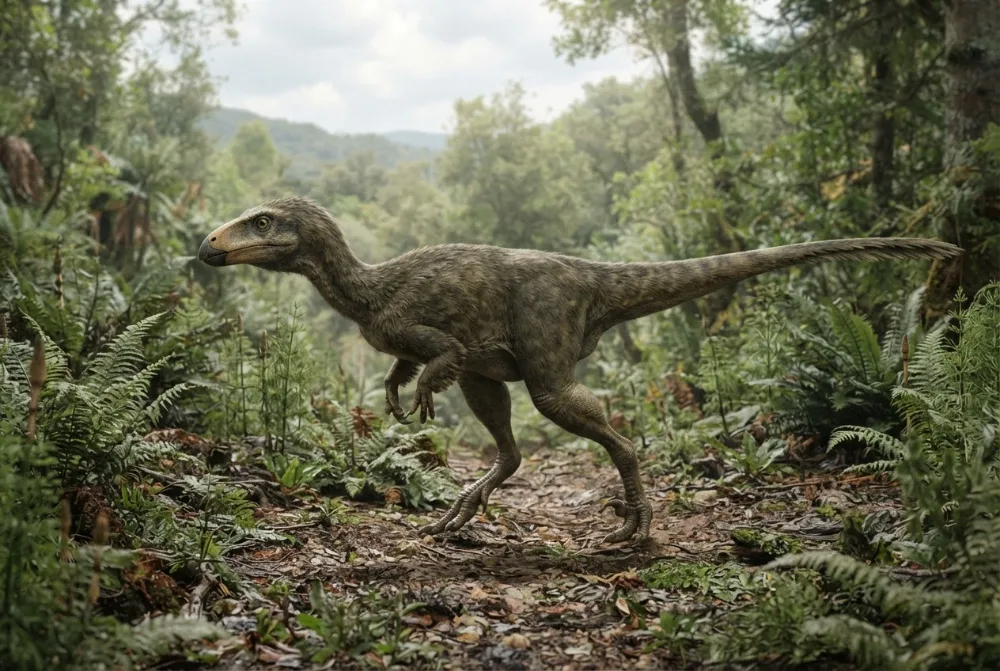
Foskeia was a small, two-legged plant-eater that lived in what is now Spain. It had a beak and a very special skull, and it was one of the earliest members of its dinosaur group.1
Azalaki na bomoi ntango nini?
Azalaki monene boni?
Azalaki molai boni?
Azalaki molai boni na likolo?
kokanisa
 molai lokola bapusu 4 ya ndako zolo kino mokila🍌molai lokola matoko 11 oyo balandani🏃akokaki kopota metele 100 na sekonde 8,8 (moto oyo aleki mbangu asalelaka 9,6)
Foskeia azalaki monene boni soki tokokanisi na YO?
Kaka matematiki na navigatere na yo. Eloko moko te ebombami to etindami esika moko.
Azalaki na mbangu boni?


Makambo ya kosepelisa
Foskeia had a beak made of fused premaxillae bones, which is very unusual for an ornithopod dinosaur.1
Its front teeth stuck out forward (procumbent) and the crowns extended beyond the edge of the beak.1
The first tooth in its lower jaw was shaped like a thin thread (filiform), which is a unique feature.1
Foskeia had a very high jaw joint, which helped it bite with extra force.1
Scientists used CT scans to see inside the skull fossils and build a 3D model of the head.1
Foskeia lived about 125 to 119 million years ago, during the Early Cretaceous period.2
This dinosaur is the earliest known member of a group called Rhabdodontia, which lived only in Europe.1
Mituna oyo batunaka mingi na ntina na Foskeia
?How big was Foskeia?
Foskeia was very small, about 0.5 metres (1.6 feet) long, making it one of the smallest ornithopods known.31
?What did Foskeia eat?
Foskeia was a plant-eater (herbivore). Its name means 'light forager', referring to its small size and presumed herbivorous habits.3
?Could Foskeia walk on two legs?
Yes, adults were bipedal. Juveniles started out walking on all fours, but switched to two legs early in life.3
?Why did Foskeia have a beak?
Foskeia had a beak made of fused premaxillae bones, which is unusual for an ornithopod. It likely used it to bite off plant material.3
?When did Foskeia live?
Foskeia lived during the Early Cretaceous, about 125 to 119 million years ago, in what is now Spain.3
Mpo na bayebi ya badino
- Nkombo ya siansi
- Foskeia
- Nkombo epesamaki na
- Dieudonné et al. 20264
- Lisanga
- Badino ya monoko ya ndeke
- Libota / klade
- Rhabdodontia4
- Klasifikasio
- Ornithischia > Ornithopoda > Iguanodontia4
- Mbula ya mabanga
- mbula milio 126 kino 120 (Barremian / Aptian)4
- Milongo ya mabanga
- Castrillo de la Reina4
- Bikolo
- Espanye4
- Bafosile oyo ekomami
- 1 na The Paleobiology Database4
- Ntango bamonaki yango
- Foskeia was named in 2026 by a team of scientists led by Dieudonné, based on fossils found at the Vegagete site in Burgos, Spain. The remains were first thought to belong to a different dinosaur, but new skull bones showed it was a new species.12
- Naino bazali kowelana
- Scientists are not sure exactly how big Foskeia grew, because only a few bones have been found so far.1
Esika makambo euti
- Foskeia pelendonum, a new rhabdodontomorph from the Lower Cretaceous of Salas de los Infantes (Burgos Province, Spain), and a new phylogeny of ornithischian dinosaurs (riull.ull.es)
- PBDB Taxon (paleobiodb.org)
- Foskeia (en.wikipedia.org)
- Foskeia in The Paleobiology Database (CC BY 4.0): mbula, bisika, milongo ya mabanga, klasifikasio.
Likambo nyonso na lokasa oyo ezali na nimero oyo elakisi liziba na yango. Soki tosali libunga, limbisa biso, tozali bato balingaka badino, zulunalo ya siansi te. Yebisa biso na [email protected] mpe tokobongisa yango.
 Rex azali na nzala! Dino Wiki ezali mosala ya tata moko mpo na mwana na ye ya mobali oyo alingaka badino, ofele, piblisite te mpe batrakere te. Bato bakolo bakoki kopesa Rex biskwi mpo na kosalisa ete etikala na internet.Leisa Rex
 Iguanodon
 Tenontosaurus
 Thescelosaurus
 Zalmoxes
 Camptosaurus
 Rhabdodon
 Stegosaurus
 Archaeopteryx
 Giganotosaurus
 Microraptor
 Deinonychus
 Baryonyx