 Ozali dino nini? Kwizi
 Etumba ya badino
 Mbangu ya badino
 Masano mike ya badino
 Albumu ya bastika
 Bilisti TOP ya badino
 Kamwisa ngai!
Azalaki na bomoi ntango nini?

Azalaki monene boni?
Azalaki molai boni?
Azalaki molai boni na likolo?
Azalaki kilo boni?
 molai lokola bambwa 7 zolo kino mokila🍌molai lokola matoko 39 oyo balandani🍉kilo lokola bapasteke 240🧸kilo lokola bana 63 ya eteyelo ya bana mike🎒kilo lokola bana 38 ya kelasi🐻❄️kilo lokola ba-urs ya pembe 2,5🏃akokaki kopota metele 100 na sekonde 10 (moto oyo aleki mbangu asalelaka 9,6)
Indosuchus azalaki monene boni soki tokokanisi na YO?
Kaka matematiki na navigatere na yo. Eloko moko te ebombami to etindami esika moko.
Azalaki na mbangu boni?


Makambo ya kosepelisa
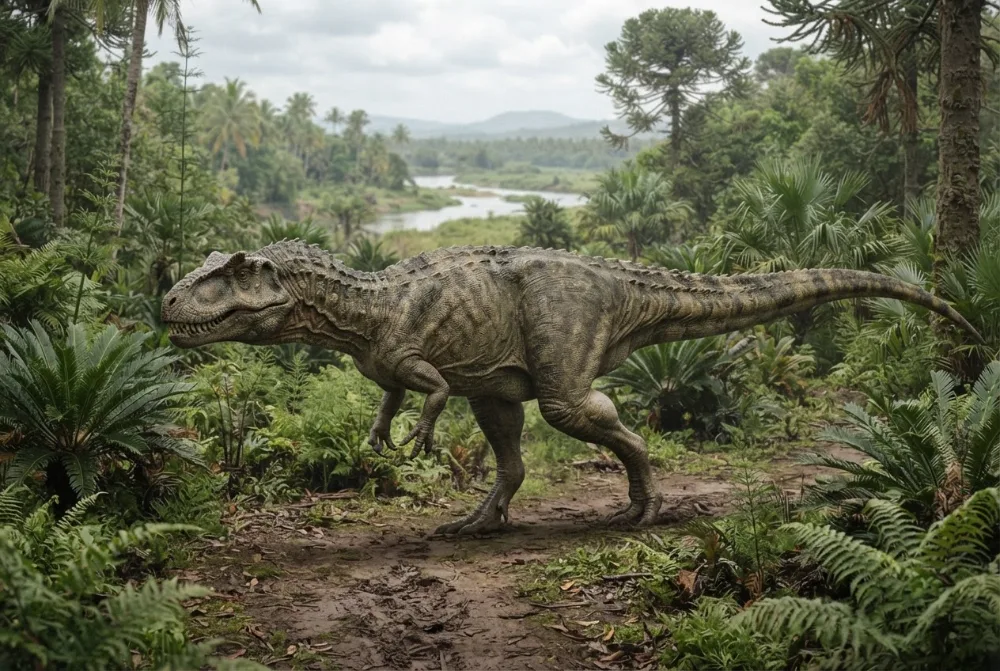
Indosuchus is known only from a few skull bones, so scientists are still learning about it.1
Its name means 'Indian crocodile', even though it was a dinosaur, not a crocodile.1
At first, scientists thought Indosuchus was related to Allosaurus or Tyrannosaurus, but now they know it was an abelisaurid.1
Indosuchus had a crested skull that was flattened on top, which helped tell it apart from other dinosaurs.1
Mituna oyo batunaka mingi na ntina na Indosuchus
?How big was Indosuchus?
Indosuchus was about 7 metres (23 feet) long and weighed about 1.2 tonnes (1.3 short tons). That is about as long as a large car.42
?What did Indosuchus eat?
Indosuchus was a carnivore, so it ate meat. It probably hunted other dinosaurs or scavenged for food.42
?When did Indosuchus live?
Indosuchus lived during the Late Cretaceous Period, about 70 to 66 million years ago, right before the dinosaurs went extinct.42
?Where was Indosuchus found?
Indosuchus fossils were found in India, near Jabalpur in Madhya Pradesh, in rocks of the Lameta Formation.42
?Why is it called Indosuchus?
Its name means 'Indian crocodile' in Greek, because it was found in India and its skull reminded scientists of a crocodile. But it was a dinosaur, not a crocodile.42
?Did Indosuchus have feathers?
Nobody knows for sure. No feathers have been found with Indosuchus fossils, and since it was an abelisaurid, it might have had scales like other abelisaurids.4
Mobuki masapo
Lisapo: Indosuchus was a crocodile because its name means 'Indian crocodile'.
Solo: Indosuchus was a dinosaur, not a crocodile. The name just refers to its crocodile-like snout.1
Mpo na bayebi ya badino
- Nkombo ya siansi
- Indosuchus
- Nkombo epesamaki na
- Huene 19335
- Lisanga
- Badino ya kolia mosuni
- Libota / klade
- Abelisauridae5
- Klasifikasio
- Theropoda > Ceratosauria > Abelisauridae5
- Mbula ya mabanga
- mbula milio 72 kino 66 (Maastrichtian)5
- Milongo ya mabanga
- Lameta5
- Bikolo
- Indi5
- Bafosile oyo ekomami
- 1 na The Paleobiology Database5
- Ntango bamonaki yango
- Indosuchus was named by German paleontologist Friedrich von Huene in 1932, and described by Huene and Charles Alfred Matley in 1933 from three partial skulls found near Jabalpur, India.1
- Naino bazali kowelana
- Scientists still debate exactly how Indosuchus is related to other abelisaurids, because only a few skull bones have been found.1
Esika makambo euti
- Indosuchus (en.wikipedia.org)
- Indosuchus (nhm.ac.uk)
- Indosuchus| The Late Cretaceous Predator of Ancient India (thedinosaurs.org)
- Indosuchus - Wikipedia (en.m.wikipedia.org)
- Indosuchus in The Paleobiology Database (CC BY 4.0): mbula, bisika, milongo ya mabanga, klasifikasio.
Likambo nyonso na lokasa oyo ezali na nimero oyo elakisi liziba na yango. Soki tosali libunga, limbisa biso, tozali bato balingaka badino, zulunalo ya siansi te. Yebisa biso na [email protected] mpe tokobongisa yango.
 Rex azali na nzala! Dino Wiki ezali mosala ya tata moko mpo na mwana na ye ya mobali oyo alingaka badino, ofele, piblisite te mpe batrakere te. Bato bakolo bakoki kopesa Rex biskwi mpo na kosalisa ete etikala na internet.Leisa Rex
 Allosaurus
 Carnotaurus
 Dilophosaurus
 Giganotosaurus
 Compsognathus
 Paronychodon
 Tyrannosaurus
 Triceratops
 Velociraptor
 Spinosaurus
 Ankylosaurus
 Parasaurolophus