 Ozali dino nini? Kwizi
 Etumba ya badino
 Mbangu ya badino
 Masano mike ya badino
 Albumu ya bastika
 Bilisti TOP ya badino
 Kamwisa ngai!
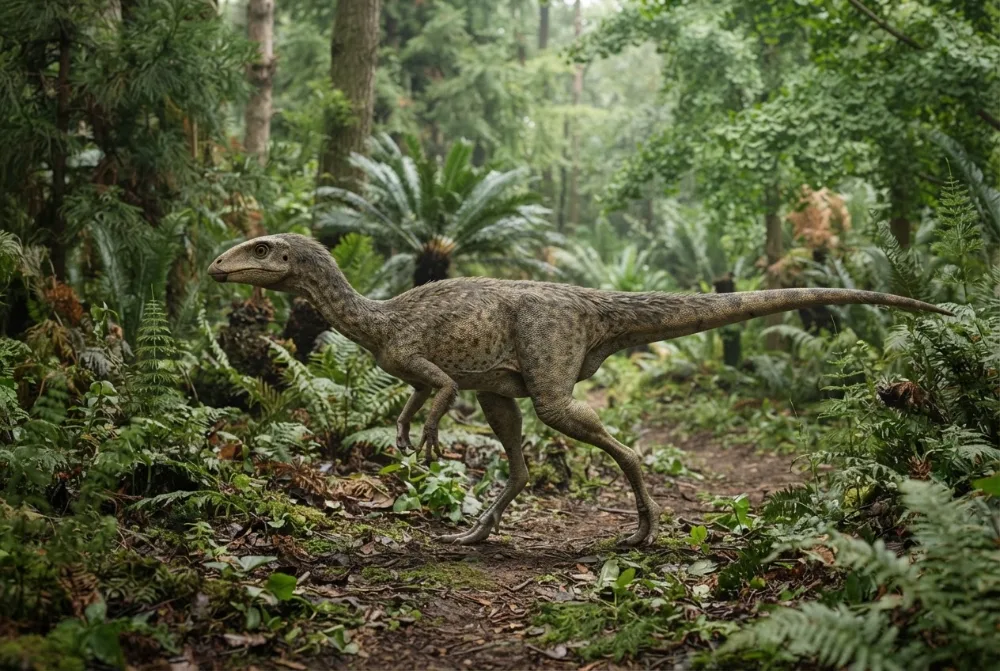
Jeholosaurus
Jeholosaurus was a small, speedy plant-eater that lived in ancient China. It had a beak and cheek teeth for chomping plants, but its front teeth were sharp like a meat-eater's, so it might have eaten a few bugs too!1
Azalaki na bomoi ntango nini?
Azalaki monene boni?
Azalaki molai boni?
Jeholosaurus azalaki monene boni soki tokokanisi na YO?
Kaka matematiki na navigatere na yo. Eloko moko te ebombami to etindami esika moko.
Azalaki na mbangu boni?


Makambo ya kosepelisa
Jeholosaurus had a very fast tooth replacement rate, with new teeth growing every 46 days, faster than most early plant-eaters.1
Its eye socket was huge, making up 40% of the skull length, which is a sign it was a young animal.1
The front teeth were narrow and long, like a meat-eater's, but the back teeth were fan-shaped for chewing plants.1
The hip bone pointed backward, which is typical for ornithischian dinosaurs, but it also had a forward-pointing bone that supported its belly.1
All known fossils are from young animals, so scientists don't know exactly how big an adult could get.1
Mituna oyo batunaka mingi na ntina na Jeholosaurus
?How big was Jeholosaurus?
The known fossils are from young animals, so the adult size is unknown. The largest specimen is about 71 centimetres long, with a skull of 6.3 centimetres.1
?What did Jeholosaurus eat?
It mostly ate plants, using its beak and fan-shaped cheek teeth. But its front teeth were sharp like a meat-eater's, so it might have also eaten small animals or bugs.1
?Was Jeholosaurus a dinosaur?
Yes, Jeholosaurus was a small ornithischian dinosaur, a group of plant-eating dinosaurs with bird-like hips.1
?Why did Jeholosaurus have a beak?
The beak helped it nip off plants. Its cheek teeth were fan-shaped for grinding them up, and it may have had fleshy cheeks to hold food while chewing.1
Mobuki masapo
Lisapo: Jeholosaurus was a meat-eater because it had sharp front teeth.
Solo: Its back teeth were for chewing plants, and it likely ate plants, though it might have eaten some insects or small animals too.1
Mpo na bayebi ya badino
- Nkombo ya siansi
- Jeholosaurus
- Nkombo epesamaki na
- Xu et al. 20003
- Lisanga
- Badino ya monoko ya ndeke
- Libota / klade
- Thescelosauridae3
- Klasifikasio
- Ornithischia3
- Mbula ya mabanga
- mbula milio 126 kino 120 (Barremian / Aptian)3
- Milongo ya mabanga
- Yixian3
- Bikolo
- Sina3
- Bafosile oyo ekomami
- 2 na The Paleobiology Database3
- Ntango bamonaki yango
- The first fossils were found in 2000 at Lujiatun near Beipiao City, China, and named by Xu Xing and colleagues the same year.1
- Naino bazali kowelana
- Scientists still debate whether Jeholosaurus was a plant-eater or an omnivore, because its front teeth were sharp and its back teeth were for plants.1
Esika makambo euti
- Jeholosaurus (en.wikipedia.org)
- Cranial anatomy of Jeholosaurus shangyuanensis (Dinosauria: Ornithischia) from the Early Cretaceous of China | Zootaxa (mapress.com)
- Jeholosaurus in The Paleobiology Database (CC BY 4.0): mbula, bisika, milongo ya mabanga, klasifikasio.
Likambo nyonso na lokasa oyo ezali na nimero oyo elakisi liziba na yango. Soki tosali libunga, limbisa biso, tozali bato balingaka badino, zulunalo ya siansi te. Yebisa biso na [email protected] mpe tokobongisa yango.
 Rex azali na nzala! Dino Wiki ezali mosala ya tata moko mpo na mwana na ye ya mobali oyo alingaka badino, ofele, piblisite te mpe batrakere te. Bato bakolo bakoki kopesa Rex biskwi mpo na kosalisa ete etikala na internet.Leisa Rex
 Iguanodon
 Tenontosaurus
 Thescelosaurus
 Zalmoxes
 Camptosaurus
 Rhabdodon
 Stegosaurus
 Archaeopteryx
 Giganotosaurus
 Microraptor
 Deinonychus
 Baryonyx