 Ozali dino nini? Kwizi
 Etumba ya badino
 Mbangu ya badino
 Masano mike ya badino
 Albumu ya bastika
 Bilisti TOP ya badino
 Kamwisa ngai!
Sinocalliopteryx
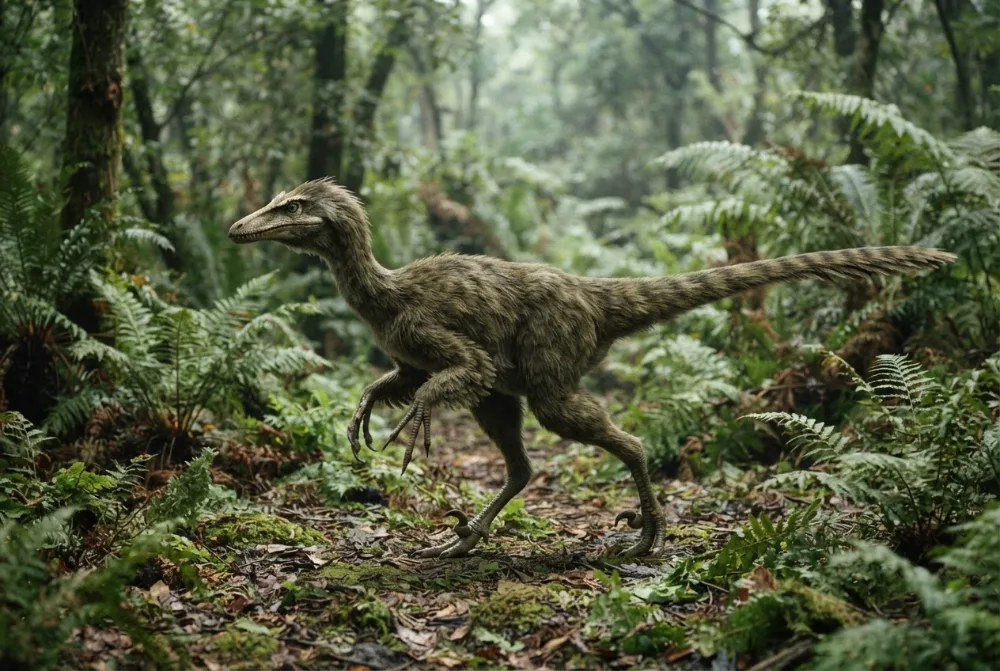
Sinocalliopteryx was a fast, feathered hunter that lived in what is now China. It had long legs and arms, and its body was covered in simple, hair-like feathers. This dinosaur was a fierce predator that could even catch birds on the ground.21
Azalaki na bomoi ntango nini?
Azalaki monene boni?
Azalaki molai boni?
Azalaki molai boni na likolo?
kokanisa
Azalaki kilo boni?
 molai lokola bapusu 5 ya ndako zolo kino mokila🍌molai lokola matoko 13 oyo balandani🍉kilo lokola bapasteke 4🏃akokaki kopota metele 100 na sekonde 8,4 (moto oyo aleki mbangu asalelaka 9,6)
Sinocalliopteryx azalaki monene boni soki tokokanisi na YO?
Kaka matematiki na navigatere na yo. Eloko moko te ebombami to etindami esika moko.
Azalaki na mbangu boni?


Makambo ya kosepelisa
Sinocalliopteryx was the largest known compsognathid dinosaur when it was discovered in 2007.2
One Sinocalliopteryx fossil had the leg of a dromaeosaurid dinosaur inside its stomach, showing it ate other predators.21
Another fossil contained the bones of at least two Confuciusornis birds in its belly, suggesting it hunted birds.2
Sinocalliopteryx had long protofeathers on its hips, tail, and thighs, some up to 10 centimeters (4 inches) long.2
It also had protofeathers on its feet, which is unusual for a dinosaur that was not closely related to birds.2
The stomach acid in one fossil had etched a bone for about 13 days, showing Sinocalliopteryx had a high metabolism.2
Mituna oyo batunaka mingi na ntina na Sinocalliopteryx
?How big was Sinocalliopteryx?
About 2.4 metres (7.8 feet) long and weighed around 20 kilograms (44 pounds).21
?Did Sinocalliopteryx have feathers?
Yes, it was covered in simple, hair-like protofeathers, with the longest ones on its hips, tail, and thighs.21
Mpo na bayebi ya badino
- Nkombo ya siansi
- Sinocalliopteryx
- Nkombo epesamaki na
- Ji et al. 20075
- Lisanga
- Badino ya kolia mosuni
- Libota / klade
- Compsognathidae5
- Klasifikasio
- Theropoda > Compsognathidae5
- Mbula ya mabanga
- mbula milio 126 kino 120 (Barremian / Aptian)5
- Milongo ya mabanga
- Yixian5
- Bikolo
- Sina5
- Bafosile oyo ekomami
- 2 na The Paleobiology Database5
- Ntango bamonaki yango
- Sinocalliopteryx was named in 2007 by Ji Shu'an, Ji Qiang, Lü Junchang, and Yuan Chongxi. The first fossil was found at Hengdaozi, in Sihetun, Liaoning Province, China.21
- Naino bazali kowelana
- Scientists are not sure if the stones found in the first Sinocalliopteryx fossil were swallowed on purpose to help digestion or by accident.2
Esika makambo euti
- Sinocalliopteryx | Natural History Museum (nhm.ac.uk)
- Sinocalliopteryx (en.wikipedia.org)
- PBDB Taxon (paleobiodb.org)
- Abdominal Contents from Two Large Early Cretaceous Compsognathids (Dinosauria: Theropoda) Demonstrate Feeding on Confuciusornithids and Dromaeosaurids | PLOS One (journals.plos.org)
- Sinocalliopteryx in The Paleobiology Database (CC BY 4.0): mbula, bisika, milongo ya mabanga, klasifikasio.
Likambo nyonso na lokasa oyo ezali na nimero oyo elakisi liziba na yango. Soki tosali libunga, limbisa biso, tozali bato balingaka badino, zulunalo ya siansi te. Yebisa biso na [email protected] mpe tokobongisa yango.
 Rex azali na nzala! Dino Wiki ezali mosala ya tata moko mpo na mwana na ye ya mobali oyo alingaka badino, ofele, piblisite te mpe batrakere te. Bato bakolo bakoki kopesa Rex biskwi mpo na kosalisa ete etikala na internet.Leisa Rex
 Allosaurus
 Carnotaurus
 Dilophosaurus
 Giganotosaurus
 Compsognathus
 Paronychodon
 Stegosaurus
 Iguanodon
 Archaeopteryx
 Microraptor
 Deinonychus
 Baryonyx