 Kwizi ya Ndiwe dino uti?
 Nkhondo ya madino
 Mpikisano wa madino
 Masewera ang'onoang'ono a madino
 Chimbale cha zomata
 Mindandanda ya TOP ya madino
 Ndidabwitse!
Alexornis
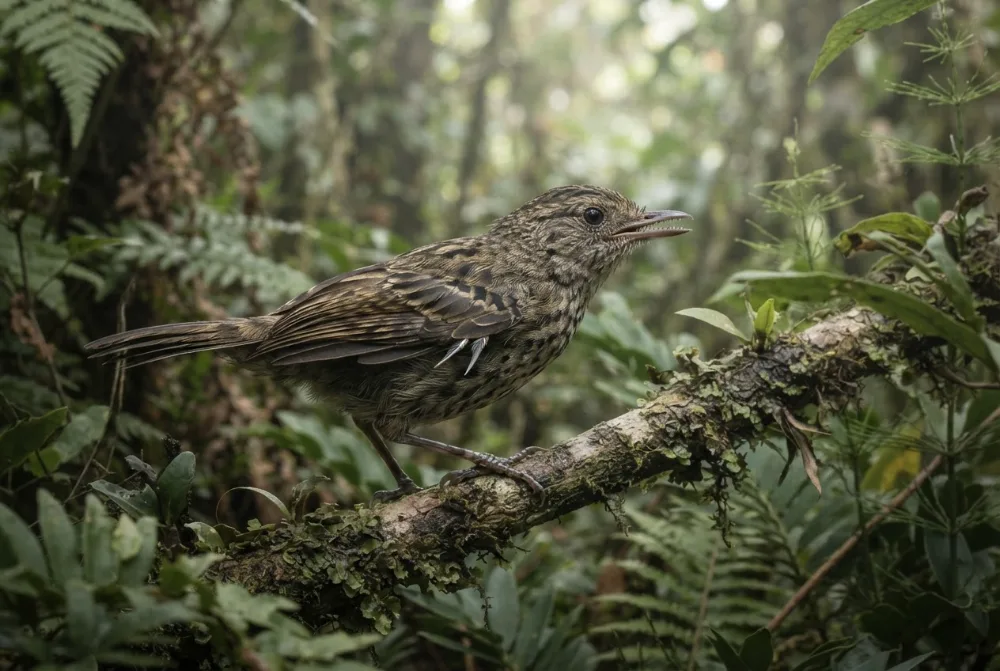
Alexornis was a tiny bird that lived during the Late Cretaceous in what is now Mexico. It was about the size of a sparrow and probably ate insects or other small animals. This bird is special because it belongs to a group called enantiornithines, which had a backwards shoulder joint compared to modern birds.13
Ankakhala liti?
Anali wamkulu bwanji?
Ankalemera bwanji?
Alexornis anali wamkulu bwanji poyerekeza ndi IWEYO?
Ndi masamu chabe mu msakatuli wako. Palibe chimene chimasungidwa kapena kutumizidwa kwina kulikonse.
Anali ndi liwiro lotani?


Mfundo zosangalatsa
Alexornis is known from only one partial skeleton, which includes shoulder, wing, and leg bones, but no skull.1
It weighed only about 35.6 grams, which is roughly the same as a modern sparrow.1
When first discovered, scientists thought Alexornis was an ancestor of kingfishers and woodpeckers, but later studies showed it was an enantiornithine bird.1
Enantiornithines like Alexornis had a reversed joint between the shoulder blade and the collarbone, which confused early researchers.1
The fossil was discovered in 1971 and formally described in 1976 by paleontologist Pierce Brodkorb.1
Alexornis lived during the Santonian age of the Late Cretaceous, about 85 to 83 million years ago.3
Mafunso ofunsidwa kwambiri okhudza Alexornis
?How big was Alexornis?
About the size of a sparrow, weighing roughly 35.6 grams.1
?What did Alexornis eat?
Scientists think it probably ate insects or other small animals, based on its small size and bird-like features.1
?Was Alexornis a dinosaur?
Alexornis was a bird, and birds are a type of dinosaur called avialan dinosaurs. So yes, it was a dinosaur.1
?When did Alexornis live?
It lived during the Late Cretaceous, about 85 to 83 million years ago.1
Wothetsa nthano zabodza
Nthano: Some people thought Alexornis was a modern bird ancestor.
Zoona: Actually, Alexornis is an enantiornithine, a group of ancient birds that went extinct with the dinosaurs.1
Kwa akatswiri a madino
- Dzina la sayansi
- Alexornis
- Anapatsidwa dzina ndi
- Brodkorb 19763
- Gulu
- Mbalame zoyambirira
- Banja / kladi
- Alexornithidae3
- Magawidwe a sayansi
- Theropoda > Avialae3
- Zaka za miyala
- zaka 86 mpaka 84 miliyoni (Santonian)3
- Mapangidwe a miyala
- La Bocana Roja3
- Mayiko
- Mekisiko3
- Zolemba za mafosili
- 1 mu The Paleobiology Database3
- Kupezeka
- The only known fossil of Alexornis was found in 1971 near El Rosario, Baja California, Mexico. It was named and described in 1976 by Pierce Brodkorb, who thought it was an ancestor of modern kingfishers and woodpeckers.12
- Akukambiranabe
- Scientists are still unsure exactly how Alexornis is related to other enantiornithine birds, especially those from South America and Central Asia.1
Kumene mfundo zimachokera
- Alexornis (en.wikipedia.org)
- repository.si.edu (repository.si.edu)
- Alexornis in The Paleobiology Database (CC BY 4.0): zaka, malo, mapangidwe a miyala, magawidwe a sayansi.
Mfundo iliyonse patsamba lino ili ndi nambala yosonyeza kumene yachokera. Ngati talakwitsa kanthu, pepa, ndife okonda madino, osati magazini ya sayansi. Tiuze pa [email protected] ndipo tikonza.
 Rex ali ndi njala! Dino Wiki ndi ntchito ya bambo kwa mwana wawo wamwamuna wokonda madainoso, yaulere popanda zotsatsa ndi zokazonda. Akuluakulu angadyetse Rex zokhwasula-khwasula kuti tsambali lipitirize kupezeka pa intaneti.Dyetsa Rex
 Archaeopteryx
 Hesperornis
 Ichthyornis
 Baptornis
 Jurapteryx
 Gobipteryx
 Tyrannosaurus
 Triceratops
 Velociraptor
 Spinosaurus
 Ankylosaurus
 Parasaurolophus