 Kwizi ya Ndiwe dino uti?
 Nkhondo ya madino
 Mpikisano wa madino
 Masewera ang'onoang'ono a madino
 Chimbale cha zomata
 Mindandanda ya TOP ya madino
 Ndidabwitse!
Brighstoneus
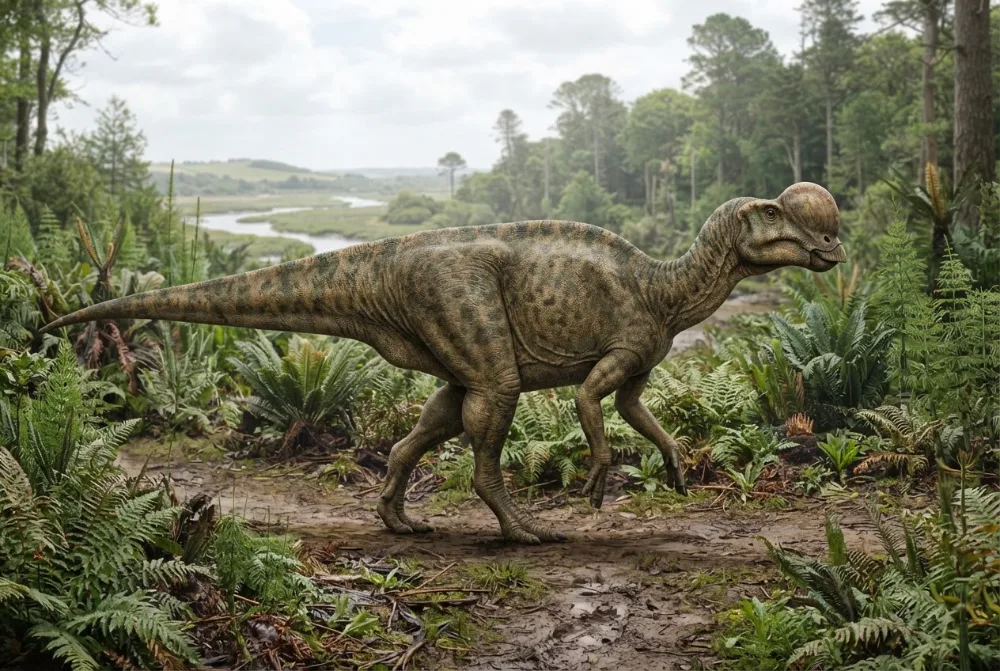
Brighstoneus was a big, plant-eating dinosaur that lived on the Isle of Wight in England about 125 million years ago. It had a strange, bulbous nose that made it look different from its relatives. Scientists think it used its big nose to show off to other dinosaurs or to scare away rivals.12
Ankakhala liti?
Anali wamkulu bwanji?
Anali wautali bwanji?
Msinkhu wake unali wautali bwanji?
kuyerekeza
Ankalemera bwanji?
 wautali ngati agalu 6 otsatizana mphuno ndi mchira🍌wautali ngati nthochi 33 zotsatizana🍉wolemera ngati mavwende 200🧸wolemera ngati ana a sukulu ya mkaka 53🎒wolemera ngati ana a sukulu 31🐻❄️wolemera ngati zimbalangondo zoyera 2🏃akanatha kuthamanga mamita 100 m'masekondi 11 (munthu waliwiro kwambiri amafunika 9.6)
Brighstoneus anali wamkulu bwanji poyerekeza ndi IWEYO?
Ndi masamu chabe mu msakatuli wako. Palibe chimene chimasungidwa kapena kutumizidwa kwina kulikonse.
Anali ndi liwiro lotani?


Mfundo zosangalatsa
Brighstoneus had a bulbous bump on its nose, called a nasal bulla, which made its snout look S-shaped from the side.1
Its fossils were found mixed up with the bones of a meat-eating dinosaur called Neovenator after a storm in 1978.1
The dinosaur was named by a retired doctor, Jeremy Lockwood, who spent years studying old bones in museum collections.2
Brighstoneus lived in a floodplain environment that had rivers, lakes, and frequent wildfires.1
Its teeth were different from other similar dinosaurs because they had ridges on both sides.2
The name Brighstoneus honors the village of Brighstone, where a famous Victorian fossil collector named Reverend William Fox once lived.1
Mafunso ofunsidwa kwambiri okhudza Brighstoneus
?How big was Brighstoneus?
Brighstoneus was probably about 6 metres long and weighed around 1 tonne.1
?What did Brighstoneus eat?
Brighstoneus was a plant-eater. It had a beak and teeth with ridges to chew tough plants.1
?Why did Brighstoneus have a bulbous nose?
Scientists think the bulbous nose, called a nasal bulla, was used to show off to attract mates or scare away rivals.2
?When did Brighstoneus live?
Brighstoneus lived about 125 million years ago, during the Early Cretaceous period.1
Wothetsa nthano zabodza
Nthano: Some people think Brighstoneus was just another Iguanodon.
Zoona: Scientists proved it is a separate species because of its unique bulbous nose and different teeth.2
Kwa akatswiri a madino
- Dzina la sayansi
- Brighstoneus
- Anapatsidwa dzina ndi
- Lockwood et al. 20213
- Gulu
- Odya zomera a milomo
- Banja / kladi
- Hadrosauriformes3
- Magawidwe a sayansi
- Ornithischia > Ornithopoda > Iguanodontia3
- Zaka za miyala
- zaka 126 mpaka 121 miliyoni (Barremian)3
- Mapangidwe a miyala
- Wessex3
- Mayiko
- United Kingdom3
- Zolemba za mafosili
- 1 mu The Paleobiology Database3
- Kupezeka
- Brighstoneus was discovered in 1978 after a storm on the Isle of Wight, but it was not named until 2021. Jeremy Lockwood, a retired doctor and PhD student, studied the bones and realized they belonged to a new species.12
- Akukambiranabe
- Scientists are not sure exactly what the bulbous nose was used for. It might have been for attracting mates or for fighting rivals.2
Kumene mfundo zimachokera
- Brighstoneus (en.wikipedia.org)
- New bulbous nosed dinosaur discovered (csd.docstore.port.ac.uk)
- Brighstoneus in The Paleobiology Database (CC BY 4.0): zaka, malo, mapangidwe a miyala, magawidwe a sayansi.
Mfundo iliyonse patsamba lino ili ndi nambala yosonyeza kumene yachokera. Ngati talakwitsa kanthu, pepa, ndife okonda madino, osati magazini ya sayansi. Tiuze pa [email protected] ndipo tikonza.
 Rex ali ndi njala! Dino Wiki ndi ntchito ya bambo kwa mwana wawo wamwamuna wokonda madainoso, yaulere popanda zotsatsa ndi zokazonda. Akuluakulu angadyetse Rex zokhwasula-khwasula kuti tsambali lipitirize kupezeka pa intaneti.Dyetsa Rex
 Iguanodon
 Tenontosaurus
 Thescelosaurus
 Zalmoxes
 Camptosaurus
 Rhabdodon
 Stegosaurus
 Archaeopteryx
 Giganotosaurus
 Microraptor
 Deinonychus
 Baryonyx