 Kwizi ya Ndiwe dino uti?
 Nkhondo ya madino
 Mpikisano wa madino
 Masewera ang'onoang'ono a madino
 Chimbale cha zomata
 Mindandanda ya TOP ya madino
 Ndidabwitse!
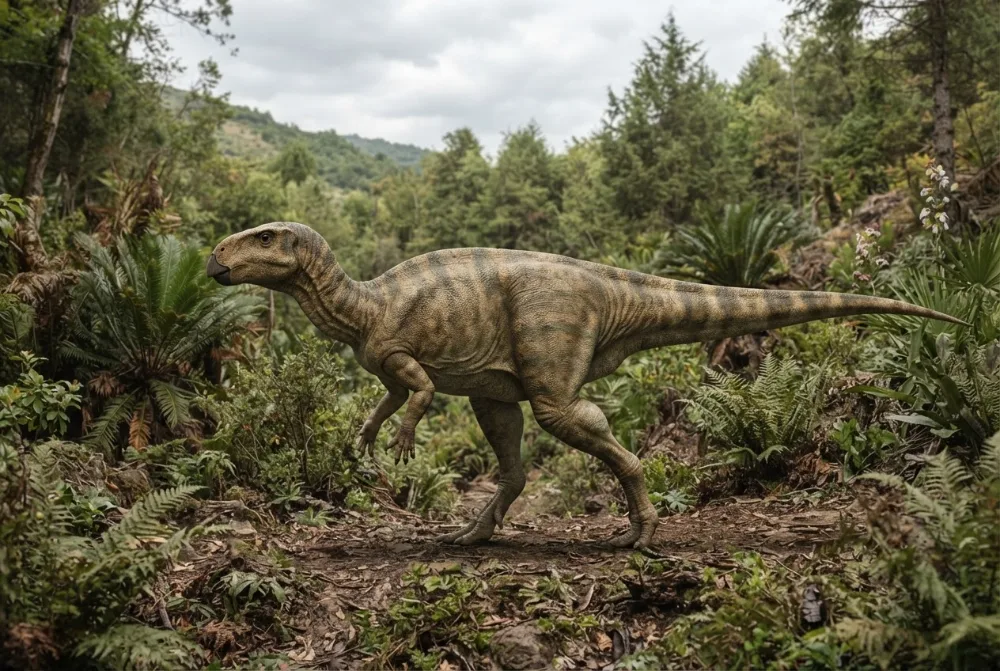
Zalmoxes
Zalmoxes was a small, plant-eating dinosaur that lived on an island called Hateg, in what is now Romania. It walked on two legs, had a beak, and ate tough plants. It was about the size of a small car, but some were even smaller!1
Ankakhala liti?
Anali wamkulu bwanji?
Anali wautali bwanji?
Msinkhu wake unali wautali bwanji?
kuyerekeza
Ankalemera bwanji?
 wautali ngati agalu 3 otsatizana mphuno ndi mchira🍌wautali ngati nthochi 16 zotsatizana
 wolemera ngati amphaka a pakhomo 11🍉wolemera ngati mavwende 9🧸wolemera ngati ana a sukulu ya mkaka 2.5🎒wolemera ngati ana a sukulu 1.5🏃akanatha kuthamanga mamita 100 m'masekondi 8.2 (munthu waliwiro kwambiri amafunika 9.6)
Zalmoxes anali wamkulu bwanji poyerekeza ndi IWEYO?
Ndi masamu chabe mu msakatuli wako. Palibe chimene chimasungidwa kapena kutumizidwa kwina kulikonse.
Anali ndi liwiro lotani?


Mfundo zosangalatsa
Zalmoxes had a slow growth rate and a long growth period, which is different from many other dinosaurs.1
It lived on an island, and scientists think it might have been smaller than its relatives because of island dwarfism, though some think it was already small.1
Zalmoxes had a large triangular head and a beak, which helped it eat tough plants.1
Fossils of Zalmoxes have been found in Austria and France too, not just Romania.4
One species of Zalmoxes, called Z. shqiperorum, was later reclassified as a different type of dinosaur, a ceratopsian, not an ornithopod.1
Zalmoxes was one of the most common vertebrates in Transylvania during the latest Cretaceous period.1
Mafunso ofunsidwa kwambiri okhudza Zalmoxes
?How big was Zalmoxes?
Zalmoxes was small, with adults of Z. robustus reaching about 2.5 metres (8.2 feet) long and weighing about 45 kilograms (99 pounds). An unnamed species grew to about 2.9 metres (9.5 feet) long.1
?What did Zalmoxes eat?
Zalmoxes ate tough, fibrous plants like soft shoots, horsetails, angiosperms, pteridophytes, and ferns. It had a beak and could process C3 plants.1
?When did Zalmoxes live?
Zalmoxes lived during the Maastrichtian age of the Late Cretaceous, about 70 to 66 million years ago. It was one of the most common vertebrates in Transylvania at that time.13
?Where was Zalmoxes found?
Fossils of Zalmoxes have been found in Romania, specifically in the Hateg Basin of Transylvania. Some sources also mention finds in Austria and France, but the main site is Romania.13
?Was Zalmoxes a dinosaur?
Yes, Zalmoxes was a dinosaur, specifically a small ornithopod. It is classified as a probable rhabdodontid ornithopod, not a ceratopsian, though one species was later reclassified.13
?Why was Zalmoxes small?
Scientists once thought Zalmoxes was small due to island dwarfism, but later studies suggest it was already close to the size of its ancestors. Some related species were larger or smaller due to island effects.1
Wothetsa nthano zabodza
Nthano: Some people think Zalmoxes was a dwarf dinosaur because it lived on an island.
Zoona: Scientists now think Zalmoxes was already small, and its larger relative Rhabdodon had island gigantism, while a smaller relative Mochlodon had island dwarfism.1
Kwa akatswiri a madino
- Dzina la sayansi
- Zalmoxes
- Anapatsidwa dzina ndi
- Weishampel et al. 20034
- Gulu
- Odya zomera a milomo
- Banja / kladi
- Rhabdodontoidea4
- Magawidwe a sayansi
- Ornithischia > Ornithopoda > Iguanodontia4
- Zaka za miyala
- zaka 84 mpaka 66 miliyoni (Campanian / Maastrichtian)4
- Mapangidwe a miyala
- Sebeş, Sînpetru, Densuș-Ciula4
- Mayiko
- Romaniya, Austria, Falansa4
- Zolemba za mafosili
- 44 mu The Paleobiology Database4
- Amadziwikanso kuti
- Onychosaurus (mayina akale tsopano amawerengedwa ngati nyama yomweyi)4
- Kupezeka
- The first fossils were named Mochlodon robustus by Baron Franz Nopcsa in 1899. In 2003, scientists renamed them Zalmoxes robustus after studying new remains.12
- Akukambiranabe
- Scientists still debate whether Zalmoxes was a dwarf species or just naturally small, and how it is related to other similar dinosaurs.1
Kumene mfundo zimachokera
- Zalmoxes (en.wikipedia.org)
- Osteology and phylogeny of Zalmoxes (n. g.), an unusual Euornithopod dinosaur from the latest Cretaceous of Romania (tandfonline.com)
- Zalmoxes | Natural History Museum (nhm.ac.uk)
- Zalmoxes in The Paleobiology Database (CC BY 4.0): zaka, malo, mapangidwe a miyala, magawidwe a sayansi.
Mfundo iliyonse patsamba lino ili ndi nambala yosonyeza kumene yachokera. Ngati talakwitsa kanthu, pepa, ndife okonda madino, osati magazini ya sayansi. Tiuze pa [email protected] ndipo tikonza.
 Rex ali ndi njala! Dino Wiki ndi ntchito ya bambo kwa mwana wawo wamwamuna wokonda madainoso, yaulere popanda zotsatsa ndi zokazonda. Akuluakulu angadyetse Rex zokhwasula-khwasula kuti tsambali lipitirize kupezeka pa intaneti.Dyetsa Rex
 Iguanodon
 Tenontosaurus
 Thescelosaurus
 Camptosaurus
 Rhabdodon
 Nanosaurus
 Tyrannosaurus
 Triceratops
 Velociraptor
 Spinosaurus
 Ankylosaurus
 Parasaurolophus