 Kwizi ya Ndiwe dino uti?
 Nkhondo ya madino
 Mpikisano wa madino
 Masewera ang'onoang'ono a madino
 Chimbale cha zomata
 Mindandanda ya TOP ya madino
 Ndidabwitse!
Ankakhala liti?

Anali wamkulu bwanji?
Anali wautali bwanji?
Msinkhu wake unali wautali bwanji?
kuyerekeza
 wautali ngati amphaka a pakhomo 4 otsatizana mphuno ndi mchira🍌wautali ngati nthochi 12 zotsatizana🏊akanatha kusambira utali wa dziwe lalikulu losambira (50 m) m'masekondi 7.8
Canadaga anali wamkulu bwanji poyerekeza ndi IWEYO?
Ndi masamu chabe mu msakatuli wako. Palibe chimene chimasungidwa kapena kutumizidwa kwina kulikonse.
Anali ndi liwiro lotani?


Mfundo zosangalatsa
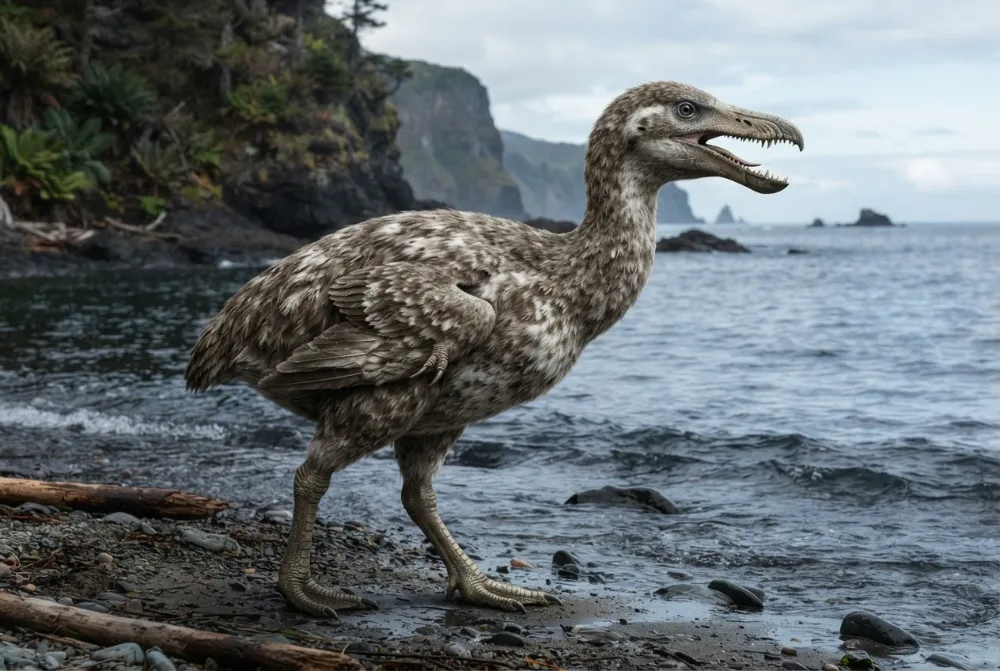
Canadaga is one of the largest known members of its group, reaching about 2.2 metres (7.2 feet) long.1
It lived in the Arctic, which is unusual because most of its relatives lived in warmer waters.1
Canadaga was one of the last of its kind, living about 67 million years ago, just before the dinosaurs went extinct.1
Its fossils were found in rocks from the Kanguk Formation, which is from the Late Cretaceous period.1
Scientists found only a few bones: three neck vertebrae, one tail vertebra, and two thigh bones.1
Canadaga could not fly, but it was a great swimmer, using its legs to push through the water.1
Mafunso ofunsidwa kwambiri okhudza Canadaga
?Was Canadaga a dinosaur?
Yes, Canadaga was a dinosaur. Like all birds, it belongs to the group of dinosaurs called theropods.1
?How big was Canadaga?
Canadaga was about 2.2 metres (7.2 feet) long, making it one of the largest known members of its group.1
?Could Canadaga fly?
No, Canadaga could not fly. It was a flightless bird that used its strong legs to dive and swim in the sea.1
Wothetsa nthano zabodza
Nthano: Some people think Canadaga was a dinosaur.
Zoona: Canadaga was a bird, not a dinosaur, even though it lived during the age of dinosaurs.1
Kwa akatswiri a madino
- Dzina la sayansi
- Canadaga
- Anapatsidwa dzina ndi
- Hou 19993
- Gulu
- Mbalame zoyambirira
- Banja / kladi
- Hesperornithidae3
- Magawidwe a sayansi
- Theropoda > Avialae3
- Zaka za miyala
- zaka 84 mpaka 66 miliyoni (Campanian / Maastrichtian)3
- Mapangidwe a miyala
- Kanguk3
- Mayiko
- Kanada3
- Zolemba za mafosili
- 2 mu The Paleobiology Database3
- Kupezeka
- The fossils were collected from Bylot Island, Canada, and were studied by Chinese scientist Hou Lian-Hai, who named the species Canadaga arctica in 1999.12
- Akukambiranabe
- Scientists are still debating why Canadaga and other large hesperornithids went extinct, with some thinking their large size and special features played a role.2
Kumene mfundo zimachokera
- Canadaga (en.wikipedia.org)
- NEW HESPERORMTHID (AVES) FROM THE CANADIAN ARCTIC (vertpala.ac.cn)
- Canadaga in The Paleobiology Database (CC BY 4.0): zaka, malo, mapangidwe a miyala, magawidwe a sayansi.
Mfundo iliyonse patsamba lino ili ndi nambala yosonyeza kumene yachokera. Ngati talakwitsa kanthu, pepa, ndife okonda madino, osati magazini ya sayansi. Tiuze pa [email protected] ndipo tikonza.
 Rex ali ndi njala! Dino Wiki ndi ntchito ya bambo kwa mwana wawo wamwamuna wokonda madainoso, yaulere popanda zotsatsa ndi zokazonda. Akuluakulu angadyetse Rex zokhwasula-khwasula kuti tsambali lipitirize kupezeka pa intaneti.Dyetsa Rex
 Archaeopteryx
 Hesperornis
 Ichthyornis
 Baptornis
 Jurapteryx
 Gobipteryx
 Tyrannosaurus
 Triceratops
 Velociraptor
 Spinosaurus
 Ankylosaurus
 Parasaurolophus