 Kwizi ya Ndiwe dino uti?
 Nkhondo ya madino
 Mpikisano wa madino
 Masewera ang'onoang'ono a madino
 Chimbale cha zomata
 Mindandanda ya TOP ya madino
 Ndidabwitse!
Cimoliopterus
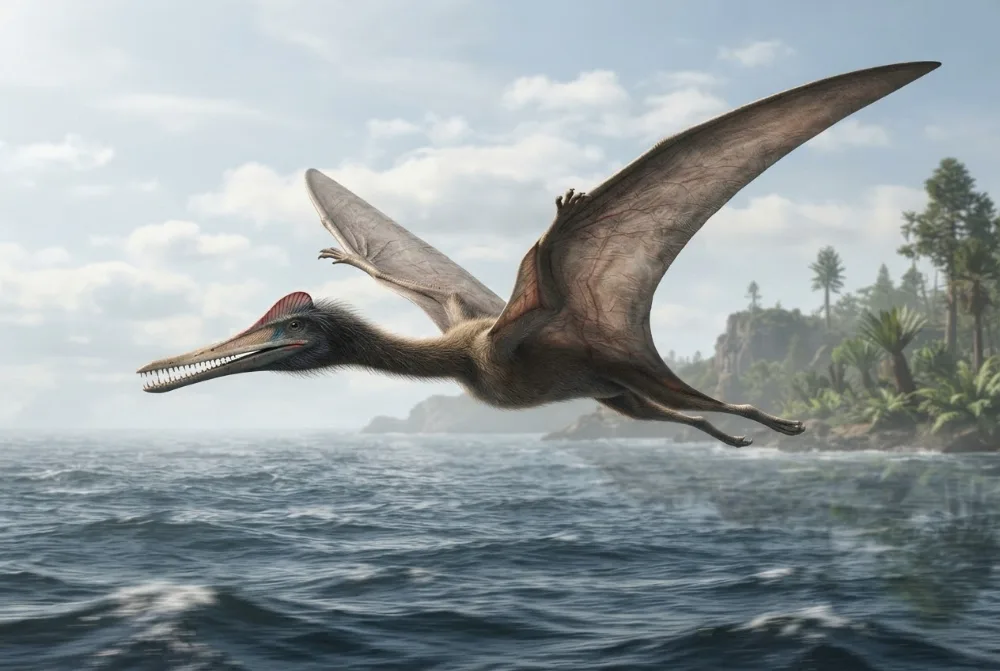
Cimoliopterus was a flying reptile that soared over the seas during the time of the dinosaurs. It had a long, toothy snout and a thin crest on its beak. It probably caught fish by swooping down and snatching them from the water.51
Ankakhala liti?
Anali wamkulu bwanji?
Mapiko ake anali otambalala bwanji?
 mapiko otambalala ngati njinga 3 pamzere⚽akanatha kuuluka kudutsa bwalo lonse la mpira m'masekondi 5.5
Cimoliopterus anali wamkulu bwanji poyerekeza ndi IWEYO?
Ndi masamu chabe mu msakatuli wako. Palibe chimene chimasungidwa kapena kutumizidwa kwina kulikonse.
Anali ndi liwiro lotani?


Mfundo zosangalatsa
Cimoliopterus had a thin crest on the top of its snout that started above the fourth pair of teeth.1
The tip of its snout was small and blunt, and the front of the upper jaw sloped downward at about a 45-degree angle.1
One species, Cimoliopterus dunni, was discovered in Texas and is the first North American record of this pterosaur genus.1
It had at least 26 teeth in its upper jaw, and the first pair pointed more downward than forward.1
Mafunso ofunsidwa kwambiri okhudza Cimoliopterus
?How big was Cimoliopterus?
Cimoliopterus cuvieri had a wingspan of about 3.5 metres (11 feet), and Cimoliopterus dunni was similar in size. One Cimoliopterus specimen had a wingspan of about 5 metres (16 feet).3
?What did Cimoliopterus eat?
It probably ate fish. It may have flown over the water and dipped its long jaws in to catch fish with its interlocking teeth.34
?Could Cimoliopterus fly?
Yes, it was a flying reptile. It was probably good at long-distance soaring over oceans, and its fossils are mostly found in marine rocks.3
?Why did Cimoliopterus have a crest?
Scientists are not sure. Some think the crest helped steady its jaws in the water while fishing, but it may have been for display.3
Kwa akatswiri a madino
- Dzina la sayansi
- Cimoliopterus
- Anapatsidwa dzina ndi
- Rodrigues and Kellner 20135
- Gulu
- Zokwawa zouluka
- Banja / kladi
- Pteranodontoidea5
- Magawidwe a sayansi
- Pterosauria > Pterodactyloidea5
- Zaka za miyala
- zaka 100 mpaka 90 miliyoni (Cenomanian / Turonian)5
- Mapangidwe a miyala
- Britton5
- Mayiko
- United Kingdom, Amereka5
- Zolemba za mafosili
- 2 mu The Paleobiology Database5
- Kupezeka
- The genus Cimoliopterus was named in 2013 by paleontologists Taissa Rodrigues and Alexander Kellner based on fossils from England. A second species, Cimoliopterus dunni, was described in 2015 by Timothy Myers from a partial snout found in Texas.51
- Akukambiranabe
- Scientists are not sure exactly how large Cimoliopterus grew, because only parts of the skull have been found so far.1
Kumene mfundo zimachokera
- First North American occurrence of the toothed pteranodontoid pterosaur Cimoliopterus: Journal of Vertebrate Paleontology: Vol 35 , No 6 - Get Access (tandfonline.com)
- PBDB Taxon (paleobiodb.org)
- Cimoliopterus (en.wikipedia.org)
- New North American pterosaur is a Texan -- but flying reptile's closest cousin is English | EurekAlert! (eurekalert.org)
- Cimoliopterus in The Paleobiology Database (CC BY 4.0): zaka, malo, mapangidwe a miyala, magawidwe a sayansi.
Mfundo iliyonse patsamba lino ili ndi nambala yosonyeza kumene yachokera. Ngati talakwitsa kanthu, pepa, ndife okonda madino, osati magazini ya sayansi. Tiuze pa [email protected] ndipo tikonza.
 Rex ali ndi njala! Dino Wiki ndi ntchito ya bambo kwa mwana wawo wamwamuna wokonda madainoso, yaulere popanda zotsatsa ndi zokazonda. Akuluakulu angadyetse Rex zokhwasula-khwasula kuti tsambali lipitirize kupezeka pa intaneti.Dyetsa Rex
 Pteranodon
 Quetzalcoatlus
 Dorygnathus
 Rhamphorhynchus
 Anhanguera
 Pterodactylus
 Tyrannosaurus
 Triceratops
 Velociraptor
 Spinosaurus
 Ankylosaurus
 Parasaurolophus