 Kwizi ya Ndiwe dino uti?
 Nkhondo ya madino
 Mpikisano wa madino
 Masewera ang'onoang'ono a madino
 Chimbale cha zomata
 Mindandanda ya TOP ya madino
 Ndidabwitse!
Ankakhala liti?

Anali wamkulu bwanji?
Anali wautali bwanji?
Msinkhu wake unali wautali bwanji?
Ankalemera bwanji?

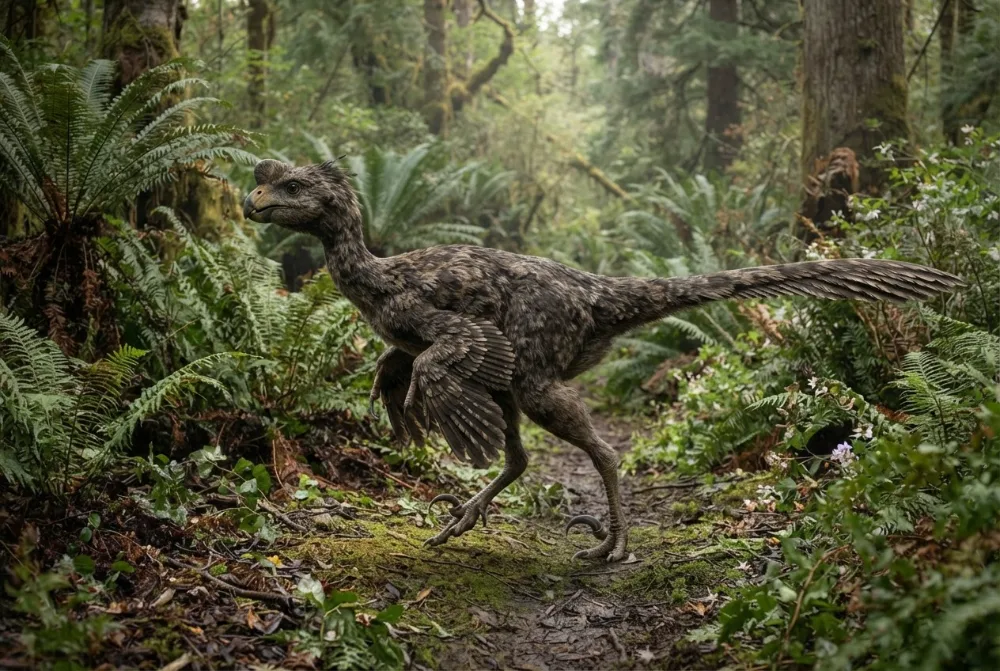
 wautali ngati agalu 2.5 otsatizana mphuno ndi mchira🍌wautali ngati nthochi 14 zotsatizana🍉wolemera ngati mavwende 4🏃akanatha kuthamanga mamita 100 m'masekondi 9.5 (munthu waliwiro kwambiri amafunika 9.6)
Citipes anali wamkulu bwanji poyerekeza ndi IWEYO?
Ndi masamu chabe mu msakatuli wako. Palibe chimene chimasungidwa kapena kutumizidwa kwina kulikonse.
Anali ndi liwiro lotani?


Mfundo zosangalatsa
Citipes was named in 2020, but its fossils were first discovered in 1926 and were thought to belong to other dinosaurs like Ornithomimus.1
A fossil of a young Gorgosaurus was found with the legs of at least two Citipes inside its stomach, showing that Citipes was hunted by this larger dinosaur.1
The Citipes legs inside the Gorgosaurus were from babies less than one year old, and the Gorgosaurus seemed to prefer eating the muscular hind legs.1
Citipes had a fused ankle and strong leg muscles, which made it a very fast runner.1
One Citipes fossil shows a broken hip bone that had healed, meaning the animal survived a serious injury.1
Citipes lived alongside two other similar dinosaurs, Caenagnathus and Chirostenotes, but they were different sizes and probably ate different foods to avoid competing.1
Mafunso ofunsidwa kwambiri okhudza Citipes
?How big was Citipes?
Citipes was a small dinosaur, roughly the size of an emu when fully grown. The juveniles found in the Gorgosaurus stomach were about the size of a turkey.2
?What did Citipes eat?
Citipes probably ate plants and small animals, since it had a beak like a parrot. It lived alongside two similar dinosaurs that ate different foods to avoid competing.1
?Did Citipes have feathers?
Yes, scientists think Citipes was covered in feathers, like many other bird-like dinosaurs. It was a caenagnathid, a type of feathered theropod.1
Wothetsa nthano zabodza
Nthano: Citipes is often confused with the dinosaur Citipati, which has a similar name.
Zoona: Citipes and Citipati are different dinosaurs. Citipati is an oviraptorid from Mongolia, while Citipes is a caenagnathid from North America.1
Kwa akatswiri a madino
- Dzina la sayansi
- Citipes
- Anapatsidwa dzina ndi
- Funston 20203
- Gulu
- Madino a nthenga achilendo
- Banja / kladi
- Caenagnathidae3
- Magawidwe a sayansi
- Theropoda > Oviraptorosauria3
- Zaka za miyala
- zaka 84 mpaka 66 miliyoni (Campanian / Maastrichtian)3
- Mapangidwe a miyala
- Dinosaur Park, Hell Creek3
- Mayiko
- Kanada, Amereka3
- Zolemba za mafosili
- 12 mu The Paleobiology Database3
- Kupezeka
- The first Citipes fossils were found in 1926 in Alberta, Canada, by a University of Toronto expedition. They were named Ornithomimus elegans by William Parks in 1933, but later moved to their own genus Citipes by Gregory Funston in 2020.1
- Akukambiranabe
- Scientists are not sure exactly what Citipes ate. It had a beak but no teeth, so it may have eaten plants, small animals, or both.1
Kumene mfundo zimachokera
- Citipes (en.wikipedia.org)
- Young tyrannosaur found with baby dinosaurs in its stomach | CBC News (cbc.ca)
- Citipes in The Paleobiology Database (CC BY 4.0): zaka, malo, mapangidwe a miyala, magawidwe a sayansi.
Mfundo iliyonse patsamba lino ili ndi nambala yosonyeza kumene yachokera. Ngati talakwitsa kanthu, pepa, ndife okonda madino, osati magazini ya sayansi. Tiuze pa [email protected] ndipo tikonza.
 Rex ali ndi njala! Dino Wiki ndi ntchito ya bambo kwa mwana wawo wamwamuna wokonda madainoso, yaulere popanda zotsatsa ndi zokazonda. Akuluakulu angadyetse Rex zokhwasula-khwasula kuti tsambali lipitirize kupezeka pa intaneti.Dyetsa Rex
 Therizinosaurus
 Oviraptor
 Chirostenotes
 Leptorhynchos
 Avimimus
 Caenagnathus
 Tyrannosaurus
 Triceratops
 Velociraptor
 Spinosaurus
 Ankylosaurus
 Parasaurolophus