 Kwizi ya Ndiwe dino uti?
 Nkhondo ya madino
 Mpikisano wa madino
 Masewera ang'onoang'ono a madino
 Chimbale cha zomata
 Mindandanda ya TOP ya madino
 Ndidabwitse!
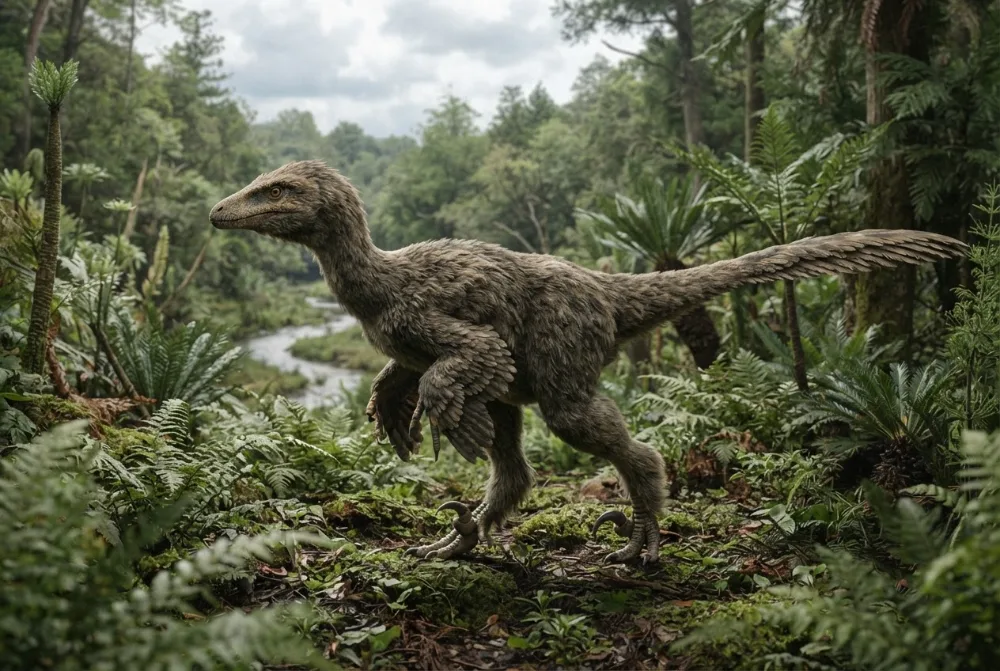
Fukuivenator
Fukuivenator was a small, fast dinosaur that lived in what is now Japan. It had a strange mix of features from different dinosaur groups, making it a real puzzle for scientists. This dinosaur might have eaten both plants and meat, like a modern raccoon.12
Ankakhala liti?
Anali wamkulu bwanji?
Anali wautali bwanji?
Msinkhu wake unali wautali bwanji?
kuyerekeza
Ankalemera bwanji?
 wautali ngati amphaka a pakhomo 5 otsatizana mphuno ndi mchira🍌wautali ngati nthochi 14 zotsatizana🍉wolemera ngati mavwende 5🏃akanatha kuthamanga mamita 100 m'masekondi 13 (munthu waliwiro kwambiri amafunika 9.6)
Fukuivenator anali wamkulu bwanji poyerekeza ndi IWEYO?
Ndi masamu chabe mu msakatuli wako. Palibe chimene chimasungidwa kapena kutumizidwa kwina kulikonse.
Anali ndi liwiro lotani?


Mfundo zosangalatsa
Fukuivenator is known from a nearly complete skeleton, making it the most complete non-bird dinosaur ever found in Japan.12
Its inner ear was shaped like a mix between those of birds and other dinosaurs, showing a step in the evolution of bird hearing.12
Fukuivenator had a very large nostril opening, almost as tall as another hole in its skull called the antorbital fenestra.1
This dinosaur had different kinds of teeth in its mouth, a feature called heterodonty. Some teeth were small and spatula-shaped, while others were large and curved.1
Mafunso ofunsidwa kwambiri okhudza Fukuivenator
?How big was Fukuivenator?
Fukuivenator was about 2.45 metres (8.0 feet) long and weighed around 25 kilograms (55 pounds).41
?What did Fukuivenator eat?
Fukuivenator probably ate both plants and meat, like a modern raccoon. Its teeth and long neck suggest it was at least omnivorous, maybe even mostly herbivorous.41
?Where was Fukuivenator found?
Fukuivenator was found in 2007 in a quarry near the Sugiyama River in Katsuyama, Japan. The skeleton is the most complete non-bird dinosaur fossil ever found in Japan.41
?When did Fukuivenator live?
Fukuivenator lived during the Early Cretaceous, about 127 to 115 million years ago. That's based on radiometric dating of nearby rocks.4
Kwa akatswiri a madino
- Dzina la sayansi
- Fukuivenator
- Anapatsidwa dzina ndi
- Azuma et al. 20165
- Gulu
- Madino a nthenga achilendo
- Banja / kladi
- Therizinosauria5
- Magawidwe a sayansi
- Theropoda > Therizinosauria5
- Zaka za miyala
- zaka 121 mpaka 113 miliyoni (Aptian)5
- Mapangidwe a miyala
- Kitadani5
- Mayiko
- Japani5
- Zolemba za mafosili
- 1 mu The Paleobiology Database5
- Kupezeka
- Fukuivenator was named in 2016 by a team led by Yoichi Azuma. The fossil was found in the summer of 2007 in the Kitadani Dinosaur Quarry in Fukui, Japan. It was a nearly complete skeleton, the most complete non-bird dinosaur from Japan.13
- Akukambiranabe
- Scientists are not sure which dinosaur group Fukuivenator belongs to. It has features of dromaeosaurids, therizinosaurs, and other groups, but its exact family tree is still debated.12
Kumene mfundo zimachokera
- A bizarre theropod from the Early Cretaceous of Japan highlighting mosaic evolution among coelurosaurians | Scientific Reports (nature.com)
- A bizarre theropod from the Early Cretaceous of Japan highlighting mosaic evolution among coelurosaurians (pmc.ncbi.nlm.nih.gov)
- PBDB Taxon (paleobiodb.org)
- Fukuivenator (en.wikipedia.org)
- Fukuivenator in The Paleobiology Database (CC BY 4.0): zaka, malo, mapangidwe a miyala, magawidwe a sayansi.
Mfundo iliyonse patsamba lino ili ndi nambala yosonyeza kumene yachokera. Ngati talakwitsa kanthu, pepa, ndife okonda madino, osati magazini ya sayansi. Tiuze pa [email protected] ndipo tikonza.
 Rex ali ndi njala! Dino Wiki ndi ntchito ya bambo kwa mwana wawo wamwamuna wokonda madainoso, yaulere popanda zotsatsa ndi zokazonda. Akuluakulu angadyetse Rex zokhwasula-khwasula kuti tsambali lipitirize kupezeka pa intaneti.Dyetsa Rex
 Therizinosaurus
 Oviraptor
 Chirostenotes
 Citipes
 Leptorhynchos
 Avimimus
 Stegosaurus
 Iguanodon
 Archaeopteryx
 Giganotosaurus
 Microraptor
 Deinonychus