 Kwizi ya Ndiwe dino uti?
 Nkhondo ya madino
 Mpikisano wa madino
 Masewera ang'onoang'ono a madino
 Chimbale cha zomata
 Mindandanda ya TOP ya madino
 Ndidabwitse!
Imperobator
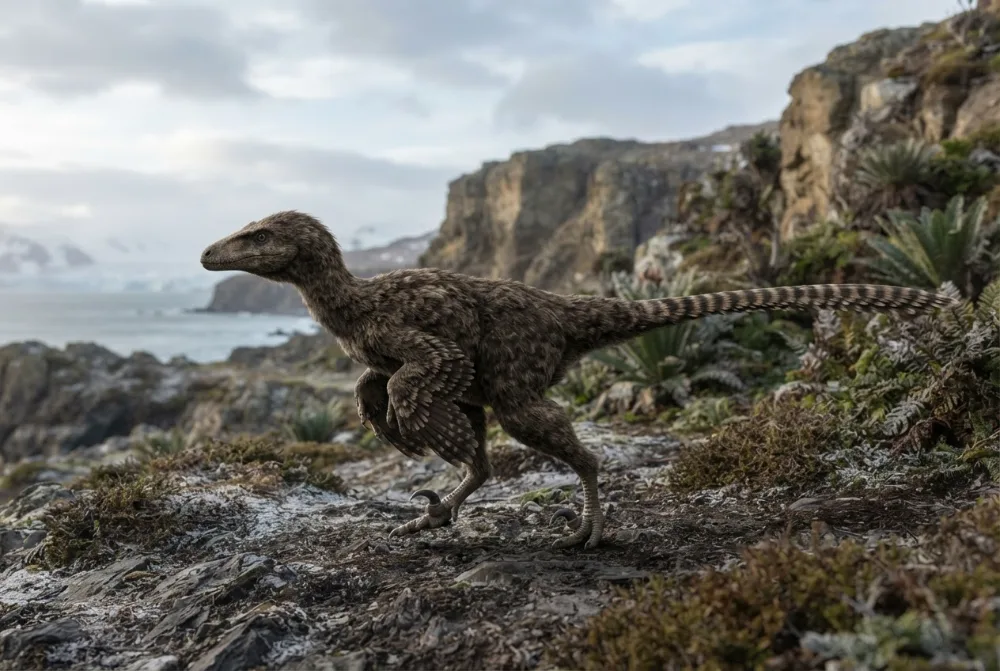
Imperobator was a meat-eating dinosaur that lived in Antarctica during the Late Cretaceous. It was one of only two non-bird theropods known from that icy continent. Scientists think it was a close cousin of the famous raptors like Velociraptor.1
Ankakhala liti?
Anali wamkulu bwanji?
Anali wautali bwanji?
Msinkhu wake unali wautali bwanji?
 wautali ngati agalu 3 otsatizana mphuno ndi mchira🍌wautali ngati nthochi 17 zotsatizana🏃akanatha kuthamanga mamita 100 m'masekondi 7.2 (munthu waliwiro kwambiri amafunika 9.6)
Imperobator anali wamkulu bwanji poyerekeza ndi IWEYO?
Ndi masamu chabe mu msakatuli wako. Palibe chimene chimasungidwa kapena kutumizidwa kwina kulikonse.
Anali ndi liwiro lotani?


Mfundo zosangalatsa
Imperobator is one of only two non-avian theropod dinosaurs ever found in Antarctica.1
Its foot did not have the famous sickle claw that most raptors have, which surprised scientists.1
The first fossils were discovered in 2003 by a team from the University of California Museum of Paleontology.1
Imperobator lived about 71 million years ago, when Antarctica was warmer and covered in forests.1
It shared its home with the ornithopod dinosaur Morrosaurus and the bird Antarcticavis.1
Scientists are still debating whether Imperobator was a true dromaeosaur or a more primitive paravian.1
Mafunso ofunsidwa kwambiri okhudza Imperobator
?How big was Imperobator?
Imperobator was about 2 to 3 metres long, similar in size to Deinonychus. It was originally thought to be much larger, like Utahraptor, but later studies showed it was smaller.1
?Did Imperobator have a sickle claw?
No, Imperobator did not have the famous sickle claw on its foot that most raptors have. This surprised scientists and helped them figure out it was not a true dromaeosaur.1
?What did Imperobator eat?
Imperobator was a meat-eating dinosaur. Its teeth were long, curved, and bladed, just like those of other carnivorous paravians.1
?Where was Imperobator found?
Imperobator was found on James Ross Island in Antarctica. The first fossils were discovered in 2003 by a team from the University of California Museum of Paleontology.1
?When did Imperobator live?
Imperobator lived about 71 million years ago, during the Late Cretaceous period. At that time, Antarctica was warmer and covered in forests.1
?Is Imperobator a dinosaur?
Yes, Imperobator is a non-avian theropod dinosaur. It is one of only two non-bird theropods ever found in Antarctica.1
Wothetsa nthano zabodza
Nthano: Imperobator had a sickle claw like Velociraptor.
Zoona: Imperobator lacked the distinctive sickle claw on its foot, which sets it apart from typical dromaeosaurs.1
Kwa akatswiri a madino
- Dzina la sayansi
- Imperobator
- Anapatsidwa dzina ndi
- Ely and Case 20192
- Gulu
- Maraputala
- Banja / kladi
- Dromaeosauridae2
- Magawidwe a sayansi
- Theropoda > Dromaeosauridae2
- Zaka za miyala
- zaka 72 mpaka 66 miliyoni (Maastrichtian)2
- Mapangidwe a miyala
- Snow Hill Island2
- Mayiko
- Antakitika2
- Zolemba za mafosili
- 1 mu The Paleobiology Database2
- Kupezeka
- Imperobator was named by Ricardo Ely and Judd Case in 2019. The fossils were first found in 2003 on James Ross Island, Antarctica, and were initially thought to be a dromaeosaur.12
- Akukambiranabe
- Scientists are not sure whether Imperobator belongs to the dromaeosaur family or to a more primitive group of paravians.1
Kumene mfundo zimachokera
- Imperobator (en.wikipedia.org)
- Imperobator in The Paleobiology Database (CC BY 4.0): zaka, malo, mapangidwe a miyala, magawidwe a sayansi.
Mfundo iliyonse patsamba lino ili ndi nambala yosonyeza kumene yachokera. Ngati talakwitsa kanthu, pepa, ndife okonda madino, osati magazini ya sayansi. Tiuze pa [email protected] ndipo tikonza.
 Rex ali ndi njala! Dino Wiki ndi ntchito ya bambo kwa mwana wawo wamwamuna wokonda madainoso, yaulere popanda zotsatsa ndi zokazonda. Akuluakulu angadyetse Rex zokhwasula-khwasula kuti tsambali lipitirize kupezeka pa intaneti.Dyetsa Rex
 Velociraptor
 Microraptor
 Deinonychus
 Asiamericana
 Richardoestesia
 Saurornitholestes
 Tyrannosaurus
 Triceratops
 Spinosaurus
 Ankylosaurus
 Parasaurolophus
 Pteranodon