 Kwizi ya Ndiwe dino uti?
 Nkhondo ya madino
 Mpikisano wa madino
 Masewera ang'onoang'ono a madino
 Chimbale cha zomata
 Mindandanda ya TOP ya madino
 Ndidabwitse!
Istiorachis
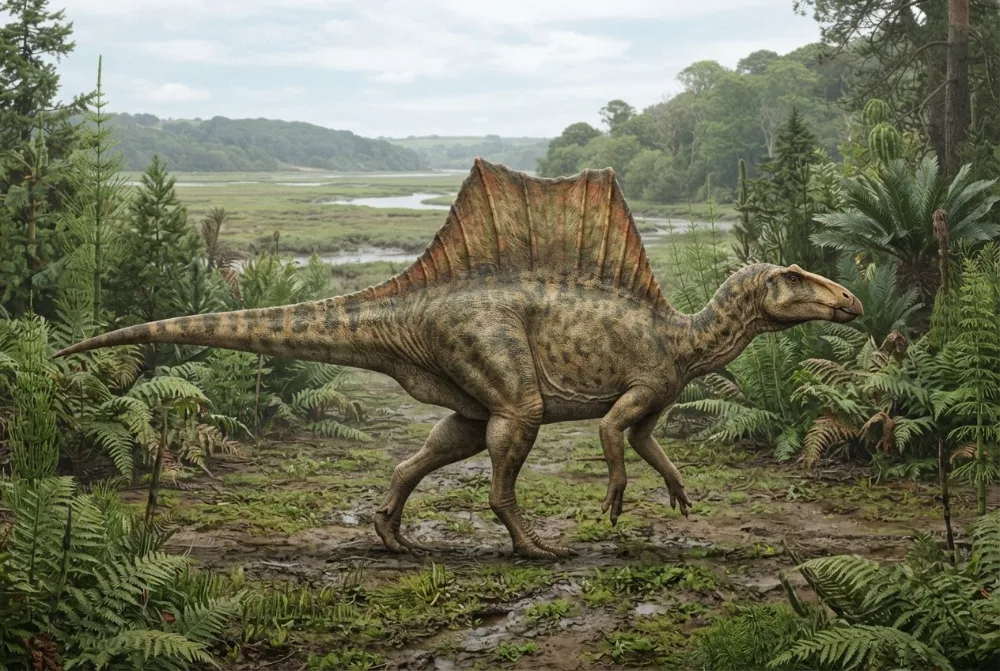
Istiorachis was a plant-eating dinosaur that lived on the Isle of Wight over 120 million years ago. It had a tall sail on its back made of long spines, which might have helped it show off to other dinosaurs. It was about the size of an American bison and weighed as much as a small car.2
Ankakhala liti?
Anali wamkulu bwanji?
Msinkhu wake unali wautali bwanji?
Ankalemera bwanji?

Istiorachis anali wamkulu bwanji poyerekeza ndi IWEYO?
Ndi masamu chabe mu msakatuli wako. Palibe chimene chimasungidwa kapena kutumizidwa kwina kulikonse.
Anali ndi liwiro lotani?


Mfundo zosangalatsa
Istiorachis had very long spines on its back and tail bones, making a sail-like structure that was probably used for showing off to mates or scaring predators.1
Its name honors Dame Ellen MacArthur, a famous sailor from the Isle of Wight who sailed solo around the world.1
The only known fossil of Istiorachis was found in a plant debris bed near Grange Chine on the Isle of Wight.1
Some of the skeleton was stolen by poachers before scientists could collect it.1
Istiorachis belonged to a group of dinosaurs called iguanodontians, which were common in the Early Cretaceous.2
The sail of Istiorachis was made of neural spines that were over four times taller than the main part of the backbone.1
Mafunso ofunsidwa kwambiri okhudza Istiorachis
?How big was Istiorachis?
It was about the size of an American bison, stood around two metres tall, and weighed about one tonne (1,000 kilograms).2
?What did Istiorachis eat?
It was a plant-eating dinosaur, so it ate plants like ferns, cycads and conifers that grew in its warm, forested environment.3
Kwa akatswiri a madino
- Dzina la sayansi
- Istiorachis
- Anapatsidwa dzina ndi
- Lockwood et al. 20254
- Gulu
- Odya zomera a milomo
- Banja / kladi
- Styracosterna4
- Magawidwe a sayansi
- Ornithischia > Ornithopoda > Iguanodontia4
- Zaka za miyala
- zaka 133 mpaka 121 miliyoni (Hauterivian / Barremian)4
- Mapangidwe a miyala
- Wessex4
- Mayiko
- United Kingdom4
- Zolemba za mafosili
- 1 mu The Paleobiology Database4
- Kupezeka
- Istiorachis was named in 2025 by Jeremy Lockwood, David Martill, and Susannah Maidment. The fossil was dug up by Nicholas Chase from the Wessex Formation on the Isle of Wight.1
- Akukambiranabe
- Scientists are not sure exactly what the sail was used for. It might have helped with walking on four legs, or it might have been for showing off to other dinosaurs.1
Kumene mfundo zimachokera
- The origins of neural spine elongation in iguanodontian dinosaurs and the osteology of a new sail-back styracosternan (Dinosauria, Ornithischia) from the Lower Cretaceous Wealden Group of England (onlinelibrary.wiley.com)
- New sail-backed dinosaur species unearthed on the Isle of Wight | Natural History Museum (nhm.ac.uk)
- Istiorachis (en.wikipedia.org)
- Istiorachis in The Paleobiology Database (CC BY 4.0): zaka, malo, mapangidwe a miyala, magawidwe a sayansi.
Mfundo iliyonse patsamba lino ili ndi nambala yosonyeza kumene yachokera. Ngati talakwitsa kanthu, pepa, ndife okonda madino, osati magazini ya sayansi. Tiuze pa [email protected] ndipo tikonza.
 Rex ali ndi njala! Dino Wiki ndi ntchito ya bambo kwa mwana wawo wamwamuna wokonda madainoso, yaulere popanda zotsatsa ndi zokazonda. Akuluakulu angadyetse Rex zokhwasula-khwasula kuti tsambali lipitirize kupezeka pa intaneti.Dyetsa Rex
 Iguanodon
 Tenontosaurus
 Thescelosaurus
 Zalmoxes
 Camptosaurus
 Rhabdodon
 Stegosaurus
 Archaeopteryx
 Giganotosaurus
 Microraptor
 Deinonychus
 Baryonyx