 Kwizi ya Ndiwe dino uti?
 Nkhondo ya madino
 Mpikisano wa madino
 Masewera ang'onoang'ono a madino
 Chimbale cha zomata
 Mindandanda ya TOP ya madino
 Ndidabwitse!
Iyuku
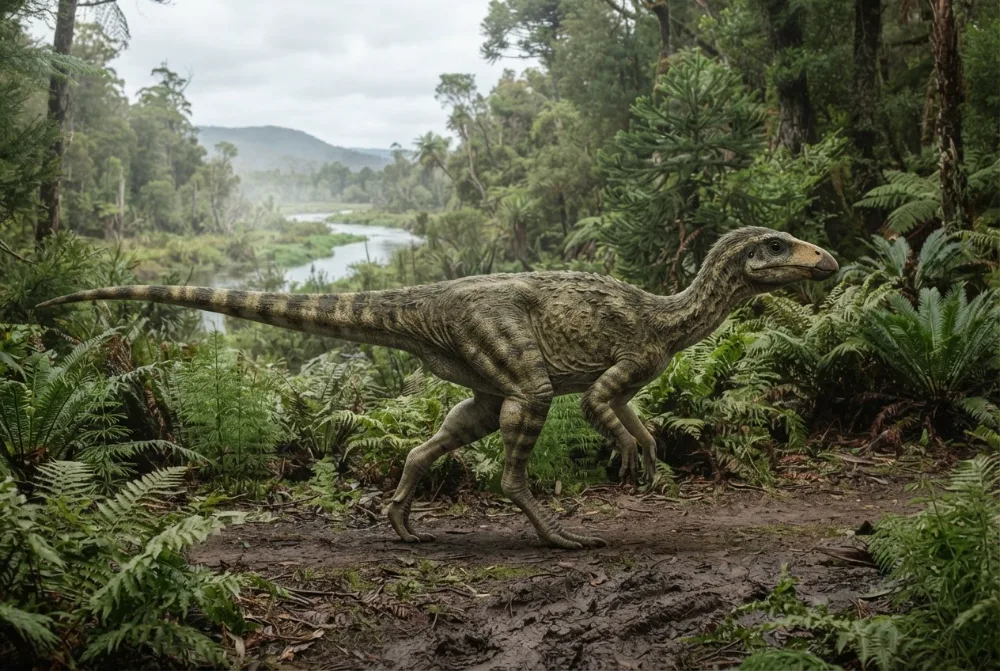
Iyuku was a small, plant-eating dinosaur that lived in what is now South Africa. What makes it really special is that almost all the fossils found are from babies and very young dinosaurs! Scientists think a whole group of Iyuku hatchlings died together during a dry season.21
Ankakhala liti?
Anali ndi liwiro lotani?


Mfundo zosangalatsa
All the juvenile Iyuku bones were found in a single, small bonebed, suggesting a group of hatchlings died together.21
The name Iyuku comes from the Xhosa language and means 'hatchling', because almost all the fossils are from very young animals.1
Iyuku lived during the Early Cretaceous period, about 137 to 132 million years ago.4
The bonebed where Iyuku was found also contained rare theropod teeth, crocodile teeth, turtle shell fragments, and fish bones.1
Mafunso ofunsidwa kwambiri okhudza Iyuku
?How big was Iyuku?
Iyuku was a small dinosaur. A subadult's shin bone was about 35 to 42 centimetres long, so the whole animal was probably the size of a large dog.3
?What did Iyuku eat?
Iyuku was a plant-eating dinosaur. It ate plants like ferns and leaves.3
?Why is Iyuku called a hatchling?
Its name comes from the Xhosa word for 'hatchling' because almost all the fossils found are from babies and very young dinosaurs.3
?When did Iyuku live?
Iyuku lived during the Early Cretaceous period, about 137 to 132 million years ago.3
Kwa akatswiri a madino
- Dzina la sayansi
- Iyuku
- Anapatsidwa dzina ndi
- Forster et al. 20224
- Gulu
- Odya zomera a milomo
- Banja / kladi
- Euiguanodontia4
- Magawidwe a sayansi
- Ornithischia > Ornithopoda > Iguanodontia4
- Zaka za miyala
- zaka 137 mpaka 133 miliyoni (Valanginian)4
- Mapangidwe a miyala
- Kirkwood4
- Mayiko
- South Africa4
- Zolemba za mafosili
- 1 mu The Paleobiology Database4
- Kupezeka
- Iyuku was named in 2022 by Catherine Forster and her team based on fossils collected from 1995 to 1999 in the Kirkwood Formation, South Africa. The species name honors Dr. Michael Raath for his work on southern African fossils.1
- Akukambiranabe
- Scientists are not sure exactly how big Iyuku grew, because almost all the fossils are from babies and juveniles, not adults.1
Kumene mfundo zimachokera
- Iyuku raathi , a new iguanodontian dinosaur from the Early Cretaceous Kirkwood Formation, South Africa (anatomypubs.onlinelibrary.wiley.com)
- Iyuku raathi, a new iguanodontian dinosaur from the Early Cretaceous Kirkwood Formation, South Africa (pubmed.ncbi.nlm.nih.gov)
- Iyuku (en.wikipedia.org)
- Iyuku in The Paleobiology Database (CC BY 4.0): zaka, malo, mapangidwe a miyala, magawidwe a sayansi.
Mfundo iliyonse patsamba lino ili ndi nambala yosonyeza kumene yachokera. Ngati talakwitsa kanthu, pepa, ndife okonda madino, osati magazini ya sayansi. Tiuze pa [email protected] ndipo tikonza.
 Rex ali ndi njala! Dino Wiki ndi ntchito ya bambo kwa mwana wawo wamwamuna wokonda madainoso, yaulere popanda zotsatsa ndi zokazonda. Akuluakulu angadyetse Rex zokhwasula-khwasula kuti tsambali lipitirize kupezeka pa intaneti.Dyetsa Rex
 Iguanodon
 Tenontosaurus
 Thescelosaurus
 Zalmoxes
 Camptosaurus
 Rhabdodon
 Stegosaurus
 Archaeopteryx
 Giganotosaurus
 Microraptor
 Deinonychus
 Baryonyx