 Kwizi ya Ndiwe dino uti?
 Nkhondo ya madino
 Mpikisano wa madino
 Masewera ang'onoang'ono a madino
 Chimbale cha zomata
 Mindandanda ya TOP ya madino
 Ndidabwitse!
Jeholosaurus
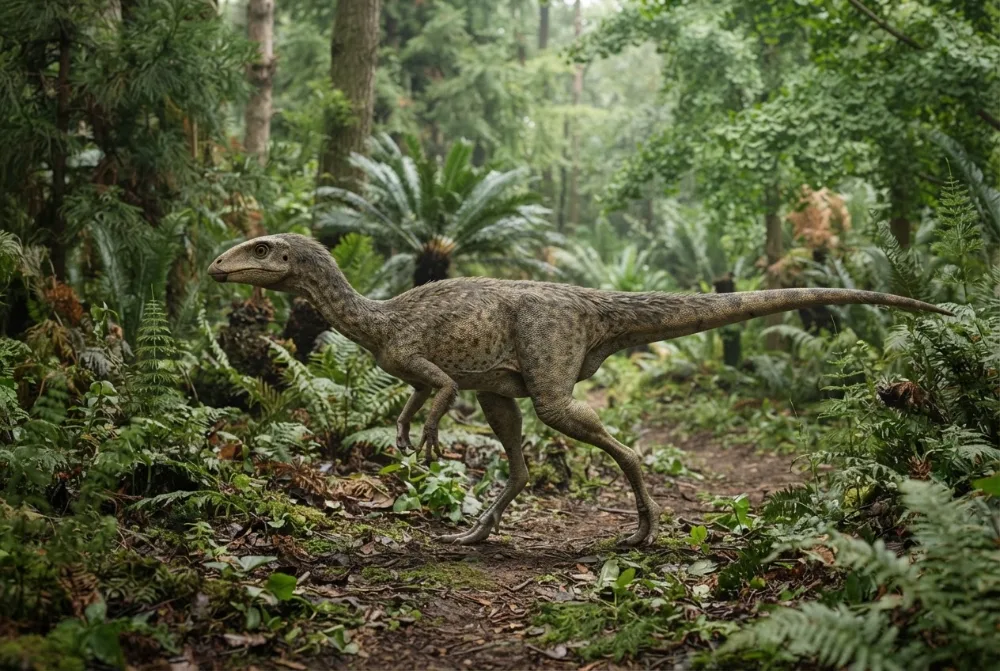
Jeholosaurus was a small, speedy plant-eater that lived in ancient China. It had a beak and cheek teeth for chomping plants, but its front teeth were sharp like a meat-eater's, so it might have eaten a few bugs too!1
Ankakhala liti?
Anali wamkulu bwanji?
Anali wautali bwanji?
Jeholosaurus anali wamkulu bwanji poyerekeza ndi IWEYO?
Ndi masamu chabe mu msakatuli wako. Palibe chimene chimasungidwa kapena kutumizidwa kwina kulikonse.
Anali ndi liwiro lotani?


Mfundo zosangalatsa
Jeholosaurus had a very fast tooth replacement rate, with new teeth growing every 46 days, faster than most early plant-eaters.1
Its eye socket was huge, making up 40% of the skull length, which is a sign it was a young animal.1
The front teeth were narrow and long, like a meat-eater's, but the back teeth were fan-shaped for chewing plants.1
The hip bone pointed backward, which is typical for ornithischian dinosaurs, but it also had a forward-pointing bone that supported its belly.1
All known fossils are from young animals, so scientists don't know exactly how big an adult could get.1
Mafunso ofunsidwa kwambiri okhudza Jeholosaurus
?How big was Jeholosaurus?
The known fossils are from young animals, so the adult size is unknown. The largest specimen is about 71 centimetres long, with a skull of 6.3 centimetres.1
?What did Jeholosaurus eat?
It mostly ate plants, using its beak and fan-shaped cheek teeth. But its front teeth were sharp like a meat-eater's, so it might have also eaten small animals or bugs.1
?Was Jeholosaurus a dinosaur?
Yes, Jeholosaurus was a small ornithischian dinosaur, a group of plant-eating dinosaurs with bird-like hips.1
?Why did Jeholosaurus have a beak?
The beak helped it nip off plants. Its cheek teeth were fan-shaped for grinding them up, and it may have had fleshy cheeks to hold food while chewing.1
Wothetsa nthano zabodza
Nthano: Jeholosaurus was a meat-eater because it had sharp front teeth.
Zoona: Its back teeth were for chewing plants, and it likely ate plants, though it might have eaten some insects or small animals too.1
Kwa akatswiri a madino
- Dzina la sayansi
- Jeholosaurus
- Anapatsidwa dzina ndi
- Xu et al. 20003
- Gulu
- Odya zomera a milomo
- Banja / kladi
- Thescelosauridae3
- Magawidwe a sayansi
- Ornithischia3
- Zaka za miyala
- zaka 126 mpaka 120 miliyoni (Barremian / Aptian)3
- Mapangidwe a miyala
- Yixian3
- Mayiko
- China3
- Zolemba za mafosili
- 2 mu The Paleobiology Database3
- Kupezeka
- The first fossils were found in 2000 at Lujiatun near Beipiao City, China, and named by Xu Xing and colleagues the same year.1
- Akukambiranabe
- Scientists still debate whether Jeholosaurus was a plant-eater or an omnivore, because its front teeth were sharp and its back teeth were for plants.1
Kumene mfundo zimachokera
- Jeholosaurus (en.wikipedia.org)
- Cranial anatomy of Jeholosaurus shangyuanensis (Dinosauria: Ornithischia) from the Early Cretaceous of China | Zootaxa (mapress.com)
- Jeholosaurus in The Paleobiology Database (CC BY 4.0): zaka, malo, mapangidwe a miyala, magawidwe a sayansi.
Mfundo iliyonse patsamba lino ili ndi nambala yosonyeza kumene yachokera. Ngati talakwitsa kanthu, pepa, ndife okonda madino, osati magazini ya sayansi. Tiuze pa [email protected] ndipo tikonza.
 Rex ali ndi njala! Dino Wiki ndi ntchito ya bambo kwa mwana wawo wamwamuna wokonda madainoso, yaulere popanda zotsatsa ndi zokazonda. Akuluakulu angadyetse Rex zokhwasula-khwasula kuti tsambali lipitirize kupezeka pa intaneti.Dyetsa Rex
 Iguanodon
 Tenontosaurus
 Thescelosaurus
 Zalmoxes
 Camptosaurus
 Rhabdodon
 Stegosaurus
 Archaeopteryx
 Giganotosaurus
 Microraptor
 Deinonychus
 Baryonyx