 Kwizi ya Ndiwe dino uti?
 Nkhondo ya madino
 Mpikisano wa madino
 Masewera ang'onoang'ono a madino
 Chimbale cha zomata
 Mindandanda ya TOP ya madino
 Ndidabwitse!
Ankakhala liti?

Anali wamkulu bwanji?
Anali wautali bwanji?
Msinkhu wake unali wautali bwanji?
Ankalemera bwanji?
 wautali ngati amphaka a pakhomo 4 otsatizana mphuno ndi mchira🍌wautali ngati nthochi 10 zotsatizanawolemera pafupifupi ngati mphaka wa pakhomo🍌wolemera ngati nthochi 33🪑wamng'ono moti angayende pansi pa mpando🏃akanatha kuthamanga mamita 100 m'masekondi 14 (munthu waliwiro kwambiri amafunika 9.6)
Leaellynasaura anali wamkulu bwanji poyerekeza ndi IWEYO?
Ndi masamu chabe mu msakatuli wako. Palibe chimene chimasungidwa kapena kutumizidwa kwina kulikonse.
Anali ndi liwiro lotani?


Mfundo zosangalatsa
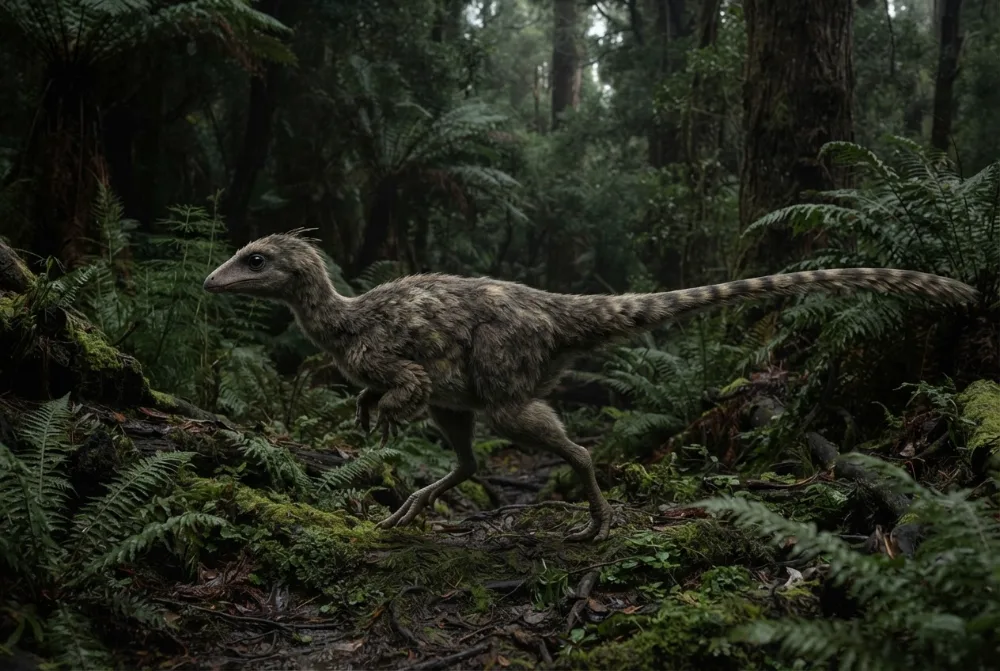
Leaellynasaura lived inside the Antarctic Circle during the Early Cretaceous, about 118 to 110 million years ago, when the climate was warmer than today.1
Its tail was extremely long, about three times the length of the rest of its body, and had more tail bones than most other plant-eating dinosaurs.1
It had enlarged eye sockets and large optic lobes in its brain, which helped it see in the dim light of polar winters.21
Bone growth lines show that Leaellynasaura grew continuously all year, meaning it did not hibernate or slow down much during the cold, dark winter.2
It may have lived in small herds or flocks, and dinosaur burrows found in Victoria suggest some small ornithopods might have sheltered underground in the coldest months.2
Its teeth had five ridges on each side, fewer than other small Victorian ornithopods like Qantassaurus and Atlascopcosaurus, which had at least eight.2
Mafunso ofunsidwa kwambiri okhudza Leaellynasaura
?How big was Leaellynasaura?
About 1.8 metres (6 feet) long including its tail, but some estimates based on a juvenile specimen suggest about 1 metre (3.3 feet).12
?What did Leaellynasaura eat?
It was a plant-eater that ate low-growing plants like horsetails, cycads, and ferns.12
?Did Leaellynasaura have feathers?
Scientists think it might have had hair-like filaments on its skin, but no feathers have been found yet.4
?Where was Leaellynasaura found?
It was discovered in Dinosaur Cove, Victoria, Australia, in rocks that were once inside the Antarctic Circle.12
?How fast could Leaellynasaura run?
Nobody knows for sure, but as a small, lightweight dinosaur it was probably quick and agile.1
Kwa akatswiri a madino
- Dzina la sayansi
- Leaellynasaura
- Anapatsidwa dzina ndi
- Rich and Vickers-Rich 19895
- Gulu
- Odya zomera a milomo
- Banja / kladi
- Elasmaria5
- Magawidwe a sayansi
- Ornithischia > Ornithopoda > Iguanodontia5
- Zaka za miyala
- zaka 113 mpaka 110 miliyoni (Albian)5
- Mapangidwe a miyala
- Eumeralla5
- Mayiko
- Australia5
- Zolemba za mafosili
- 4 mu The Paleobiology Database5
- Kupezeka
- Leaellynasaura was discovered in Dinosaur Cove, Australia, and named in 1989 by Tom Rich and Patricia Vickers-Rich. They named it after their daughter Leaellyn.15
- Akukambiranabe
- Scientists are not sure which fossils belong to Leaellynasaura, because most were found scattered, and some long-tailed skeletons may belong to a different dinosaur.1
Kumene mfundo zimachokera
- Leaellynasaura (en.wikipedia.org)
- Dinosaurs - Leaellynasaura amicagraphica - The Australian Museum (australian.museum)
- LEAELLYNASAURA - DinoChecker dinosaur archive (dinochecker.com)
- Leaellynasaura | Western Australian Museum (museum.wa.gov.au)
- Leaellynasaura in The Paleobiology Database (CC BY 4.0): zaka, malo, mapangidwe a miyala, magawidwe a sayansi.
Mfundo iliyonse patsamba lino ili ndi nambala yosonyeza kumene yachokera. Ngati talakwitsa kanthu, pepa, ndife okonda madino, osati magazini ya sayansi. Tiuze pa [email protected] ndipo tikonza.
 Rex ali ndi njala! Dino Wiki ndi ntchito ya bambo kwa mwana wawo wamwamuna wokonda madainoso, yaulere popanda zotsatsa ndi zokazonda. Akuluakulu angadyetse Rex zokhwasula-khwasula kuti tsambali lipitirize kupezeka pa intaneti.Dyetsa Rex
 Iguanodon
 Tenontosaurus
 Thescelosaurus
 Zalmoxes
 Camptosaurus
 Rhabdodon
 Stegosaurus
 Archaeopteryx
 Giganotosaurus
 Microraptor
 Deinonychus
 Baryonyx