 Kwizi ya Ndiwe dino uti?
 Nkhondo ya madino
 Mpikisano wa madino
 Masewera ang'onoang'ono a madino
 Chimbale cha zomata
 Mindandanda ya TOP ya madino
 Ndidabwitse!
Ankakhala liti?

Anali wamkulu bwanji?
Anali wautali bwanji?
Msinkhu wake unali wautali bwanji?
kuyerekeza
Ankalemera bwanji?
 wautali ngati magalimoto 3 oimikidwa pamzere🍌wautali ngati nthochi 78 zotsatizana
 wolemera pafupifupi ngati njovu🍉wolemera ngati mavwende 1400🎒wolemera ngati makalasi athunthu a ana a sukulu 9🐻❄️wolemera ngati zimbalangondo zoyera 16🏢wamtali moti angasuzumire pawindo la nsanjika ya 2🏃akanatha kuthamanga mamita 100 m'masekondi 20 (munthu waliwiro kwambiri amafunika 9.6)
Oxalaia anali wamkulu bwanji poyerekeza ndi IWEYO?
Ndi masamu chabe mu msakatuli wako. Palibe chimene chimasungidwa kapena kutumizidwa kwina kulikonse.
Anali ndi liwiro lotani?


Mfundo zosangalatsa
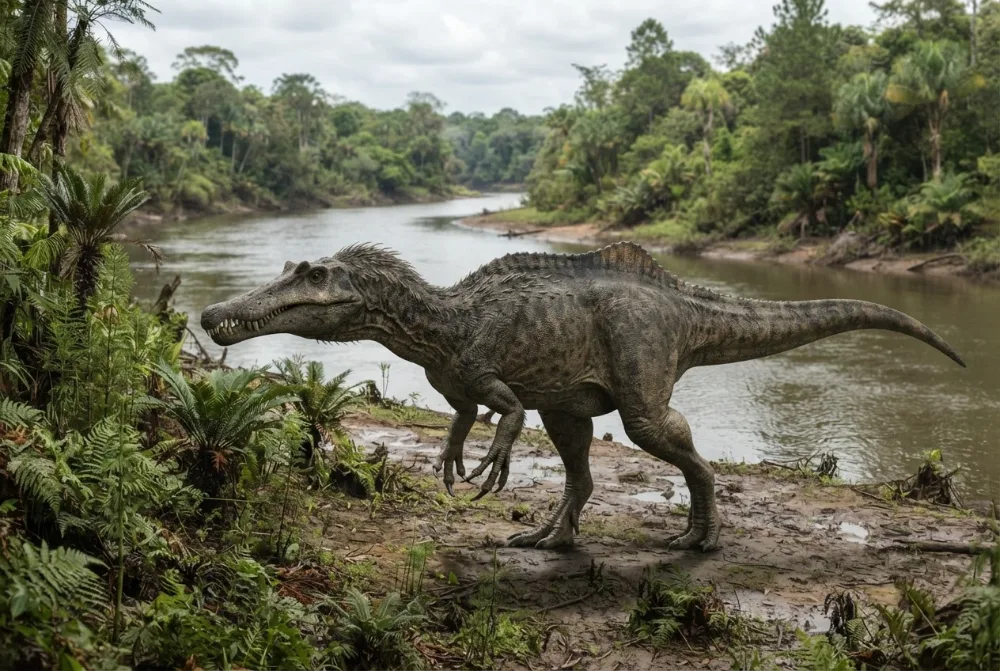
Oxalaia is the largest meat-eating dinosaur ever found in Brazil.1
Its teeth had no serrations, unlike many other spinosaurids such as Suchomimus.1
Oxalaia had one functional tooth followed by two replacement teeth, a feature not seen in other theropod dinosaurs.1
The front part of its snout was very expanded and rounded, different from Spinosaurus.1
Oxalaia lived about 100 to 94 million years ago during the Late Cretaceous period.3
Its fossils were found on Cajual Island, a place where descendants of escaped slaves (quilombolas) live.1
Mafunso ofunsidwa kwambiri okhudza Oxalaia
?How big was Oxalaia?
Oxalaia was about 12 to 14 metres long and weighed 5 to 7 tonnes. That makes it the largest meat eating dinosaur found in Brazil.12
?What did Oxalaia eat?
Oxalaia was a spinosaurid, so it mostly ate fish, like a crocodile. It may also have eaten small dinosaurs and pterosaurs.2
?When did Oxalaia live?
Oxalaia lived during the Late Cretaceous period, about 100.5 to 93.9 million years ago.2
?Where was Oxalaia found?
Oxalaia's fossils were found on Cajual Island in Maranhão, northeastern Brazil, in the Alcântara Formation.2
?Is Oxalaia a dinosaur?
Yes, Oxalaia is a dinosaur. It is a spinosaurid theropod, which means it was a meat-eating dinosaur.2
?Did Oxalaia have feathers?
Nobody knows for sure. No feathers have been found with Oxalaia fossils, and spinosaurids are not known to have feathers, but some related dinosaurs may have had them.2
?Was Oxalaia bigger than T. rex?
Oxalaia was about 12 to 14 metres long, similar in length to T. rex, but T. rex was heavier, weighing about 8 tonnes compared to Oxalaia's 5 to 7 tonnes.12
?Could Oxalaia swim?
It is possible. Spinosaurids like Oxalaia had long snouts and conical teeth like fish-eaters, and some scientists think they could swim, but there is no direct evidence for Oxalaia.2
Kwa akatswiri a madino
- Dzina la sayansi
- Oxalaia
- Anapatsidwa dzina ndi
- Kellner et al. 20113
- Gulu
- Maspinosauri
- Banja / kladi
- Spinosauridae3
- Magawidwe a sayansi
- Theropoda > Spinosauridae3
- Zaka za miyala
- zaka 100 mpaka 94 miliyoni (Cenomanian)3
- Mapangidwe a miyala
- Alcântara3
- Mayiko
- Brazil3
- Zolemba za mafosili
- 1 mu The Paleobiology Database3
- Kupezeka
- Oxalaia was named in 2011 by Alexander Kellner and his team based on a snout and a jaw fragment found at Laje do Coringa in Brazil.31
- Akukambiranabe
- Scientists are not sure if Oxalaia is a separate species or the same as Spinosaurus, because only a few bones have been found.1
Kumene mfundo zimachokera
- A new dinosaur (Theropoda, Spinosauridae) from the Cretaceous (Cenomanian) Alcântara Formation, Cajual Island, Brazil (scielo.br)
- Oxalaia (en.wikipedia.org)
- Oxalaia in The Paleobiology Database (CC BY 4.0): zaka, malo, mapangidwe a miyala, magawidwe a sayansi.
Mfundo iliyonse patsamba lino ili ndi nambala yosonyeza kumene yachokera. Ngati talakwitsa kanthu, pepa, ndife okonda madino, osati magazini ya sayansi. Tiuze pa [email protected] ndipo tikonza.
 Rex ali ndi njala! Dino Wiki ndi ntchito ya bambo kwa mwana wawo wamwamuna wokonda madainoso, yaulere popanda zotsatsa ndi zokazonda. Akuluakulu angadyetse Rex zokhwasula-khwasula kuti tsambali lipitirize kupezeka pa intaneti.Dyetsa Rex
 Spinosaurus
 Baryonyx
 Suchomimus
 Angaturama
 Camarillasaurus
 Ceratosuchops
 Tyrannosaurus
 Triceratops
 Velociraptor
 Ankylosaurus
 Parasaurolophus
 Pteranodon