 Kwizi ya Ndiwe dino uti?
 Nkhondo ya madino
 Mpikisano wa madino
 Masewera ang'onoang'ono a madino
 Chimbale cha zomata
 Mindandanda ya TOP ya madino
 Ndidabwitse!
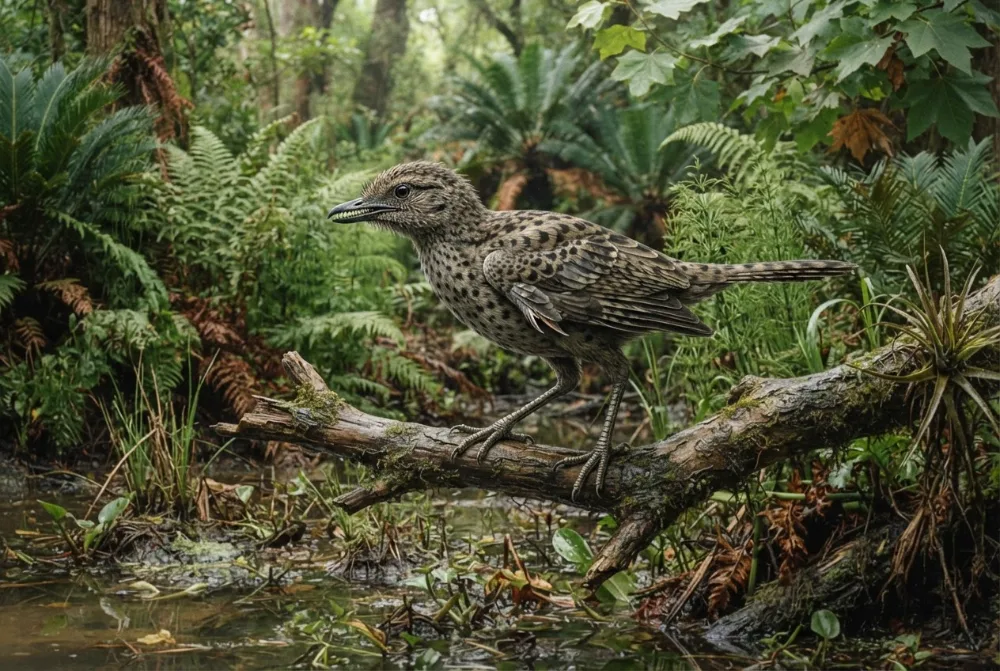
Potamornis
Potamornis was a small, toothed bird that lived near the end of the Age of Dinosaurs. It hunted along the shores of a river in what is now Wyoming, USA. It was a fast, meat-eating bird that could probably run and maybe fly a little.3
Ankakhala liti?
Anali wamkulu bwanji?
Anali wautali bwanji?
Msinkhu wake unali wautali bwanji?
kuyerekeza
Ankalemera bwanji?
 wolemera pafupifupi ngati mphaka wa pakhomo🍌wolemera ngati nthochi 17🧱wautali ngati zidutswa zomangira za zidole 16 pamzere🪑wamng'ono moti angayende pansi pa mpando🏊akanatha kusambira utali wa dziwe lalikulu losambira (50 m) m'masekondi 22
Potamornis anali wamkulu bwanji poyerekeza ndi IWEYO?
Ndi masamu chabe mu msakatuli wako. Palibe chimene chimasungidwa kapena kutumizidwa kwina kulikonse.
Anali ndi liwiro lotani?


Mfundo zosangalatsa
Potamornis is known from just one partial skull bone, called a quadrate, which was found in Wyoming.3
It lived about 72 to 66 million years ago, right before the big extinction that killed the non-bird dinosaurs.1
Potamornis belonged to a group of ancient birds called Hesperornithiformes, which were mostly diving birds with teeth.3
The name Potamornis means 'river bird', because it was found in rocks that were once a riverbed.3
Scientists think Potamornis was a ground-dwelling bird that could run fast on land.3
It laid eggs, like all birds do, and probably built nests on the ground.1
Mafunso ofunsidwa kwambiri okhudza Potamornis
?How big was Potamornis?
It was a small bird, weighing perhaps 1.5 or 2 kilograms (3.3 to 4.4 pounds).2
?Did Potamornis have teeth?
Yes, it was a toothed bird. It belonged to a group of ancient birds called Hesperornithiformes, which had teeth.2
?Could Potamornis fly?
Probably not. It was a flightless diving bird, like other members of its group, though some scientists think it might have been able to fly a little.2
?What did Potamornis eat?
It was a meat-eater (carnivore). It likely hunted for fish and other small animals in the water.3
Wothetsa nthano zabodza
Nthano: Some people think Potamornis was a dinosaur like T. rex.
Zoona: Potamornis was a bird, and while birds are dinosaurs, it was a small, feathered, flying or running bird, not a big predator.3
Kwa akatswiri a madino
- Dzina la sayansi
- Potamornis
- Anapatsidwa dzina ndi
- Elzanowski et al. 20013
- Gulu
- Mbalame zoyambirira
- Banja / kladi
- Hesperornithiformes3
- Magawidwe a sayansi
- Theropoda > Avialae3
- Zaka za miyala
- zaka 72 mpaka 66 miliyoni (Maastrichtian)3
- Mapangidwe a miyala
- Lance3
- Mayiko
- Amereka3
- Zolemba za mafosili
- 1 mu The Paleobiology Database3
- Kupezeka
- Potamornis was named by Elzanowski, Paul, and Stidham in 2001, based on a skull bone found in the Lance Formation of Wyoming.3
- Akukambiranabe
- Scientists are still not sure exactly how Potamornis is related to other ancient birds, because only a single skull bone has been found.3
Kumene mfundo zimachokera
- PBDB Taxon (paleobiodb.org)
- Potamornis (en.wikipedia.org)
- Potamornis in The Paleobiology Database (CC BY 4.0): zaka, malo, mapangidwe a miyala, magawidwe a sayansi.
Mfundo iliyonse patsamba lino ili ndi nambala yosonyeza kumene yachokera. Ngati talakwitsa kanthu, pepa, ndife okonda madino, osati magazini ya sayansi. Tiuze pa [email protected] ndipo tikonza.
 Rex ali ndi njala! Dino Wiki ndi ntchito ya bambo kwa mwana wawo wamwamuna wokonda madainoso, yaulere popanda zotsatsa ndi zokazonda. Akuluakulu angadyetse Rex zokhwasula-khwasula kuti tsambali lipitirize kupezeka pa intaneti.Dyetsa Rex
 Archaeopteryx
 Hesperornis
 Ichthyornis
 Baptornis
 Jurapteryx
 Gobipteryx
 Tyrannosaurus
 Triceratops
 Velociraptor
 Spinosaurus
 Ankylosaurus
 Parasaurolophus