 Kwizi ya Ndiwe dino uti?
 Nkhondo ya madino
 Mpikisano wa madino
 Masewera ang'onoang'ono a madino
 Chimbale cha zomata
 Mindandanda ya TOP ya madino
 Ndidabwitse!
Samrukia
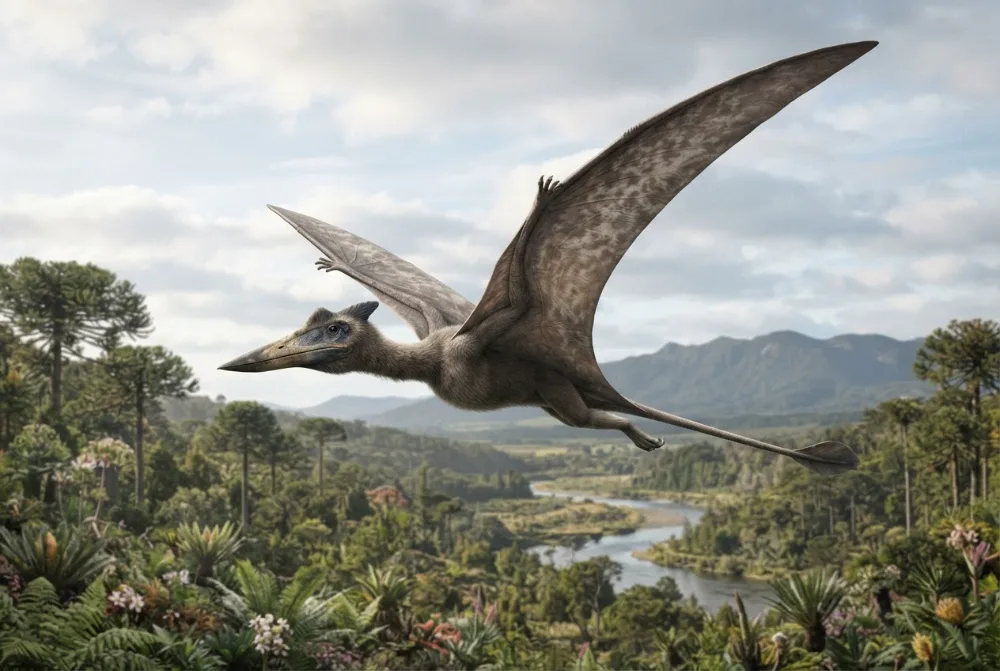
Samrukia was a huge flying reptile that lived in what is now Kazakhstan. It had a very long jaw, and scientists first thought it was a giant bird. Now they think it was a pterosaur, a flying reptile that lived at the same time as dinosaurs.1
Ankakhala liti?
Anali wamkulu bwanji?
Mapiko ake anali otambalala bwanji?
Msinkhu wake unali wautali bwanji?
Ankalemera bwanji?

 mapiko otambalala ngati njinga 2 pamzere
 wolemera ngati amphaka a pakhomo 12🍉wolemera ngati mavwende 10🧸wolemera ngati ana a sukulu ya mkaka 2.5🎒wolemera ngati ana a sukulu 1.5⚽akanatha kuuluka kudutsa bwalo lonse la mpira m'masekondi 6
Samrukia anali wamkulu bwanji poyerekeza ndi IWEYO?
Ndi masamu chabe mu msakatuli wako. Palibe chimene chimasungidwa kapena kutumizidwa kwina kulikonse.
Anali ndi liwiro lotani?


Mfundo zosangalatsa
Samrukia is known only from a single lower jaw bone, which is more than 275 millimetres long.2
When first discovered, scientists thought Samrukia was a giant bird, but later studies showed it was a pterosaur.1
Samrukia lived about 84 million years ago, during the Late Cretaceous period.1
If Samrukia could fly, its wingspan might have been about 4 metres (13 feet). If it was flightless, it might have been 2 to 3 metres (6.6 to 9.8 feet) tall.1
The jaw of Samrukia has no teeth, so it probably had a beak.2
Samrukia is named after Samruk, a magical bird from Kazakh mythology.1
Mafunso ofunsidwa kwambiri okhudza Samrukia
?Was Samrukia a dinosaur?
No, Samrukia was a pterosaur, a flying reptile that lived at the same time as dinosaurs. It is not a dinosaur.1
?How big was Samrukia?
If it could fly, its wingspan might have been about 4 metres (13 feet). If it was flightless, it might have been 2 to 3 metres (6.6 to 9.8 feet) tall.1
?What did Samrukia eat?
Samrukia had no teeth in its lower jaw, so it probably had a beak. Scientists think it may have eaten fish or other small animals, but no one knows for sure.1
Wothetsa nthano zabodza
Nthano: Samrukia was a giant bird.
Zoona: Scientists now agree that Samrukia was a pterosaur, not a bird. The jaw bone has features that are only found in pterosaurs.1
Kwa akatswiri a madino
- Dzina la sayansi
- Samrukia
- Anapatsidwa dzina ndi
- Naish et al. 20124
- Gulu
- Zokwawa zouluka
- Banja / kladi
- Pterosauria4
- Magawidwe a sayansi
- Pterosauria4
- Zaka za miyala
- zaka 86 mpaka 72 miliyoni (Santonian / Campanian)4
- Mapangidwe a miyala
- Bostobe4
- Mayiko
- Kazakhstan4
- Zolemba za mafosili
- 1 mu The Paleobiology Database4
- Kupezeka
- Samrukia was named in 2012 by Darren Naish and his team. The only fossil, a lower jaw, was found in the Bostobynskaya Formation in Kazakhstan.14
- Akukambiranabe
- Scientists are not sure if Samrukia could fly or if it was flightless, because only its jaw has been found.1
Kumene mfundo zimachokera
- Samrukia (en.wikipedia.org)
- untitled (darrennaish.wordpress.com)
- Giant 'phoenix' bird rises again | Fossils | The Guardian (theguardian.com)
- Samrukia in The Paleobiology Database (CC BY 4.0): zaka, malo, mapangidwe a miyala, magawidwe a sayansi.
Mfundo iliyonse patsamba lino ili ndi nambala yosonyeza kumene yachokera. Ngati talakwitsa kanthu, pepa, ndife okonda madino, osati magazini ya sayansi. Tiuze pa [email protected] ndipo tikonza.
 Rex ali ndi njala! Dino Wiki ndi ntchito ya bambo kwa mwana wawo wamwamuna wokonda madainoso, yaulere popanda zotsatsa ndi zokazonda. Akuluakulu angadyetse Rex zokhwasula-khwasula kuti tsambali lipitirize kupezeka pa intaneti.Dyetsa Rex
 Pteranodon
 Quetzalcoatlus
 Dorygnathus
 Rhamphorhynchus
 Anhanguera
 Pterodactylus
 Tyrannosaurus
 Triceratops
 Velociraptor
 Spinosaurus
 Ankylosaurus
 Parasaurolophus