 Kwizi ya Ndiwe dino uti?
 Nkhondo ya madino
 Mpikisano wa madino
 Masewera ang'onoang'ono a madino
 Chimbale cha zomata
 Mindandanda ya TOP ya madino
 Ndidabwitse!
Sirindhorna
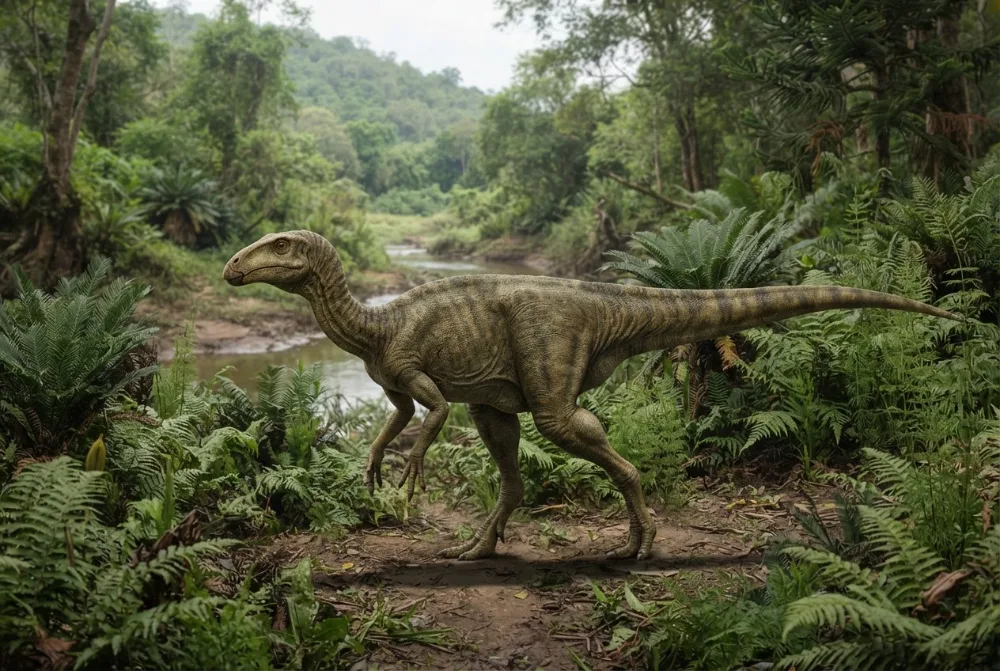
Sirindhorna was a plant-eating dinosaur that lived in what is now Thailand about 120 million years ago. It had a beak and lots of teeth for chewing tough plants. It is one of the best skulls ever found from a dinosaur like this in Southeast Asia.12
Ankakhala liti?
Anali wamkulu bwanji?
Anali wautali bwanji?
Msinkhu wake unali wautali bwanji?
Ankalemera bwanji?
 wautali ngati agalu 6 otsatizana mphuno ndi mchira🍌wautali ngati nthochi 33 zotsatizana🍉wolemera ngati mavwende 200🧸wolemera ngati ana a sukulu ya mkaka 53🎒wolemera ngati ana a sukulu 31🐻❄️wolemera ngati zimbalangondo zoyera 2🏃akanatha kuthamanga mamita 100 m'masekondi 11 (munthu waliwiro kwambiri amafunika 9.6)
Sirindhorna anali wamkulu bwanji poyerekeza ndi IWEYO?
Ndi masamu chabe mu msakatuli wako. Palibe chimene chimasungidwa kapena kutumizidwa kwina kulikonse.
Anali ndi liwiro lotani?


Mfundo zosangalatsa
Sirindhorna is known from a nearly complete skull and lower jaws, which is very rare for dinosaurs from Southeast Asia.2
It had a long ridge on top of its skull called a sagittal crest, which helped anchor strong jaw muscles.2
Its teeth had a main ridge and a secondary ridge, which helped grind plant material.2
The fossils were found by farmers digging a reservoir, and then scientists studied the site.1
Sirindhorna lived in a semi-arid environment with meandering rivers, about 120 million years ago.2
It is one of the most primitive members of the group Hadrosauroidea, which includes the duck-billed dinosaurs.2
Mafunso ofunsidwa kwambiri okhudza Sirindhorna
?What did Sirindhorna eat?
It was a plant-eater. Its teeth had a main ridge and a secondary ridge to help grind tough plants.14
?How big was Sirindhorna?
Scientists don't know its exact size yet, because only skull and jaw bones have been found. It was a medium-sized ornithopod dinosaur.14
Kwa akatswiri a madino
- Dzina la sayansi
- Sirindhorna
- Anapatsidwa dzina ndi
- Shibata et al. 20155
- Gulu
- Odya zomera a milomo
- Banja / kladi
- Hadrosauroidea5
- Magawidwe a sayansi
- Ornithischia > Ornithopoda > Iguanodontia5
- Zaka za miyala
- zaka 121 mpaka 113 miliyoni (Aptian)5
- Mapangidwe a miyala
- Khok Kruat5
- Mayiko
- Thailand5
- Zolemba za mafosili
- 1 mu The Paleobiology Database5
- Kupezeka
- Sirindhorna was named in 2015 by a team of Japanese, Thai, and Chinese scientists. The fossils were found at Ban Saphan Hin in Thailand, and the name honors Princess Maha Chakri Sirindhorn.12
- Akukambiranabe
- Scientists are not sure about the exact age of the rocks where Sirindhorna was found, but they think it lived during the Aptian stage, about 120 million years ago.12
Kumene mfundo zimachokera
- Sirindhorna (en.wikipedia.org)
- A New Basal Hadrosauroid Dinosaur from the Lower Cretaceous Khok Kruat Formation in Nakhon Ratchasima Province, Northeastern Thailand (journals.plos.org)
- Meet ‘Sirindhorna Khoratensis,’ New Dinosaur Discovered in Korat (khaosodenglish.com)
- A New Basal Hadrosauroid Dinosaur from the Lower Cretaceous Khok Kruat Formation in Nakhon Ratchasima Province, Northeastern Thailand | PLOS One (journals.plos.org)
- Sirindhorna in The Paleobiology Database (CC BY 4.0): zaka, malo, mapangidwe a miyala, magawidwe a sayansi.
Mfundo iliyonse patsamba lino ili ndi nambala yosonyeza kumene yachokera. Ngati talakwitsa kanthu, pepa, ndife okonda madino, osati magazini ya sayansi. Tiuze pa [email protected] ndipo tikonza.
 Rex ali ndi njala! Dino Wiki ndi ntchito ya bambo kwa mwana wawo wamwamuna wokonda madainoso, yaulere popanda zotsatsa ndi zokazonda. Akuluakulu angadyetse Rex zokhwasula-khwasula kuti tsambali lipitirize kupezeka pa intaneti.Dyetsa Rex
 Iguanodon
 Tenontosaurus
 Thescelosaurus
 Zalmoxes
 Camptosaurus
 Rhabdodon
 Stegosaurus
 Archaeopteryx
 Giganotosaurus
 Microraptor
 Deinonychus
 Baryonyx