 Kwizi ya Ndiwe dino uti?
 Nkhondo ya madino
 Mpikisano wa madino
 Masewera ang'onoang'ono a madino
 Chimbale cha zomata
 Mindandanda ya TOP ya madino
 Ndidabwitse!
Ankakhala liti?

Anali wamkulu bwanji?
Anali wautali bwanji?
Msinkhu wake unali wautali bwanji?
 wautali ngati agalu 6 otsatizana mphuno ndi mchira🍌wautali ngati nthochi 31 zotsatizana🏃akanatha kuthamanga mamita 100 m'masekondi 17 (munthu waliwiro kwambiri amafunika 9.6)
Tiantaisaurus anali wamkulu bwanji poyerekeza ndi IWEYO?
Ndi masamu chabe mu msakatuli wako. Palibe chimene chimasungidwa kapena kutumizidwa kwina kulikonse.
Anali ndi liwiro lotani?


Mfundo zosangalatsa
Tiantaisaurus lived about 106 to 100 million years ago, during the Early Cretaceous period.4
Its fossils include twelve neck bones, nine back bones, and twenty-eight tail bones, plus parts of its hips and legs.2
The air pockets in its vertebrae are called pneumaticity. They made its skeleton similar to modern bird skeletons.1
This dinosaur belongs to a group called therizinosaurs. These weird dinosaurs started out as meat-eaters but later became plant-eaters.1
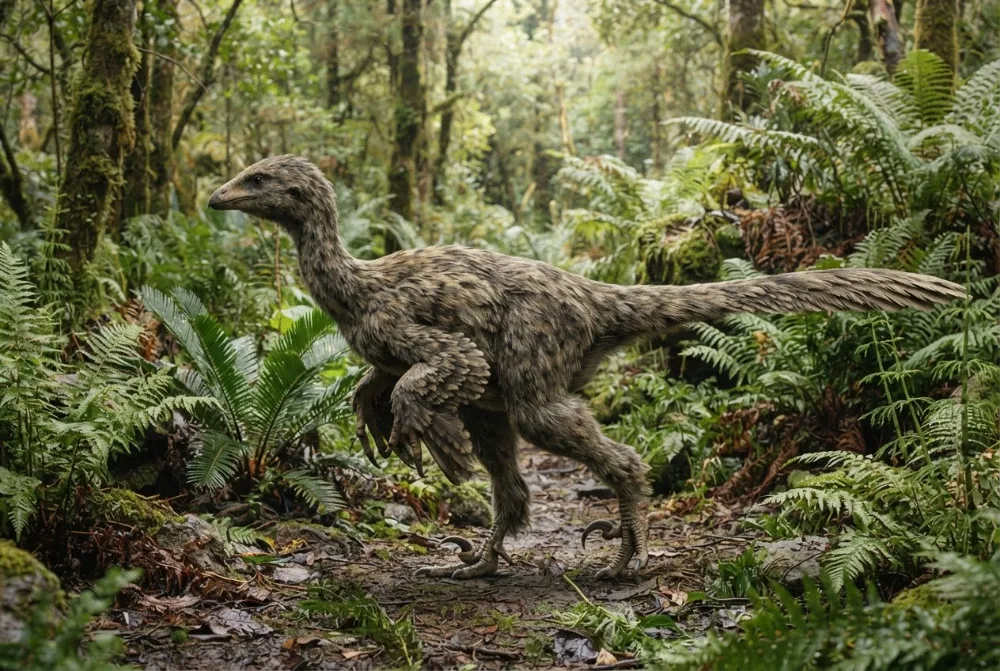
Mafunso ofunsidwa kwambiri okhudza Tiantaisaurus
?How big was Tiantaisaurus?
It was a medium sized dinosaur, but its exact size is not known from the fossils found. Scientists estimate an adult length of about 2 to 3 metres, as the fossils are too incomplete for a precise measurement.4
?What did Tiantaisaurus eat?
It was a plant-eater. Its group, the therizinosaurs, started out as meat-eaters but later evolved to eat plants.1
?Did Tiantaisaurus have feathers?
Yes, it was a feathered theropod. Many therizinosaurs are known to have had feathers, and Tiantaisaurus belonged to that group.4
?When did Tiantaisaurus live?
It lived about 106 to 100 million years ago, during the Early Cretaceous period.4
?Where was Tiantaisaurus found?
Its fossils were found in 2005 in Tiantai, Zhejiang Province, China.1
?Is Tiantaisaurus a dinosaur?
Yes, it is a dinosaur. It belongs to the theropod group called Therizinosauridae.4
?Why did Tiantaisaurus have air pockets in its bones?
The air pockets, called pneumaticity, made its heavy body lighter and helped it move around, similar to modern bird skeletons.1
?Could Tiantaisaurus run fast?
Nobody knows for sure, but the air pockets in its vertebrae helped make it less bulky and more flexible, which might have helped it move.1
Kwa akatswiri a madino
- Dzina la sayansi
- Tiantaisaurus
- Anapatsidwa dzina ndi
- Qian et al. 20124
- Gulu
- Madino a nthenga achilendo
- Banja / kladi
- Therizinosauridae4
- Magawidwe a sayansi
- Theropoda > Therizinosauria4
- Zaka za miyala
- zaka 106 mpaka 100 miliyoni (Albian)4
- Mapangidwe a miyala
- Laijia4
- Mayiko
- China4
- Zolemba za mafosili
- 1 mu The Paleobiology Database4
- Kupezeka
- Tiantaisaurus was discovered in 2005 in Tiantai, Zhejiang, China. It was named by Qian and colleagues in 2012.42
- Akukambiranabe
- Scientists debate whether Tiantaisaurus ate only plants or also some meat, because its therizinosaur relatives changed from meat-eaters to plant-eaters.1
Kumene mfundo zimachokera
- 欢迎访问《地质学刊》编辑部网站! (journalofgeology1977.com)
- Therizinosauroidea (theropoddatabase.com)
- Re: Tiantai(o)saurus Dong et al. 2007, missed Chinese therizinosaur? (reptilis.net)
- Tiantaisaurus in The Paleobiology Database (CC BY 4.0): zaka, malo, mapangidwe a miyala, magawidwe a sayansi.
Mfundo iliyonse patsamba lino ili ndi nambala yosonyeza kumene yachokera. Ngati talakwitsa kanthu, pepa, ndife okonda madino, osati magazini ya sayansi. Tiuze pa [email protected] ndipo tikonza.
 Rex ali ndi njala! Dino Wiki ndi ntchito ya bambo kwa mwana wawo wamwamuna wokonda madainoso, yaulere popanda zotsatsa ndi zokazonda. Akuluakulu angadyetse Rex zokhwasula-khwasula kuti tsambali lipitirize kupezeka pa intaneti.Dyetsa Rex
 Therizinosaurus
 Oviraptor
 Chirostenotes
 Citipes
 Leptorhynchos
 Avimimus
 Stegosaurus
 Iguanodon
 Archaeopteryx
 Giganotosaurus
 Microraptor
 Deinonychus