 Kwizi ya Ndiwe dino uti?
 Nkhondo ya madino
 Mpikisano wa madino
 Masewera ang'onoang'ono a madino
 Chimbale cha zomata
 Mindandanda ya TOP ya madino
 Ndidabwitse!
Yungavolucris
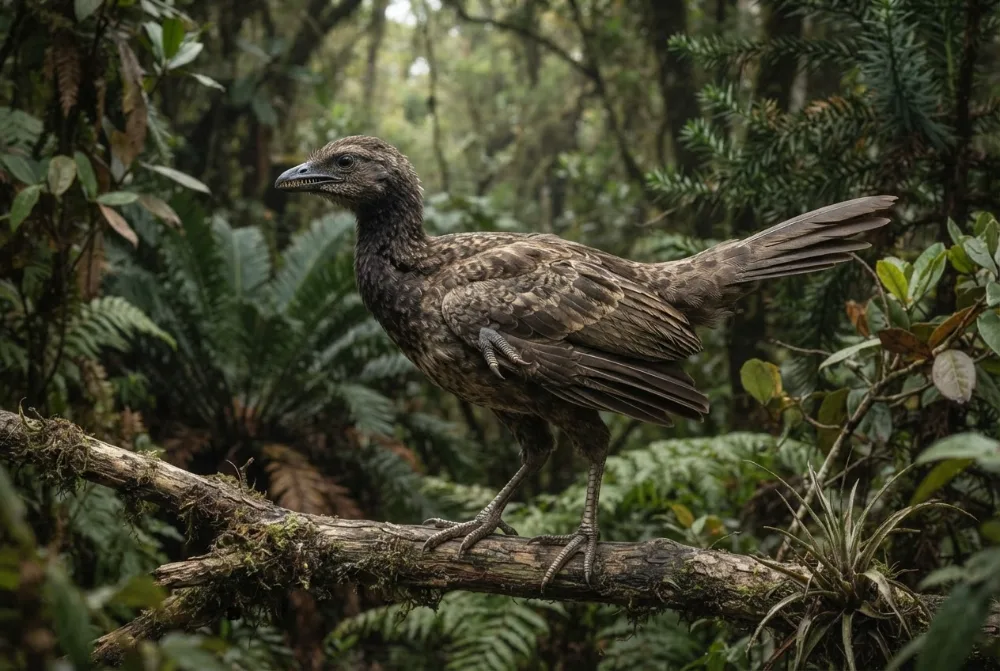
Yungavolucris was a small bird that lived about 70 to 66 million years ago, during the time of the dinosaurs. It had very short, wide feet, which made it look different from most other birds of its time.1
Ankakhala liti?
Anali wamkulu bwanji?
Anali wautali bwanji?
Msinkhu wake unali wautali bwanji?
Ankalemera bwanji?
Yungavolucris anali wamkulu bwanji poyerekeza ndi IWEYO?
Ndi masamu chabe mu msakatuli wako. Palibe chimene chimasungidwa kapena kutumizidwa kwina kulikonse.
Anali ndi liwiro lotani?


Mfundo zosangalatsa
Yungavolucris is known only from a few foot bones, called tarsometatarsals. The most complete one is just over 4 centimeters (1.5 inches) long.1
Its foot bones were very wide, about twice as wide as those of its relatives Lectavis and Soroavisaurus, which lived at the same time and place.1
The outer toe bone (metatarsal IV) was very thin but as long as the middle toe bone, and the middle toe bone was bent outward, which is unusual.1
If its legs were short and wide, Yungavolucris might have been a slow, heavy bird that could not fly, about the size of a large chicken.1
Yungavolucris lived alongside other enantiornithean birds like Lectavis and Soroavisaurus, but it had much stouter feet than them.1
Mafunso ofunsidwa kwambiri okhudza Yungavolucris
?Was Yungavolucris a dinosaur?
Yes, Yungavolucris was a bird, and birds are a type of dinosaur called avialan dinosaurs. It lived about 70 to 66 million years ago.1
?How big was Yungavolucris?
Nobody knows for sure, but if its legs were short and wide, it might have been about 50 cm long, 25 cm tall at the hip, and weighed about 1.75 kg, about the size of a large chicken.1
?Could Yungavolucris fly?
Maybe not. If its legs were both short and wide, it might have been a heavy, sluggish bird that could not fly, like a large chicken.1
Wothetsa nthano zabodza
Nthano: Some people think Yungavolucris was a dinosaur, but it was actually a bird.
Zoona: Yungavolucris was a type of enantiornithean, which is a group of ancient birds. Birds are related to dinosaurs, but they are not the same as non-avian dinosaurs.1
Kwa akatswiri a madino
- Dzina la sayansi
- Yungavolucris
- Anapatsidwa dzina ndi
- Chiappe 19933
- Gulu
- Mbalame zoyambirira
- Banja / kladi
- Enantiornithes3
- Magawidwe a sayansi
- Theropoda > Avialae3
- Zaka za miyala
- zaka 72 mpaka 66 miliyoni (Maastrichtian)3
- Mapangidwe a miyala
- Lecho3
- Mayiko
- Argentina3
- Zolemba za mafosili
- 1 mu The Paleobiology Database3
- Kupezeka
- Yungavolucris was named by Luis M. Chiappe in 1993. The fossils were found in the Lecho Formation in Argentina, at a site called Estancia El Brete.12
- Akukambiranabe
- Scientists are not sure how Yungavolucris is related to other enantiornithean birds. Some studies place it close to avisaurids, but others do not, and it might even be the same species as another bird from the same site.1
Kumene mfundo zimachokera
- Yungavolucris (en.wikipedia.org)
- PBDB Taxon (paleobiodb.org)
- Yungavolucris in The Paleobiology Database (CC BY 4.0): zaka, malo, mapangidwe a miyala, magawidwe a sayansi.
Mfundo iliyonse patsamba lino ili ndi nambala yosonyeza kumene yachokera. Ngati talakwitsa kanthu, pepa, ndife okonda madino, osati magazini ya sayansi. Tiuze pa [email protected] ndipo tikonza.
 Rex ali ndi njala! Dino Wiki ndi ntchito ya bambo kwa mwana wawo wamwamuna wokonda madainoso, yaulere popanda zotsatsa ndi zokazonda. Akuluakulu angadyetse Rex zokhwasula-khwasula kuti tsambali lipitirize kupezeka pa intaneti.Dyetsa Rex
 Archaeopteryx
 Hesperornis
 Ichthyornis
 Baptornis
 Jurapteryx
 Gobipteryx
 Tyrannosaurus
 Triceratops
 Velociraptor
 Spinosaurus
 Ankylosaurus
 Parasaurolophus