 Ati daayinoo kami? Qormaata
 Lola daayinoo
 Dorgommii daayinoo
 Taphoota daayinoo xixiqqoo
 Albamii istiikarii
 Tarreewwan TOP daayinoo
 Na dinqisiisi!
Campylognathoides
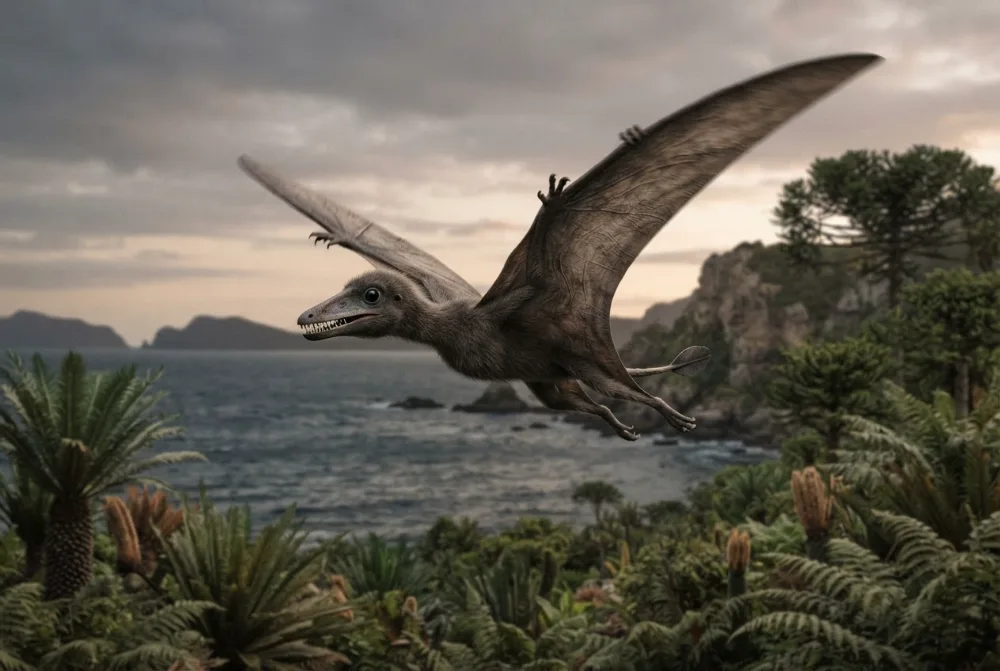
Campylognathoides was a small flying reptile that lived in the Early Jurassic, about 182 million years ago. It had long, narrow wings and a short tail, and it probably hunted at night for squid-like animals called belemnoids.12
Yoom jiraate?
Hammam guddaa ture?
Baalleen isaa hammam bal'aa turan?
 akka adurree manaa 4 funyaan hanga eegeetti dheeraa⚽dirree kubbaa miilaa guutuu sekondii 8.4 keessatti balali'ee ce'uu danda'a
SI wajjin yoo wal bira qabamu, Campylognathoides hammam guddaa ture?
Herrega qofa barbaadduu kee keessatti. Wanti tokkollee hin olkaa'amu, eessayyuu hin ergamu.
Hammam saffisaa ture?


Odeeffannoowwan bashannansiisoo
Campylognathoides is the only pterosaur known to have eaten belemnoids. Scientists found hooklets from these squid-like animals in its stomach.2
Because belemnoids migrated to the surface at night, Campylognathoides may have hunted in the dark, like some modern bats and falcons.2
The first fossils of Campylognathoides were just wing fragments. Later, much better skeletons were found in the Holzmaden shale.1
Its original name, Campylognathus, was already used for a bug. So in 1928, the name was changed to Campylognathoides.1
Campylognathoides lived in a shallow sea. Its fossils are found in marine rocks, but it flew over the water to catch its prey.12
Scientists think Campylognathoides had a fast, agile flight, similar to falcons and mastiff bats that catch food while flying.1
Gaaffiiwwan waa'ee Campylognathoides baay'ee gaafataman
?How big was Campylognathoides?
It was quite small. The larger species, C. zitteli, had a wingspan of about 1.75 metres (5.7 feet), and the smaller species, C. liasicus, had a wingspan of around 0.9 metres (3 feet).1
?Was Campylognathoides a dinosaur?
No, it was a pterosaur, a type of flying reptile that lived alongside dinosaurs but is not a dinosaur itself.1
?What did Campylognathoides eat?
It ate squid-like animals called belemnoids. Scientists found hooklets from a belemnoid called Clarkeiteuthis conocauda in its stomach.2
Ogeeyyii daayinootiif
- Maqaa saayinsii
- Campylognathoides
- Kan maqaa baase
- Strand 19283
- Garee
- Harkifattoota balali'an
- Maatii / kilaadii
- Campylognathoididae3
- Ramaddii
- Pterosauria3
- Umurii dhagaawwanii
- waggaa miliyoona 184 hanga 183 (Toarcian)3
- Caasaawwan dhagaa
- Posidonia Shale3
- Biyyoota
- Jarmanii3
- Galmee fosilii
- 12 The Paleobiology Database keessa3
- Argannoo
- The first specimen was described by Felix Plieninger in 1894 as Campylognathus zitteli, based on wing fragments from Germany. In 1928, Embrik Strand renamed it Campylognathoides because the old name was already taken.1
- Ammallee falmisiisaa
- Scientists are not sure if Campylognathoides hunted only at night or also during the day. The idea of nocturnal hunting is still being studied.2
Odeeffannoon eessaa dhufa
- Campylognathoides (en.wikipedia.org)
- Dietary tendencies of the Early Jurassic pterosaurs Campylognathoides Strand, 1928, and Dorygnathus (dinodata.de)
- Campylognathoides in The Paleobiology Database (CC BY 4.0): umurii, bakkeewwan, caasaawwan dhagaa, ramaddii.
Odeeffannoon fuula kana irra jiru hundi lakkoofsa madda isaa agarsiisu qaba. Yoo waa dogoggorre, dhiifama, nuti jaallattoota daayinoo malee joornaalii saayinsii miti. [email protected] irratti nutti himi, nus ni sirreessina.
 Rex beela'eera! Dino Wiki pirojektii abbaa tokkoo kan ilma isaa daayinoo jaallatuuf hojjetame, bilisa, beeksisa malee fi hordoftuu malee. Ga'eessonni akka inni interneetii irra turuuf Rexiif nyaata xiqqoo kennuu danda'u.Rex soori
 Pteranodon
 Quetzalcoatlus
 Dorygnathus
 Rhamphorhynchus
 Anhanguera
 Pterodactylus
 Dilophosaurus
 Stenopterygius
 Lufengosaurus
 Scutellosaurus
 Yunnanosaurus
 Sinosaurus