 Ati daayinoo kami? Qormaata
 Lola daayinoo
 Dorgommii daayinoo
 Taphoota daayinoo xixiqqoo
 Albamii istiikarii
 Tarreewwan TOP daayinoo
 Na dinqisiisi!
Cycnorhamphus
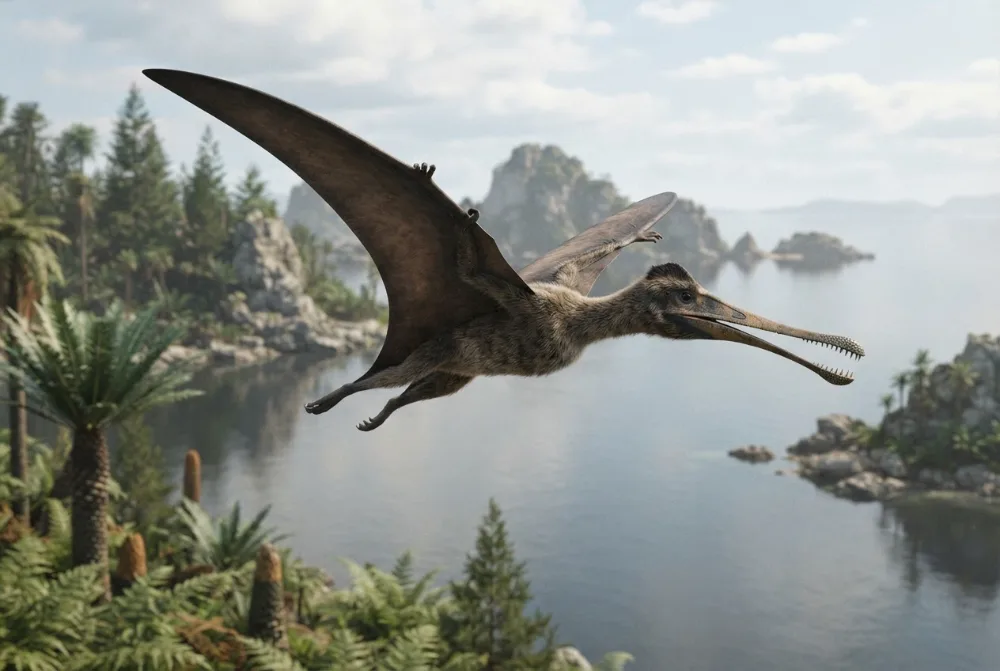
Cycnorhamphus was a pterosaur, a flying reptile that lived during the Late Jurassic. It had a strange beak with peg-like teeth at the tips and curved jaws that left a gap. Scientists think it might have used its beak to crush hard-shelled animals like mollusks.1
Yoom jiraate?
Hammam guddaa ture?
Baalleen isaa hammam bal'aa turan?
 akka adurree manaa 2.5 funyaan hanga eegeetti dheeraa⚽dirree kubbaa miilaa guutuu sekondii 9.5 keessatti balali'ee ce'uu danda'a
SI wajjin yoo wal bira qabamu, Cycnorhamphus hammam guddaa ture?
Herrega qofa barbaadduu kee keessatti. Wanti tokkollee hin olkaa'amu, eessayyuu hin ergamu.
Hammam saffisaa ture?


Odeeffannoowwan bashannansiisoo
Cycnorhamphus lived about 152 million years ago during the Late Jurassic.1
Its name means 'swan beak' because of the shape of its snout.1
The first fossil was found in Germany in 1855 and named Pterodactylus suevicus by Friedrich August Quenstedt.1
A well-preserved skull nicknamed 'The Painten Pelican' helped scientists understand its unusual jaw.1
Adult Cycnorhamphus had blunter, stouter teeth at the tips of their jaws than juveniles.1
The jaws had a gap behind the teeth, and soft tissue structures filled that gap in the upper jaw.1
Some scientists think Cycnorhamphus used its beak like openbill storks to crush hard invertebrates.1
Gaaffiiwwan waa'ee Cycnorhamphus baay'ee gaafataman
?How big was Cycnorhamphus?
Cycnorhamphus had a wingspan of about 1.5 metres (4.9 feet).4
?What did Cycnorhamphus eat?
Scientists think it probably ate shellfish, using its beak to crush hard invertebrates like mollusks, similar to openbill storks.14
?Why did Cycnorhamphus have a gap in its jaws?
Nobody knows for sure. Ideas include trapping jellyfish, opening seashells, or just for show.4
?Is Cycnorhamphus a dinosaur?
No, Cycnorhamphus is a pterosaur, a flying reptile that lived during the Late Jurassic, not a dinosaur.1
Seenaa sobaa diigaa
Seenaa sobaa: Cycnorhamphus had long jaws with many teeth like other pterosaurs.
Dhugaa: It actually had short, peg-like teeth only at the tips of its jaws, with a curved gap behind them.1
Ogeeyyii daayinootiif
- Maqaa saayinsii
- Cycnorhamphus
- Kan maqaa baase
- Seeley 18705
- Garee
- Harkifattoota balali'an
- Maatii / kilaadii
- Lophocratia5
- Ramaddii
- Pterosauria > Pterodactyloidea5
- Umurii dhagaawwanii
- waggaa miliyoona 152 hanga 145 (Kimmeridgian / Tithonian)5
- Caasaawwan dhagaa
- Nusplingen Limestone, Liegende Bankkalk, Solnhofen5
- Biyyoota
- Jarmanii5
- Galmee fosilii
- 3 The Paleobiology Database keessa5
- Argannoo
- The first fossil was found near Nusplingen in Germany and named Pterodactylus suevicus by Friedrich August Quenstedt in 1855. In 1870, Harry Govier Seeley gave it the new genus name Cycnorhamphus.1
- Ammallee falmisiisaa
- Scientists are still unsure exactly how Cycnorhamphus used its unusual beak and jaw gap.1
Odeeffannoon eessaa dhufa
- Cycnorhamphus (en.wikipedia.org)
- PBDB Taxon (paleobiodb.org)
- Cycnorhamphus, Pterofiltrus (reptileevolution.com)
- Cycnorhamphus - Thomas Henry Huxley Paleozoological Gardens (hpz.zhejiangopterus.org)
- Cycnorhamphus in The Paleobiology Database (CC BY 4.0): umurii, bakkeewwan, caasaawwan dhagaa, ramaddii.
Odeeffannoon fuula kana irra jiru hundi lakkoofsa madda isaa agarsiisu qaba. Yoo waa dogoggorre, dhiifama, nuti jaallattoota daayinoo malee joornaalii saayinsii miti. [email protected] irratti nutti himi, nus ni sirreessina.
 Rex beela'eera! Dino Wiki pirojektii abbaa tokkoo kan ilma isaa daayinoo jaallatuuf hojjetame, bilisa, beeksisa malee fi hordoftuu malee. Ga'eessonni akka inni interneetii irra turuuf Rexiif nyaata xiqqoo kennuu danda'u.Rex soori
 Pteranodon
 Quetzalcoatlus
 Dorygnathus
 Rhamphorhynchus
 Anhanguera
 Pterodactylus
 Brachiosaurus
 Diplodocus
 Allosaurus
 Brontosaurus
 Compsognathus
 Camarasaurus