 Ati daayinoo kami? Qormaata
 Lola daayinoo
 Dorgommii daayinoo
 Taphoota daayinoo xixiqqoo
 Albamii istiikarii
 Tarreewwan TOP daayinoo
 Na dinqisiisi!
Foskeia
Foskeia was a small, two-legged plant-eater that lived in what is now Spain. It had a beak and a very special skull, and it was one of the earliest members of its dinosaur group.1
Yoom jiraate?
Hammam guddaa ture?
Hammam dheeraa ture?
Hammam ol-dheeraa ture?
tilmaama
 akka adurree manaa 4 funyaan hanga eegeetti dheeraa🍌akka muuzii 11 walitti hiriiran dheeraa🏃meetira 100 sekondii 8.8 keessatti fiiguu danda'a (namni hunda caalaa saffisaan 9.6 barbaada)
SI wajjin yoo wal bira qabamu, Foskeia hammam guddaa ture?
Herrega qofa barbaadduu kee keessatti. Wanti tokkollee hin olkaa'amu, eessayyuu hin ergamu.
Hammam saffisaa ture?


Odeeffannoowwan bashannansiisoo
Foskeia had a beak made of fused premaxillae bones, which is very unusual for an ornithopod dinosaur.1
Its front teeth stuck out forward (procumbent) and the crowns extended beyond the edge of the beak.1
The first tooth in its lower jaw was shaped like a thin thread (filiform), which is a unique feature.1
Foskeia had a very high jaw joint, which helped it bite with extra force.1
Scientists used CT scans to see inside the skull fossils and build a 3D model of the head.1
Foskeia lived about 125 to 119 million years ago, during the Early Cretaceous period.2
This dinosaur is the earliest known member of a group called Rhabdodontia, which lived only in Europe.1
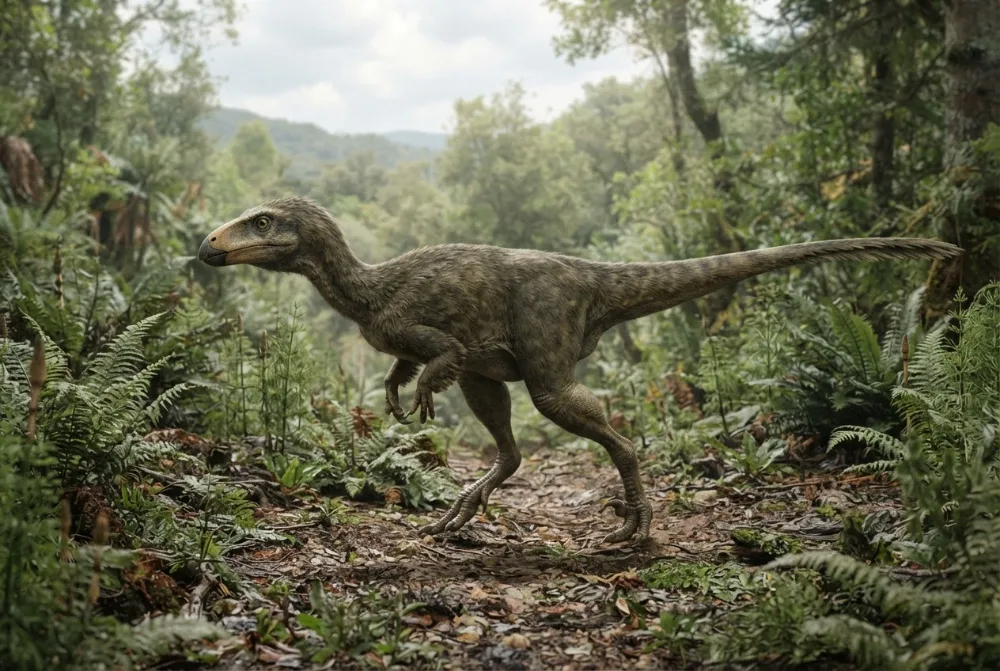
Gaaffiiwwan waa'ee Foskeia baay'ee gaafataman
?How big was Foskeia?
Foskeia was very small, about 0.5 metres (1.6 feet) long, making it one of the smallest ornithopods known.31
?What did Foskeia eat?
Foskeia was a plant-eater (herbivore). Its name means 'light forager', referring to its small size and presumed herbivorous habits.3
?Could Foskeia walk on two legs?
Yes, adults were bipedal. Juveniles started out walking on all fours, but switched to two legs early in life.3
?Why did Foskeia have a beak?
Foskeia had a beak made of fused premaxillae bones, which is unusual for an ornithopod. It likely used it to bite off plant material.3
?When did Foskeia live?
Foskeia lived during the Early Cretaceous, about 125 to 119 million years ago, in what is now Spain.3
Ogeeyyii daayinootiif
- Maqaa saayinsii
- Foskeia
- Kan maqaa baase
- Dieudonné et al. 20264
- Garee
- Biqiltuu-nyaattota afaan simbirroo qaban
- Maatii / kilaadii
- Rhabdodontia4
- Ramaddii
- Ornithischia > Ornithopoda > Iguanodontia4
- Umurii dhagaawwanii
- waggaa miliyoona 126 hanga 120 (Barremian / Aptian)4
- Caasaawwan dhagaa
- Castrillo de la Reina4
- Biyyoota
- Ispeen4
- Galmee fosilii
- 1 The Paleobiology Database keessa4
- Argannoo
- Foskeia was named in 2026 by a team of scientists led by Dieudonné, based on fossils found at the Vegagete site in Burgos, Spain. The remains were first thought to belong to a different dinosaur, but new skull bones showed it was a new species.12
- Ammallee falmisiisaa
- Scientists are not sure exactly how big Foskeia grew, because only a few bones have been found so far.1
Odeeffannoon eessaa dhufa
- Foskeia pelendonum, a new rhabdodontomorph from the Lower Cretaceous of Salas de los Infantes (Burgos Province, Spain), and a new phylogeny of ornithischian dinosaurs (riull.ull.es)
- PBDB Taxon (paleobiodb.org)
- Foskeia (en.wikipedia.org)
- Foskeia in The Paleobiology Database (CC BY 4.0): umurii, bakkeewwan, caasaawwan dhagaa, ramaddii.
Odeeffannoon fuula kana irra jiru hundi lakkoofsa madda isaa agarsiisu qaba. Yoo waa dogoggorre, dhiifama, nuti jaallattoota daayinoo malee joornaalii saayinsii miti. [email protected] irratti nutti himi, nus ni sirreessina.
 Rex beela'eera! Dino Wiki pirojektii abbaa tokkoo kan ilma isaa daayinoo jaallatuuf hojjetame, bilisa, beeksisa malee fi hordoftuu malee. Ga'eessonni akka inni interneetii irra turuuf Rexiif nyaata xiqqoo kennuu danda'u.Rex soori
Garee sana irraa kan biroo: Biqiltuu-nyaattota afaan simbirroo qaban
 IguanodonBiqiltuu-nyaattota afaan simbirroo qaban
 TenontosaurusBiqiltuu-nyaattota afaan simbirroo qaban
 ThescelosaurusBiqiltuu-nyaattota afaan simbirroo qaban
 ZalmoxesBiqiltuu-nyaattota afaan simbirroo qaban
 CamptosaurusBiqiltuu-nyaattota afaan simbirroo qaban
 RhabdodonBiqiltuu-nyaattota afaan simbirroo qaban
 Stegosaurus
 Archaeopteryx
 Giganotosaurus
 Microraptor
 Deinonychus
 Baryonyx