 Ati daayinoo kami? Qormaata
 Lola daayinoo
 Dorgommii daayinoo
 Taphoota daayinoo xixiqqoo
 Albamii istiikarii
 Tarreewwan TOP daayinoo
 Na dinqisiisi!
Harpactognathus
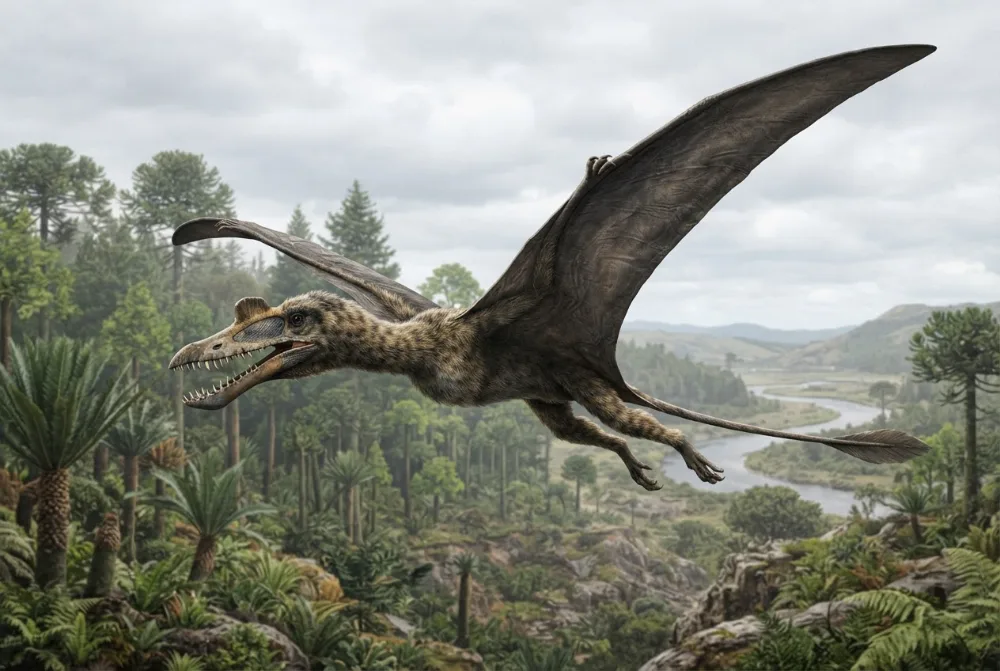
Harpactognathus was a large flying reptile that lived during the Jurassic period. It had a strong, wide beak and sharp teeth for grabbing prey. This pterosaur was one of the biggest of its kind that did not belong to the short-tailed pterodactyl group.1
Yoom jiraate?
Hammam guddaa ture?
Baalleen isaa hammam bal'aa turan?
 baallee akka saayikilii 1.5 tarreen bal'aa⚽dirree kubbaa miilaa guutuu sekondii 7.3 keessatti balali'ee ce'uu danda'a
SI wajjin yoo wal bira qabamu, Harpactognathus hammam guddaa ture?
Herrega qofa barbaadduu kee keessatti. Wanti tokkollee hin olkaa'amu, eessayyuu hin ergamu.
Hammam saffisaa ture?


Odeeffannoowwan bashannansiisoo
Harpactognathus is known from only a partial skull and a few other bones, so scientists are still learning about its full appearance.1
It had a crest on the front of its skull that might have been used for display to attract mates or show off to rivals.1
With a wingspan of about 2.5 metres (8.2 feet), Harpactognathus was among the largest non-pterodactyloid pterosaurs.1
Its fossils were found in the Morrison Formation, the same rock layer that contains famous dinosaurs like Stegosaurus and Diplodocus.1
Unlike many other pterosaurs that ate fish, Harpactognathus probably hunted small animals on land near rivers and lakes.1
The name Harpactognathus comes from Greek words meaning 'seizing jaw', which describes its strong, grabbing beak.1
Gaaffiiwwan waa'ee Harpactognathus baay'ee gaafataman
?Was Harpactognathus a dinosaur?
No, Harpactognathus was a pterosaur, a flying reptile, not a dinosaur.1
?How big was Harpactognathus?
It had an estimated wingspan of about 2.5 metres (8.2 feet) and a skull length of 280 to 300 millimetres (11 to 12 inches).1
?What did Harpactognathus eat?
It was a terrestrial carnivore that probably hunted small animals on land near rivers and lakes, not fish like many other pterosaurs.1
?Where was Harpactognathus found?
Its fossils were found in the Morrison Formation in Wyoming, USA, the same rock layer as Stegosaurus and Diplodocus.1
?Did Harpactognathus have a crest?
Yes, it had a thin crest on the front of its skull that may have been used for display to attract mates or show off to rivals.1
?When did Harpactognathus live?
It lived during the Kimmeridgian stage of the Late Jurassic period, about 157 to 152 million years ago.1
Seenaa sobaa diigaa
Seenaa sobaa: Harpactognathus is often thought to be a dinosaur.
Dhugaa: Harpactognathus was a pterosaur, a flying reptile that is not a dinosaur.1
Ogeeyyii daayinootiif
- Maqaa saayinsii
- Harpactognathus
- Kan maqaa baase
- Carpenter et al. 20032
- Garee
- Harkifattoota balali'an
- Maatii / kilaadii
- Lonchognatha2
- Ramaddii
- Pterosauria2
- Umurii dhagaawwanii
- waggaa miliyoona 152 hanga 145 (Kimmeridgian / Tithonian)2
- Caasaawwan dhagaa
- Morrison2
- Biyyoota
- Ameerikaa2
- Galmee fosilii
- 1 The Paleobiology Database keessa2
- Argannoo
- Harpactognathus was named in 2003 by paleontologist Kenneth Carpenter and his team. The first fossil, a partial snout, was found in 1996 at Bone Cabin Quarry in Wyoming, USA. The species name honors Joe Gentry, a volunteer who helped with fossil preparation.1
- Ammallee falmisiisaa
- Scientists are not sure whether Harpactognathus belongs to the scaphognathine or rhamphorhynchine group of pterosaurs, because its fossils are so incomplete.1
Odeeffannoon eessaa dhufa
- Harpactognathus (en.wikipedia.org)
- Harpactognathus in The Paleobiology Database (CC BY 4.0): umurii, bakkeewwan, caasaawwan dhagaa, ramaddii.
Odeeffannoon fuula kana irra jiru hundi lakkoofsa madda isaa agarsiisu qaba. Yoo waa dogoggorre, dhiifama, nuti jaallattoota daayinoo malee joornaalii saayinsii miti. [email protected] irratti nutti himi, nus ni sirreessina.
 Rex beela'eera! Dino Wiki pirojektii abbaa tokkoo kan ilma isaa daayinoo jaallatuuf hojjetame, bilisa, beeksisa malee fi hordoftuu malee. Ga'eessonni akka inni interneetii irra turuuf Rexiif nyaata xiqqoo kennuu danda'u.Rex soori
 Pteranodon
 Quetzalcoatlus
 Dorygnathus
 Rhamphorhynchus
 Anhanguera
 Pterodactylus
 Brachiosaurus
 Diplodocus
 Allosaurus
 Brontosaurus
 Compsognathus
 Camarasaurus