 Ati daayinoo kami? Qormaata
 Lola daayinoo
 Dorgommii daayinoo
 Taphoota daayinoo xixiqqoo
 Albamii istiikarii
 Tarreewwan TOP daayinoo
 Na dinqisiisi!
Yoom jiraate?

Hammam guddaa ture?
Hammam dheeraa ture?
Hammam ol-dheeraa ture?
tilmaama
 akka adurree manaa 2.5 funyaan hanga eegeetti dheeraa🍌akka muuzii 7 walitti hiriiran dheeraa🪑akka barcuma jala deemuu danda'utti xiqqaa🏃meetira 100 sekondii 12 keessatti fiiguu danda'a (namni hunda caalaa saffisaan 9.6 barbaada)
SI wajjin yoo wal bira qabamu, Lycorhinus hammam guddaa ture?
Herrega qofa barbaadduu kee keessatti. Wanti tokkollee hin olkaa'amu, eessayyuu hin ergamu.
Hammam saffisaa ture?


Odeeffannoowwan bashannansiisoo
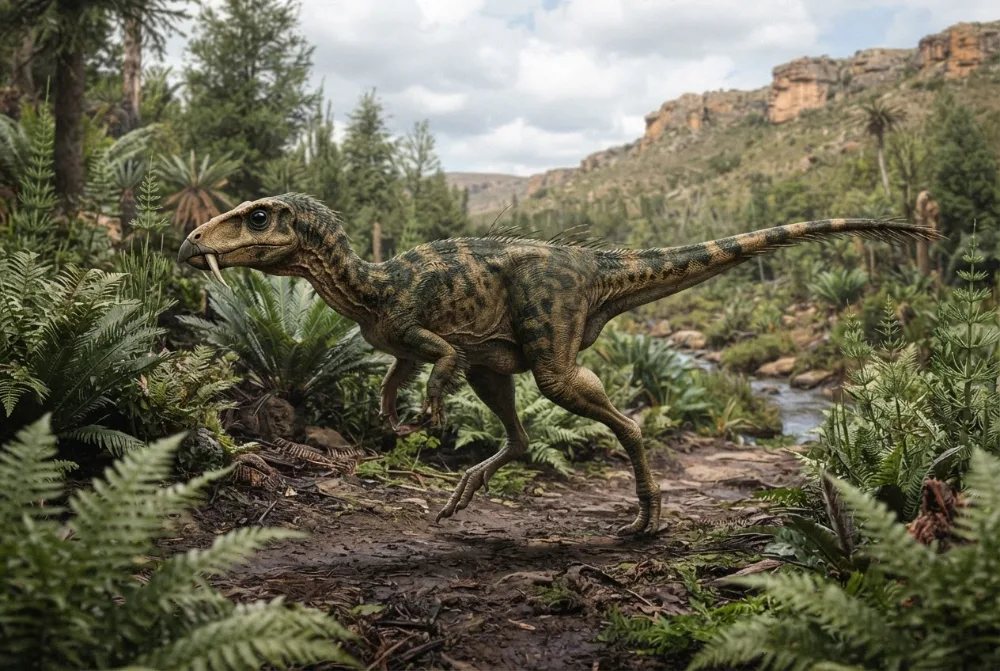
Lycorhinus was first thought to be a mammal-like reptile called a cynodont, not a dinosaur, when it was named in 1924.1
It had a beak at the front of its mouth, like a parrot, but also had long, fang-like canine teeth.1
Lycorhinus was only about 1.2 metres (4 feet) long, about the size of a large dog.1
Scientists once thought a different dinosaur called Lanasaurus was a separate species, but now they think it was the same as Lycorhinus.13
Its fossils were found in the Upper Elliot Formation, which is made of red mudstone from ancient rivers and deserts.1
Lycorhinus lived alongside the long-necked dinosaur Massospondylus and the early crocodile relative Protosuchus.1
Gaaffiiwwan waa'ee Lycorhinus baay'ee gaafataman
?What did Lycorhinus eat?
Lycorhinus was a plant-eater. Its teeth show wear from chewing tough plants, and scientists think it may have also eaten fruits, roots, and nuts, like modern peccaries do.1
?How big was Lycorhinus?
Lycorhinus was about 1.2 metres (4 feet) long, which is about the size of a large dog.12
Seenaa sobaa diigaa
Seenaa sobaa: Because Lycorhinus had long canine teeth, some people think it was a meat-eater.
Dhugaa: Lycorhinus was actually a plant-eater. Its teeth show wear from chewing plants, and its beak helped it crop vegetation.1
Ogeeyyii daayinootiif
- Maqaa saayinsii
- Lycorhinus
- Kan maqaa baase
- Haughton 19243
- Garee
- Biqiltuu-nyaattota afaan simbirroo qaban
- Maatii / kilaadii
- Heterodontosauridae3
- Ramaddii
- Ornithischia > Heterodontosauridae3
- Umurii dhagaawwanii
- waggaa miliyoona 201 hanga 184 (Hettangian / Pliensbachian)3
- Caasaawwan dhagaa
- Elliot, Clarens3
- Biyyoota
- Afrikaa Kibbaa, Leesootoo3
- Galmee fosilii
- 5 The Paleobiology Database keessa3
- Maqaan biraa
- Lanasaurus (maqaawwan durii amma akka bineensa tokkootti lakkaa'amu)3
- Argannoo
- Lycorhinus was named in 1924 by South African paleontologist Sidney H. Haughton, based on a partial jaw found in the Upper Elliot Formation of South Africa.13
- Ammallee falmisiisaa
- Scientists are not sure exactly how Lycorhinus used its long canine teeth, whether for defense, digging, or eating tough plants.1
Odeeffannoon eessaa dhufa
- Lycorhinus (en.wikipedia.org)
- Lycorhinus | Natural History Museum (nhm.ac.uk)
- Lycorhinus in The Paleobiology Database (CC BY 4.0): umurii, bakkeewwan, caasaawwan dhagaa, ramaddii.
Odeeffannoon fuula kana irra jiru hundi lakkoofsa madda isaa agarsiisu qaba. Yoo waa dogoggorre, dhiifama, nuti jaallattoota daayinoo malee joornaalii saayinsii miti. [email protected] irratti nutti himi, nus ni sirreessina.
 Rex beela'eera! Dino Wiki pirojektii abbaa tokkoo kan ilma isaa daayinoo jaallatuuf hojjetame, bilisa, beeksisa malee fi hordoftuu malee. Ga'eessonni akka inni interneetii irra turuuf Rexiif nyaata xiqqoo kennuu danda'u.Rex soori
Garee sana irraa kan biroo: Biqiltuu-nyaattota afaan simbirroo qaban
 IguanodonBiqiltuu-nyaattota afaan simbirroo qaban
 TenontosaurusBiqiltuu-nyaattota afaan simbirroo qaban
 ThescelosaurusBiqiltuu-nyaattota afaan simbirroo qaban
 ZalmoxesBiqiltuu-nyaattota afaan simbirroo qaban
 CamptosaurusBiqiltuu-nyaattota afaan simbirroo qaban
 RhabdodonBiqiltuu-nyaattota afaan simbirroo qaban
 Dilophosaurus
 Stenopterygius
 Dorygnathus
 Lufengosaurus
 Scutellosaurus
 Yunnanosaurus