 Ati daayinoo kami? Qormaata
 Lola daayinoo
 Dorgommii daayinoo
 Taphoota daayinoo xixiqqoo
 Albamii istiikarii
 Tarreewwan TOP daayinoo
 Na dinqisiisi!
Samrukia
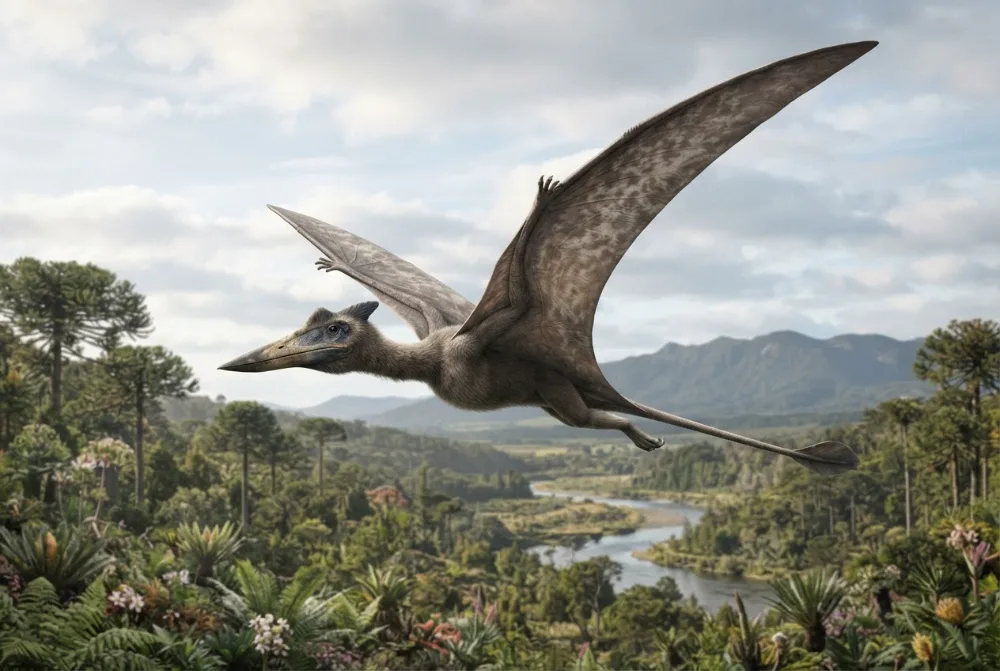
Samrukia was a huge flying reptile that lived in what is now Kazakhstan. It had a very long jaw, and scientists first thought it was a giant bird. Now they think it was a pterosaur, a flying reptile that lived at the same time as dinosaurs.1
Yoom jiraate?
Hammam guddaa ture?
Baalleen isaa hammam bal'aa turan?
Hammam ol-dheeraa ture?
Hammam ulfaataa ture?

 baallee akka saayikilii 2 tarreen bal'aa
 akka adurree manaa 12 ulfaata🍉akka habxuu 10 ulfaata🧸akka ijoollee KG 2.5 ulfaata🎒akka ijoollee mana barumsaa 1.5 ulfaata⚽dirree kubbaa miilaa guutuu sekondii 6 keessatti balali'ee ce'uu danda'a
SI wajjin yoo wal bira qabamu, Samrukia hammam guddaa ture?
Herrega qofa barbaadduu kee keessatti. Wanti tokkollee hin olkaa'amu, eessayyuu hin ergamu.
Hammam saffisaa ture?


Odeeffannoowwan bashannansiisoo
Samrukia is known only from a single lower jaw bone, which is more than 275 millimetres long.2
When first discovered, scientists thought Samrukia was a giant bird, but later studies showed it was a pterosaur.1
Samrukia lived about 84 million years ago, during the Late Cretaceous period.1
If Samrukia could fly, its wingspan might have been about 4 metres (13 feet). If it was flightless, it might have been 2 to 3 metres (6.6 to 9.8 feet) tall.1
The jaw of Samrukia has no teeth, so it probably had a beak.2
Samrukia is named after Samruk, a magical bird from Kazakh mythology.1
Gaaffiiwwan waa'ee Samrukia baay'ee gaafataman
?Was Samrukia a dinosaur?
No, Samrukia was a pterosaur, a flying reptile that lived at the same time as dinosaurs. It is not a dinosaur.1
?How big was Samrukia?
If it could fly, its wingspan might have been about 4 metres (13 feet). If it was flightless, it might have been 2 to 3 metres (6.6 to 9.8 feet) tall.1
?What did Samrukia eat?
Samrukia had no teeth in its lower jaw, so it probably had a beak. Scientists think it may have eaten fish or other small animals, but no one knows for sure.1
Seenaa sobaa diigaa
Seenaa sobaa: Samrukia was a giant bird.
Dhugaa: Scientists now agree that Samrukia was a pterosaur, not a bird. The jaw bone has features that are only found in pterosaurs.1
Ogeeyyii daayinootiif
- Maqaa saayinsii
- Samrukia
- Kan maqaa baase
- Naish et al. 20124
- Garee
- Harkifattoota balali'an
- Maatii / kilaadii
- Pterosauria4
- Ramaddii
- Pterosauria4
- Umurii dhagaawwanii
- waggaa miliyoona 86 hanga 72 (Santonian / Campanian)4
- Caasaawwan dhagaa
- Bostobe4
- Biyyoota
- Kazaakistaan4
- Galmee fosilii
- 1 The Paleobiology Database keessa4
- Argannoo
- Samrukia was named in 2012 by Darren Naish and his team. The only fossil, a lower jaw, was found in the Bostobynskaya Formation in Kazakhstan.14
- Ammallee falmisiisaa
- Scientists are not sure if Samrukia could fly or if it was flightless, because only its jaw has been found.1
Odeeffannoon eessaa dhufa
- Samrukia (en.wikipedia.org)
- untitled (darrennaish.wordpress.com)
- Giant 'phoenix' bird rises again | Fossils | The Guardian (theguardian.com)
- Samrukia in The Paleobiology Database (CC BY 4.0): umurii, bakkeewwan, caasaawwan dhagaa, ramaddii.
Odeeffannoon fuula kana irra jiru hundi lakkoofsa madda isaa agarsiisu qaba. Yoo waa dogoggorre, dhiifama, nuti jaallattoota daayinoo malee joornaalii saayinsii miti. [email protected] irratti nutti himi, nus ni sirreessina.
 Rex beela'eera! Dino Wiki pirojektii abbaa tokkoo kan ilma isaa daayinoo jaallatuuf hojjetame, bilisa, beeksisa malee fi hordoftuu malee. Ga'eessonni akka inni interneetii irra turuuf Rexiif nyaata xiqqoo kennuu danda'u.Rex soori
 Pteranodon
 Quetzalcoatlus
 Dorygnathus
 Rhamphorhynchus
 Anhanguera
 Pterodactylus
 Tyrannosaurus
 Triceratops
 Velociraptor
 Spinosaurus
 Ankylosaurus
 Parasaurolophus