 Ati daayinoo kami? Qormaata
 Lola daayinoo
 Dorgommii daayinoo
 Taphoota daayinoo xixiqqoo
 Albamii istiikarii
 Tarreewwan TOP daayinoo
 Na dinqisiisi!
Xericeps
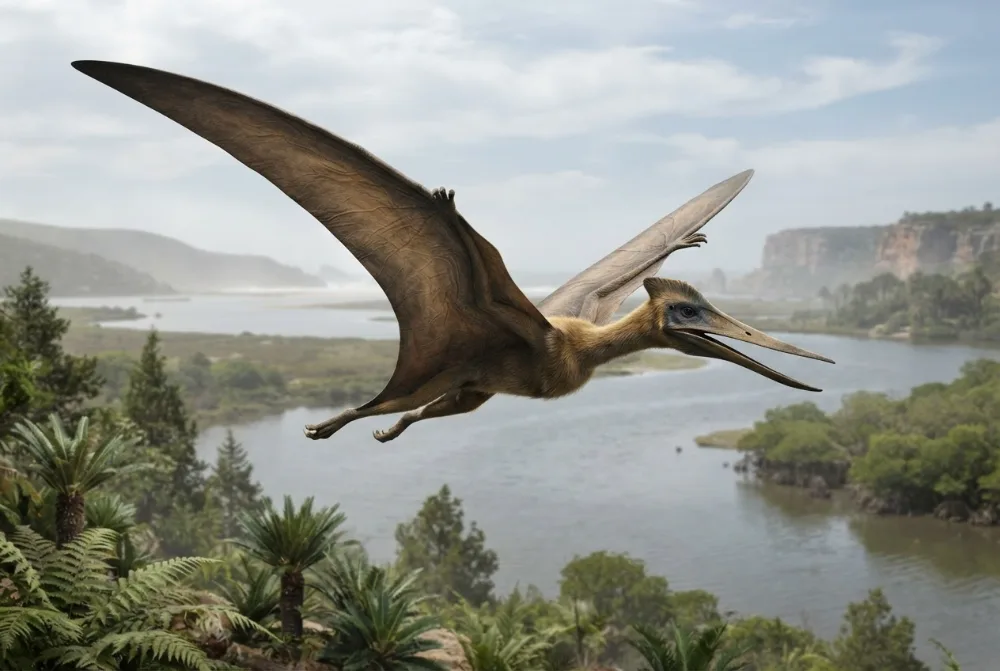
Xericeps was a flying reptile that lived in what is now the Sahara Desert in Morocco. It had a long, toothless beak that curved upward like a pair of tweezers. It probably used its beak to snatch fish from rivers and lakes.13
Yoom jiraate?
Hammam guddaa ture?
Baalleen isaa hammam bal'aa turan?
 baallee akka saayikilii 4 tarreen bal'aa⚽dirree kubbaa miilaa guutuu sekondii 4.6 keessatti balali'ee ce'uu danda'a
SI wajjin yoo wal bira qabamu, Xericeps hammam guddaa ture?
Herrega qofa barbaadduu kee keessatti. Wanti tokkollee hin olkaa'amu, eessayyuu hin ergamu.
Hammam saffisaa ture?


Odeeffannoowwan bashannansiisoo
Xericeps is known only from a piece of its lower jaw. No other bones have been found yet.1
Its beak was curved upward, which is why its species name 'curvirostris' means 'curved snout'.1
Xericeps is one of only three named pterosaurs from the Kem Kem beds of Morocco. This area was once a river system full of dinosaurs and flying reptiles.2
Scientists think Xericeps was a medium-sized pterosaur, with a wingspan likely between 3 and 8 metres (10 to 26 feet).1
Gaaffiiwwan waa'ee Xericeps baay'ee gaafataman
?Is Xericeps a dinosaur?
No, Xericeps is a pterosaur, which is a flying reptile that lived alongside dinosaurs but is not a dinosaur itself.1
?How big was Xericeps?
It was medium sized for a pterosaur, with a wingspan estimated between 3 and 8 metres (10 to 26 feet). Scientists think it was likely closer to the lower end of that range.12
?What did Xericeps eat?
Xericeps probably used its long, curved, toothless beak to snatch fish from rivers and lakes.1
?Why did Xericeps have a curved beak?
Scientists think the upward curve helped it catch food, like fish, from water. The species name 'curvirostris' even means 'curved snout'.1
Ogeeyyii daayinootiif
- Maqaa saayinsii
- Xericeps
- Kan maqaa baase
- Martill et al. 20183
- Garee
- Harkifattoota balali'an
- Maatii / kilaadii
- Neoazhdarchia3
- Ramaddii
- Pterosauria > Pterodactyloidea3
- Umurii dhagaawwanii
- waggaa miliyoona 100 hanga 94 (Cenomanian)3
- Biyyoota
- Morookoo3
- Galmee fosilii
- 1 The Paleobiology Database keessa3
- Argannoo
- The only known fossil of Xericeps was found by local mine workers at Aferdou N'Chaft in Morocco. British paleontologist David M. Martill bought it at the mine site in January 2017. He and his colleagues named it in 2018.12
- Ammallee falmisiisaa
- Scientists are not sure exactly which group of pterosaurs Xericeps belongs to. Some studies place it with the alanqids, others with the chaoyangopterids.1
Odeeffannoon eessaa dhufa
- Xericeps (en.wikipedia.org)
- A new edentulous pterosaur from the Cretaceous Kem Kem beds of south eastern Morocco (sciencedirect.com)
- Xericeps in The Paleobiology Database (CC BY 4.0): umurii, bakkeewwan, caasaawwan dhagaa, ramaddii.
Odeeffannoon fuula kana irra jiru hundi lakkoofsa madda isaa agarsiisu qaba. Yoo waa dogoggorre, dhiifama, nuti jaallattoota daayinoo malee joornaalii saayinsii miti. [email protected] irratti nutti himi, nus ni sirreessina.
 Rex beela'eera! Dino Wiki pirojektii abbaa tokkoo kan ilma isaa daayinoo jaallatuuf hojjetame, bilisa, beeksisa malee fi hordoftuu malee. Ga'eessonni akka inni interneetii irra turuuf Rexiif nyaata xiqqoo kennuu danda'u.Rex soori
 Pteranodon
 Quetzalcoatlus
 Dorygnathus
 Rhamphorhynchus
 Anhanguera
 Pterodactylus
 Tyrannosaurus
 Triceratops
 Velociraptor
 Spinosaurus
 Ankylosaurus
 Parasaurolophus