 Uri dinozore iyihe? Umukino w'ibibazo
 Intambara ya dinozore
 Isiganwa rya dinozore
 Imikino mito ya dinozore
 Alubumu ya sitikeri
 Intonde za TOP za dinozore
 Ntungura!
Amanzia
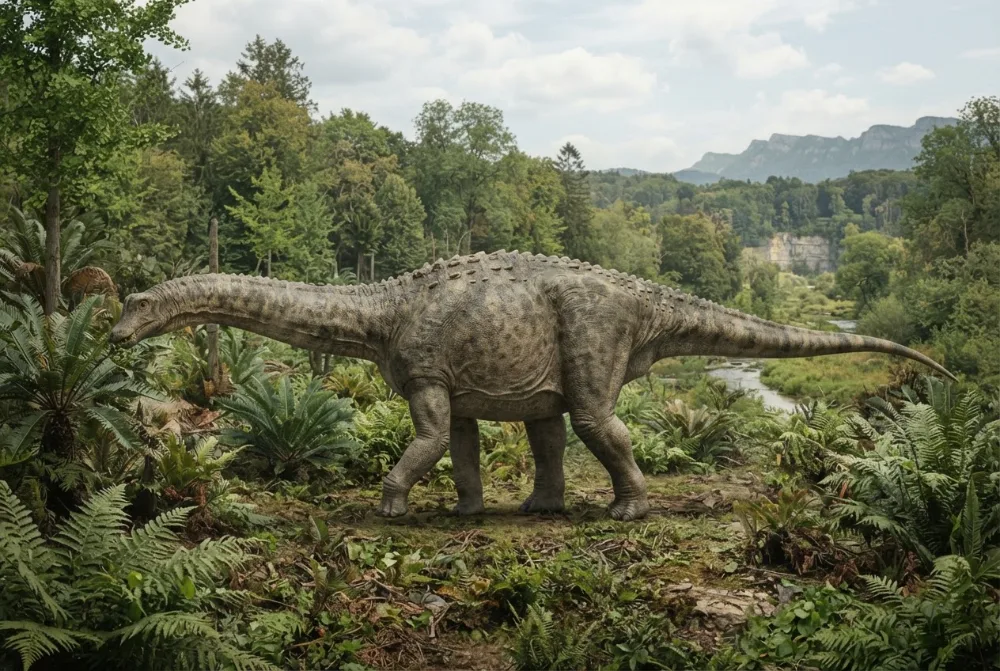
Amanzia was a long-necked plant-eater that lived in what is now Switzerland about 157 million years ago. It was a small sauropod, not much longer than a school bus, and it munched on leaves and ferns. Its bones were found in an old quarry near the town of Moutier.12
Yabayeho ryari?
Yanganaga ite?
Yari ndende ite?
Ubutumburuke bwayo bwanganaga iki?
igereranya
 ndende nk'imodoka 2 ziparitse ku murongo🍌ndende nk'imineke 56 ikurikiranye🏃yashoboraga kwiruka metero 100 mu masegonda 16 (umuntu wihuta kurusha abandi akenera 9,6)
Amanzia yanganaga ite ugereranyije NAWE?
Ni imibare gusa ibarirwa muri mushakisha yawe. Nta kintu kibikwa cyangwa cyoherezwa ahandi.
Yihutaga ite?


Utuntu dushimishije
Amanzia was first thought to be a different dinosaur called Ornithopsis, and later Cetiosauriscus, before scientists gave it its own name in 2020.12
The fossils include bones from at least four different individuals, some of which were different sizes.1
Amanzia had a special rough patch on the back of its upper arm bone that no other sauropod has.1
Its tail bones were long and had small holes for blood vessels.1
The bones were found in a greenish layer of marl and limestone, which was once a muddy seafloor.1
Amanzia is one of the few sauropods known from Switzerland, and its discovery helped scientists understand European dinosaurs better.1
Ibibazo bibazwa cyane kuri Amanzia
?How big was Amanzia?
Amanzia was a small sauropod, not more than 10 metres long. That is about as long as a school bus.12
?What did Amanzia eat?
Amanzia was a plant-eater. It munched on leaves and ferns, like other sauropods.2
Ku bazobereye muri dinozore
- Izina rya siyansi
- Amanzia
- Yiswe na
- Schwarz et al. 20203
- Itsinda
- Izifite amajosi maremare
- Umuryango / ishami
- Turiasauria3
- Ishyirwa mu byiciro
- Sauropodomorpha > Sauropoda3
- Imyaka y'amabuye
- imyaka miliyoni 155 kugeza 152 (Kimmeridgian)3
- Inzego z'amabuye
- Reuchenette3
- Ibihugu
- Ubusuwisi3
- Ibisigazwa byanditswe
- 2 muri The Paleobiology Database3
- Ivumburwa
- The first bones were found in the 1860s in a quarry near Moutier, Switzerland. In 1922, German scientist Friedrich von Huene named them Ornithopsis greppini. In 2020, a new study gave them the new genus name Amanzia, after Swiss geologist Amanz Gressly.12
- Biracyagibwaho impaka
- Scientists are not sure whether Amanzia was a member of the group Turiasauria or just a close relative of all later sauropods.1
Aho amakuru yakuwe
- Re-description of the sauropod dinosaur Amanzia (“Ornithopsis/Cetiosauriscus”) greppini n. gen. and other vertebrate remains from the Kimmeridgian (Late Jurassic) Reuchenette Formation of Moutier, Switzerland | Swiss Journal of Geosciences | Springer Nature Link (link.springer.com)
- Amanzia (en.wikipedia.org)
- Amanzia in The Paleobiology Database (CC BY 4.0): imyaka, ahantu, inzego z'amabuye, ishyirwa mu byiciro.
Buri kintu kiri kuri uru rupapuro gifite nimero yerekana aho cyakuwe. Niba hari icyo twibeshye, tubabarire, turi abakunzi ba dinozore, ntituri ikinyamakuru cya siyansi. Tubwire kuri [email protected] tuzagikosora.
 Rex arashonje! Dino Wiki ni umushinga wa papa umwe yakoreye umuhungu we ukunda dinozore, ni ubuntu, nta matangazo kandi nta bigukurikirana. Abantu bakuru bashobora guha Rex akantu ko kurya kugira ngo Dino Wiki ikomeze kuboneka kuri interineti.Gaburira Rex
 Brachiosaurus
 Diplodocus
 Brontosaurus
 Argentinosaurus
 Camarasaurus
 Morosaurus
 Allosaurus
 Compsognathus
 Camptosaurus
 Nanosaurus
 Rhamphorhynchus
 Ceratosaurus