 Uri dinozore iyihe? Umukino w'ibibazo
 Intambara ya dinozore
 Isiganwa rya dinozore
 Imikino mito ya dinozore
 Alubumu ya sitikeri
 Intonde za TOP za dinozore
 Ntungura!
Amphicoelias
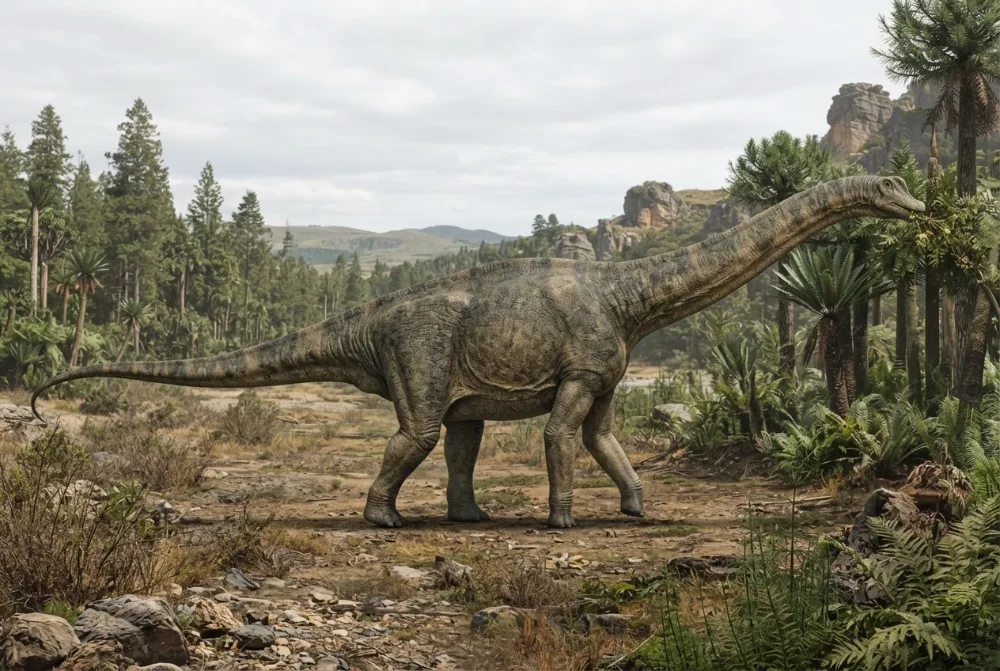
Amphicoelias was a giant, long-necked plant-eater that lived about 150 million years ago. It had very long and thin hind legs, and its front legs were longer than those of its close relative Diplodocus. This dinosaur was about as long as three school buses parked end to end!1
Yabayeho ryari?
Yanganaga ite?
Yari ndende ite?
Ubutumburuke bwayo bwanganaga iki?
igereranya
Yari iremereye ite?

 ndende nk'imodoka 4 ziparitse ku murongo🍌ndende nk'imineke 100 ikurikiranyeiremereye nk'imodoka 10🍉iremereye nk'imbuto 3000 za watermelon🎒iremereye nk'ibyumba 19 by'amashuri byuzuye abana🐻❄️iremereye nk'idubu 33 zo mu rubura🏃yashoboraga kwiruka metero 100 mu masegonda 28 (umuntu wihuta kurusha abandi akenera 9,6)
Amphicoelias yanganaga ite ugereranyije NAWE?
Ni imibare gusa ibarirwa muri mushakisha yawe. Nta kintu kibikwa cyangwa cyoherezwa ahandi.
Yihutaga ite?


Utuntu dushimishije
Amphicoelias was named by the famous paleontologist Edward Drinker Cope in 1877.1
Its name means 'biconcave' because the bones of its spine were hollow on both sides.1
Amphicoelias lived in a savanna-like environment with ferns and some tall trees along rivers.1
The first fossils of Amphicoelias were found by a man named Aaron Ripley in Colorado in 1877.1
Amphicoelias was lighter and more slender than many other sauropods of its time.1
Ibibazo bibazwa cyane kuri Amphicoelias
?How big was Amphicoelias?
Amphicoelias was about 18 metres (59 feet) long and weighed about 15 metric tons (17 short tons). That is longer than its close relative Diplodocus.1
?What did Amphicoelias eat?
Amphicoelias was a plant-eater that ate ferns and other plants. It lived in a savanna-like environment with some tall trees along rivers.1
?When did Amphicoelias live?
Amphicoelias lived about 150 million years ago during the Late Jurassic Period.1
?Was Amphicoelias a dinosaur?
Yes, Amphicoelias was a dinosaur. It was a sauropod, a type of long-necked, plant-eating dinosaur.1
?Where was Amphicoelias found?
Amphicoelias fossils were found in Colorado, United States, in rocks called the Morrison Formation.1
?Is Amphicoelias the biggest dinosaur?
No, Amphicoelias was not the biggest dinosaur. It was about 18 metres long, which is shorter than its relative Diplodocus. One giant species once called Amphicoelias fragillimus was later renamed Maraapunisaurus.1
Ku bazobereye muri dinozore
- Izina rya siyansi
- Amphicoelias
- Yiswe na
- Cope 18773
- Itsinda
- Izifite amajosi maremare
- Umuryango / ishami
- Diplodocoidea3
- Ishyirwa mu byiciro
- Sauropodomorpha > Sauropoda > Diplodocoidea3
- Imyaka y'amabuye
- imyaka miliyoni 158 kugeza 143 ()3
- Inzego z'amabuye
- Morrison, Kadzi3
- Ibihugu
- Amerika, Zimbabwe3
- Ibisigazwa byanditswe
- 3 muri The Paleobiology Database3
- Ivumburwa
- Edward Drinker Cope named Amphicoelias in 1877 based on fossils found by Aaron Ripley in Colorado, USA.1
- Biracyagibwaho impaka
- Scientists are not sure if some bones, like a tooth and shoulder blade, really belong to Amphicoelias or to another dinosaur.1
Aho amakuru yakuwe
- Amphicoelias (en.wikipedia.org)
- PBDB Taxon (paleobiodb.org)
- Amphicoelias in The Paleobiology Database (CC BY 4.0): imyaka, ahantu, inzego z'amabuye, ishyirwa mu byiciro.
Buri kintu kiri kuri uru rupapuro gifite nimero yerekana aho cyakuwe. Niba hari icyo twibeshye, tubabarire, turi abakunzi ba dinozore, ntituri ikinyamakuru cya siyansi. Tubwire kuri [email protected] tuzagikosora.
 Rex arashonje! Dino Wiki ni umushinga wa papa umwe yakoreye umuhungu we ukunda dinozore, ni ubuntu, nta matangazo kandi nta bigukurikirana. Abantu bakuru bashobora guha Rex akantu ko kurya kugira ngo Dino Wiki ikomeze kuboneka kuri interineti.Gaburira Rex
 Brachiosaurus
 Diplodocus
 Brontosaurus
 Argentinosaurus
 Camarasaurus
 Morosaurus
 Allosaurus
 Compsognathus
 Camptosaurus
 Nanosaurus
 Rhamphorhynchus
 Ceratosaurus