 Uri dinozore iyihe? Umukino w'ibibazo
 Intambara ya dinozore
 Isiganwa rya dinozore
 Imikino mito ya dinozore
 Alubumu ya sitikeri
 Intonde za TOP za dinozore
 Ntungura!
Bagualia
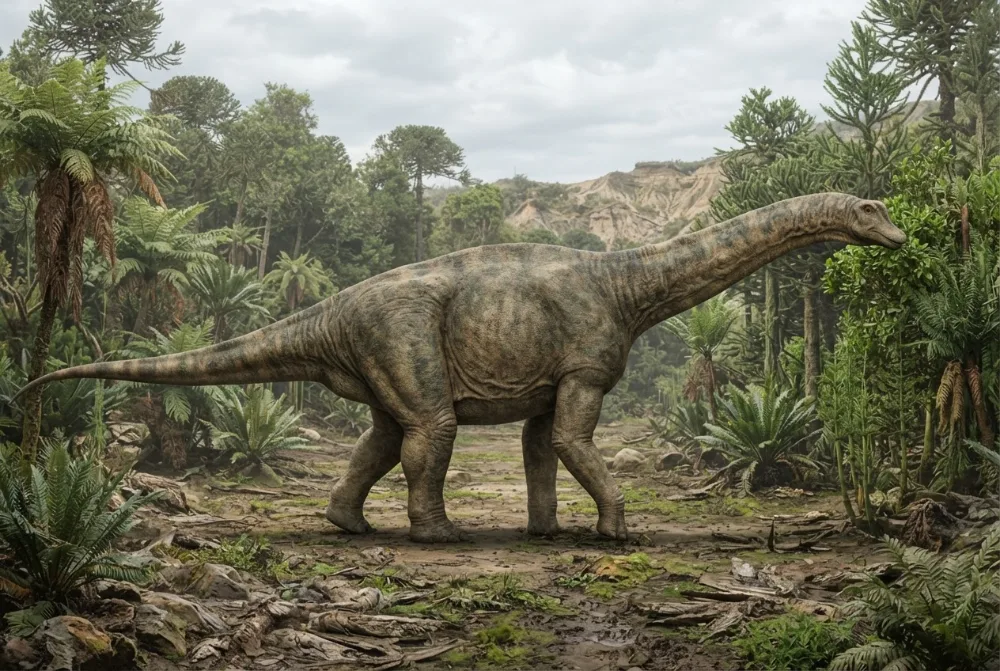
Bagualia was an early long-necked dinosaur that lived about 180 million years ago. It is one of the oldest known true sauropods, the group that later included giants like Brachiosaurus. Bagualia had a deep skull and big spoon-shaped teeth for eating tough plants.21
Yabayeho ryari?
Yanganaga ite?
Yari ndende ite?
Ubutumburuke bwayo bwanganaga iki?
igereranya
Yari iremereye ite?
 ndende nk'imodoka 2,5 ziparitse ku murongo🍌ndende nk'imineke 67 ikurikiranye
 iremereye nk'inzovu 1,5🍉iremereye nk'imbuto 2000 za watermelon🎒iremereye nk'ibyumba 12 by'amashuri byuzuye abana🐻❄️iremereye nk'idubu 22 zo mu rubura🏃yashoboraga kwiruka metero 100 mu masegonda 24 (umuntu wihuta kurusha abandi akenera 9,6)
Bagualia yanganaga ite ugereranyije NAWE?
Ni imibare gusa ibarirwa muri mushakisha yawe. Nta kintu kibikwa cyangwa cyoherezwa ahandi.
Yihutaga ite?


Utuntu dushimishije
Bagualia lived during a time of major climate change, when a huge volcanic event warmed the Earth and many other plant-eating dinosaurs died out.2
The holotype specimen includes the back half of a skull and the first seven neck bones, all still connected together.2
Scientists found remains of at least three Bagualia individuals at the same site, all about the same size.2
Bagualia had a short, deep snout and large nostrils that were set far back on its skull, like later sauropods.2
Ibibazo bibazwa cyane kuri Bagualia
?How big was Bagualia?
Scientists estimate Bagualia weighed over 10 tonnes, making it one of the first truly giant sauropods. Its exact length is not known, but it had a long neck and a large body.5
?What did Bagualia eat?
Bagualia ate tough plants like conifers. Its spoon-shaped teeth had very thick enamel, about seven times thicker than other plant-eaters, to help shear leaves.1
?When did Bagualia live?
Bagualia lived about 179 million years ago, during the Early Jurassic period. That makes it one of the oldest known true sauropods.15
?Where was Bagualia found?
Bagualia fossils were found in Bagual Canyon in Chubut, Argentina. The remains were discovered in 2007 and 2009 by scientists from the Museo Paleontológico Egidio Feruglio.1
Ku bazobereye muri dinozore
- Izina rya siyansi
- Bagualia
- Yiswe na
- Pol et al. 20206
- Itsinda
- Izifite amajosi maremare
- Umuryango / ishami
- Eusauropoda6
- Ishyirwa mu byiciro
- Sauropodomorpha > Sauropoda6
- Imyaka y'amabuye
- imyaka miliyoni 183 kugeza 180 (Toarcian)6
- Inzego z'amabuye
- Cañadón Asfalto6
- Ibihugu
- Arijantine6
- Ibisigazwa byanditswe
- 1 muri The Paleobiology Database6
- Ivumburwa
- Bagualia was named in 2020 by Diego Pol and colleagues. The fossils were found in the Cañadón Asfalto Formation in Chubut, Argentina, at a site called Bagual Canyon.12
- Biracyagibwaho impaka
- Scientists are still debating exactly how Bagualia is related to other early sauropods and how quickly the group evolved after the Toarcian warming event.2
Aho amakuru yakuwe
- Bagualia (en.wikipedia.org)
- Extinction of herbivorous dinosaurs linked to Early Jurassic global warming event (royalsocietypublishing.org)
- PBDB Taxon (paleobiodb.org)
- Nuevos hallazgos sobre Bagualia alba, un dinosaurio saurópodo qu (iipg.conicet.gov.ar)
- Axial skeleton of Bagualia (palaeo-electronica.org)
- Bagualia in The Paleobiology Database (CC BY 4.0): imyaka, ahantu, inzego z'amabuye, ishyirwa mu byiciro.
Buri kintu kiri kuri uru rupapuro gifite nimero yerekana aho cyakuwe. Niba hari icyo twibeshye, tubabarire, turi abakunzi ba dinozore, ntituri ikinyamakuru cya siyansi. Tubwire kuri [email protected] tuzagikosora.
 Rex arashonje! Dino Wiki ni umushinga wa papa umwe yakoreye umuhungu we ukunda dinozore, ni ubuntu, nta matangazo kandi nta bigukurikirana. Abantu bakuru bashobora guha Rex akantu ko kurya kugira ngo Dino Wiki ikomeze kuboneka kuri interineti.Gaburira Rex
 Brachiosaurus
 Diplodocus
 Brontosaurus
 Argentinosaurus
 Camarasaurus
 Morosaurus
 Dilophosaurus
 Stenopterygius
 Dorygnathus
 Scutellosaurus
 Sinosaurus
 Temnodontosaurus